Muslim investors have been asking whether bitcoin is halal since the day it hit mainstream awareness - and the debate is sharper now than ever. With Bitcoin sitting above a $2 trillion market cap and institutional adoption accelerating globally, the question isn't academic anymore. Real money is on the table.
Here's the honest answer: there is no single fatwa. Scholars are genuinely divided, and that disagreement runs deep. But what most guides get wrong is presenting this as a binary verdict - halal or haram, full stop. The reality is more nuanced, and once you understand how Islamic finance principles actually apply to Bitcoin, you can make an informed decision for your own situation.
This guide breaks down the core Islamic concepts, maps out exactly what scholars on both sides argue, and - most importantly - gives you a practical, activity-level framework for navigating Bitcoin as a Muslim investor in 2026.
⚡ Key Takeaways
- No universal scholarly consensus exists on Bitcoin's halal status - the debate is ongoing and evolving
- Holding Bitcoin long-term and spot buying are considered permissible by a growing number of credible Islamic scholars
- Futures trading, margin/leverage trading, and yield-bearing lending protocols are widely considered haram across both scholarly camps
- Whether Bitcoin qualifies as Mal (valid Islamic wealth) is the central legal question - most pro-permissibility scholars argue it does
- Bitcoin holdings above the nisab threshold are subject to Zakat at 2.5%
- Consulting a qualified Islamic finance scholar for your personal situation remains the most defensible path
What Is Bitcoin? Understanding the Digital Asset
Before applying any Islamic legal analysis, you need a clear picture of what Bitcoin actually is - not the hype version, but the technical reality.
Bitcoin is a decentralized digital currency that operates on a peer-to-peer (P2P) network without any central bank or authority controlling it. Created in 2009 by the pseudonymous Satoshi Nakamoto, it introduced the concept of a blockchain - a distributed public ledger where every transaction is permanently recorded across thousands of computers simultaneously.
Two components define Bitcoin at its core: the blockchain itself (the public record that no single party can alter) and cryptographic key pairs (the mathematical mechanism that lets you prove ownership and authorize transfers without revealing your identity). No bank in the middle. No central authority that can freeze your funds or inflate the supply.
How Blockchain Technology Works
Every Bitcoin transaction flows through this process: a user broadcasts a transfer → nodes across the network verify it against the full transaction history → miners bundle valid transactions into a new block and append it to the chain using Proof of Work (PoW).
Proof of Work is significant from an Islamic finance perspective: miners expend real computational energy - real labor - to validate the network. This isn't digital magic. Someone is doing actual work, consuming real resources, to maintain the ledger's integrity. That distinction matters when we get to the mining question later.
Blockchain's transparency is also worth flagging: every transaction is publicly verifiable on-chain. No hidden odds, no opaque back-office. That aligns closely with Islamic finance's emphasis on transparency and the prohibition of deceptive uncertainty (gharar).
Bitcoin vs. Traditional Currency: Key Differences
The "digital gold" comparison keeps coming up in Islamic finance circles, and for good reason. Gold has universally accepted halal status as a store of value. Bitcoin shares gold's scarcity model (fixed supply), its resistance to debasement, and its function as a hedge against currency inflation. Whether Bitcoin deserves that comparison from a Shariah standpoint is exactly what the scholarly debate hinges on.

Core Principles of Islamic Finance That Apply to Bitcoin
Three prohibitions sit at the heart of every Islamic analysis of Bitcoin. Understanding them precisely - not as vague buzzwords, but as specific legal concepts - changes how you read the scholarly debate.
The "digital gold" comparison keeps coming up in Islamic finance circles, and for good reason. Gold has universally accepted halal status as a store of value. Bitcoin shares gold's scarcity model (fixed supply), its resistance to debasement, and its function as a hedge against currency inflation. Whether Bitcoin deserves that comparison from a Shariah standpoint is exactly what the scholarly debate hinges on.
Core Principles of Islamic Finance That Apply to Bitcoin
Three prohibitions sit at the heart of every Islamic analysis of Bitcoin. Understanding them precisely - not as vague buzzwords, but as specific legal concepts - changes how you read the scholarly debate.
Riba, Gharar, and Maysir - How the Three Prohibitions Apply to Bitcoin
Riba: Bitcoin itself doesn't earn or pay interest. There's no central mechanism that generates yield on held coins. This actually supports the permissibility argument - holding Bitcoin is structurally different from holding an interest-bearing bond or a savings account. The Riba concern kicks in when you start using specific products built on top of Bitcoin: crypto lending platforms that promise fixed yields, or perpetual contracts that charge funding rates resembling interest. Bitcoin the asset isn't the problem here; the platform layer is.
Gharar: This is the haram camp's strongest argument. Bitcoin's price has experienced swings exceeding 80% in both directions within single calendar years. Scholars who rule it haram argue this volatility constitutes the kind of excessive uncertainty that Islamic law prohibits in financial contracts. The counterargument from the permissibility camp: all volatile assets carry uncertainty, including equity markets and commodities. Gharar as a prohibition targets contractual uncertainty (where you can't know what you're exchanging), not market price uncertainty, which every asset carries.
Maysir: This prohibition lands squarely on behavior, not on Bitcoin itself. Short-term speculation - entering and exiting positions purely to profit from price swings with no underlying economic rationale - closely resembles gambling under Islamic law. A day trader chasing Bitcoin price ticks is in very different territory than an investor who buys and holds BTC as a store of value over years.
The Concept of Mal - Is Bitcoin Recognized as Islamic Wealth?
Mal is the Islamic legal concept of valid, recognized wealth. For something to qualify as Mal - and therefore be subject to Islamic property rights, transactions, and obligations like Zakat - it must satisfy three criteria:
- Desirability: Is it valued and sought after? Bitcoin's $2+ trillion market cap answers this definitively.
- Storability: Can it be kept and retrieved? Yes - stored on-chain in a self-custodial wallet, permanently and verifiably.
- Taqawwum (Legal Value): Does it carry recognized value under Islamic law?
The third criterion is where the scholarly split lives. The haram camp argues that Bitcoin is "just numbers" - it has no intrinsic function, no tangible reality, and therefore can't hold Taqawwum. The permissibility camp, articulated clearly by scholars like Mufti Faraz Adam of Amanah Advisors, argues that the foundational principle in Islamic jurisprudence (Majma ul Anhar) is that items are permissible until proven otherwise - and widespread societal acceptance, economic utility, and use as a medium of exchange all confer Taqawwum on Bitcoin as a digital asset.

Is Bitcoin Halal or Haram? The Scholarly Debate Explained
The honest position is that no global consensus exists. Any guide that tells you otherwise is oversimplifying. Let's look at what each camp actually argues.
Scholars and Authorities Who Declare Bitcoin Haram
Several major authorities have ruled against Bitcoin, each centering their argument on overlapping concerns:
- Egypt's Dar al-Ifta (Grand Mufti Shawki Allam): Bitcoin's speculative nature, lack of government backing, and potential use in illegal transactions make it incompatible with Shariah principles of financial stability and social benefit.
- Turkey's Diyanet İşleri Başkanlığı: Characterizes crypto trading as prone to Gharar and harm (dharar) to the broader financial system.
- Indonesia's MUI (Majelis Ulama Indonesia): Bitcoin as a currency is haram due to Gharar; as a commodity its status is conditional and debated.
- Malaysia's National Ulema Council (2021): Banned crypto investment based on speculative concerns and lack of regulatory certainty.
Many of these rulings were issued between 2017 and 2021, when Bitcoin's regulatory environment was far murkier. Scholars in this camp deserve to be taken seriously - their concerns about speculative harm are well-grounded. What's worth noting, though, is that the regulatory context has changed substantially since their rulings were issued.
Scholars and Authorities Who Consider Bitcoin Permissible
The pro-permissibility camp has grown considerably, particularly as Bitcoin has matured as an asset class and attracted serious regulatory frameworks in the UAE, Bahrain, and beyond.
- Mufti Faraz Adam (Amanah Advisors): Bitcoin qualifies as Mal and can be classified as a digital commodity. His 2017 research paper remains the most cited pro-permissibility scholarly work, and his position has held as Bitcoin's characteristics have proven durable.
- Mufti Muhammad Abu-Bakar: Bitcoin meets the criteria of money - treated as valuable, accepted as a medium of exchange, used as a unit of account - and is therefore permissible as a medium of exchange.
- Daruloom Zakariyya (South Africa): Permissible in principle if Shariah criteria are met, particularly regarding Mal qualification.
- Mufti Ziyaad Mahomed: Islamic law doesn't require currency to have intrinsic physical value - fiat currencies don't have intrinsic value either, and they're widely used in Islamic transactions.
A critical point: even within the permissibility camp, the ruling applies specifically to holding and spot trading Bitcoin - not to all crypto activity. These scholars aren't green-lighting leverage trading or yield farming; they're ruling on Bitcoin-as-asset.
The Debate at a Glance
What Islamic Authorities Around the World Say
Rulings evolve as the technology matures. Several of the restrictive rulings above predate Bitcoin's current regulatory clarity, its proven durability as an asset, and the development of formal halal crypto frameworks. Staying current with scholarly opinion is part of responsible engagement with this topic.

When Is Bitcoin Activity Halal vs. Haram? The Activity-Based Framework
This is the section most guides skip - and it's the most practically useful. Whether Bitcoin is halal for you depends heavily on what you're doing with it, not just whether you own it.
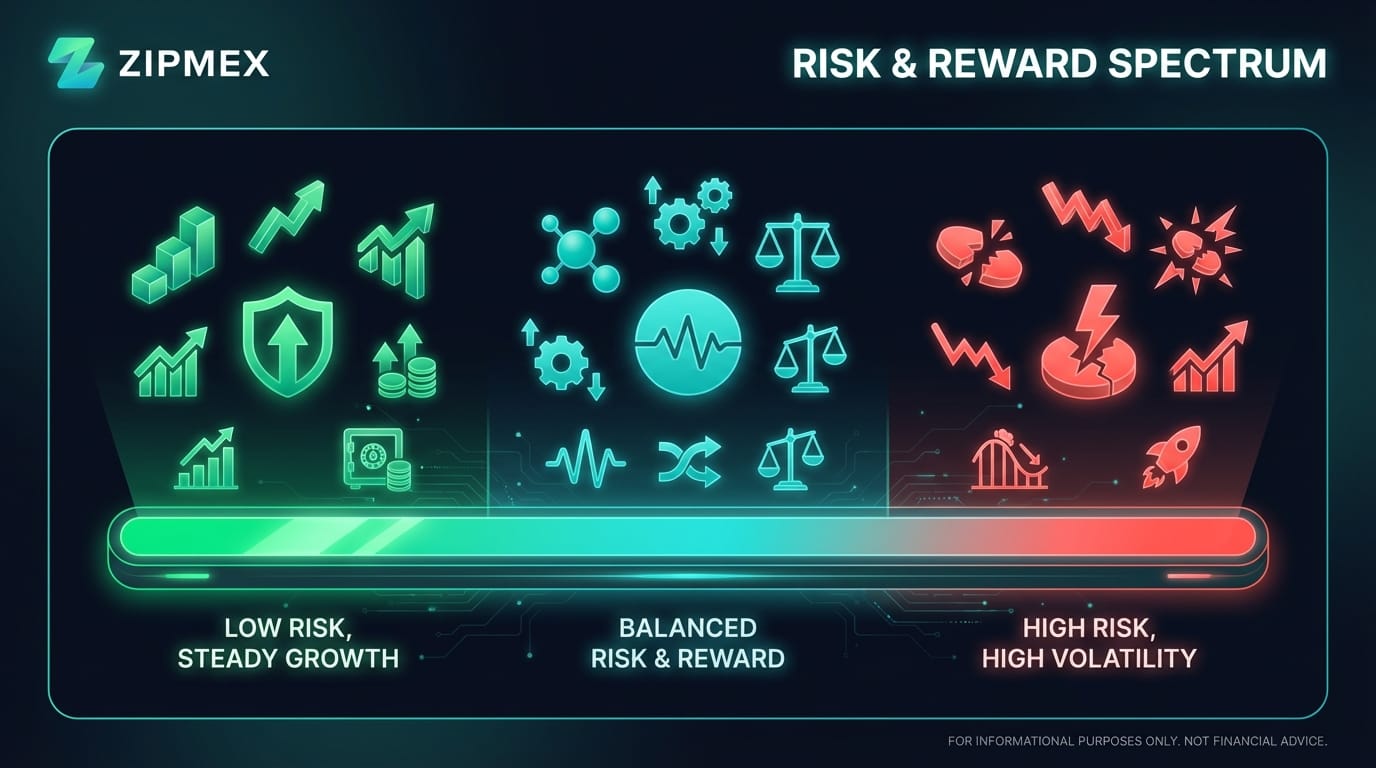
Here's a rough spectrum (Halal → Haram) of activities from most to least permissible under the broadest scholarly consensus:
Long-Term Holding (HODL) → Spot Buying → Short-Term Trading → Staking/Yield → Futures → Margin Trading
Spot Trading and Long-Term Holding - The Halal Case
Buying Bitcoin at spot price - paying cash, receiving Bitcoin immediately, owning it outright - avoids all three core prohibitions cleanly. There's no interest component (no Riba), no contractual uncertainty about what's being exchanged (Gharar is minimized), and if your purpose is investment rather than speculation, the Maysir argument doesn't hold.
The analogy to halal stock investing is the strongest one here. Buying and holding shares in a Shariah-compliant company is considered permissible - you're acquiring real ownership in a productive enterprise and bearing proportional risk. Buying and holding Bitcoin as a digital commodity follows the same logic under the permissibility scholars' framework: you're acquiring real ownership in a verifiable, scarce digital asset.
Long-term holding eliminates speculative intent by design. The niyyah (intention) behind an investment matters in Islamic finance, and an investor treating Bitcoin as a multi-year store of value is in different moral territory than one chasing daily price swings.
Futures, Margin Trading, and Day Trading - The Haram Case
These activities attract near-universal condemnation even from scholars who consider spot Bitcoin permissible:
Futures/Derivatives: A Bitcoin futures contract obligates you to buy or sell BTC at a fixed price on a future date - without necessarily owning the underlying asset. This structure contains Gharar (uncertain future obligation) and in many cases closely resembles Maysir (a bet on directional price movement). The International Islamic Fiqh Academy has consistently viewed derivative contracts with significant concern for exactly these reasons.
Margin/Leverage Trading: Borrowing capital to amplify your position introduces Riba the moment that loan carries an interest charge - which virtually all crypto margin products do, either explicitly (funding rates) or structurally. Trading with 10x or 50x leverage on a borrowed position that accrues funding fees is, under nearly all scholarly interpretations, combining Riba with Maysir. Even scholars who consider Bitcoin permissible draw the line here.
Day Trading/Scalping: Short-term speculation - entering and exiting positions within hours or days to capture price movements - with no underlying economic function is widely analogized to Maysir by scholars including Mufti Taqi Usmani. Consider this: if your profit comes entirely from other traders' losses in a zero-sum price game, the structure starts to resemble a wager. That's exactly what Maysir prohibits.
Is Bitcoin Mining Halal?
Mining sits in genuinely interesting territory. The halal argument is strong: miners expend real computational energy (real labor and capital) to validate a legitimate ledger and maintain network security. They earn newly issued Bitcoin as compensation for a real service. That's closer to halal ijara (service contract) than to speculation.
The complicating factor is environmental: massive energy consumption conflicts with Islamic stewardship principles (khalifah). The emerging scholarly position is that mining is permissible when conducted with renewable energy sources and for a legitimate, non-haram blockchain. Mining operations running on coal-powered grids face stronger objections under the environmental stewardship argument.
Red Flags - When Bitcoin and Crypto Are Clearly Haram
Regardless of which scholarly camp you follow, these activities are condemned across the board:
⚠ Universal Red Flags - Avoid These Regardless of Your Scholarly Interpretation
- Leverage/Margin Trading → Borrowed capital with interest charges = Riba violation
- Futures & Options → Derivative contracts with uncertain future obligations = Gharar + Maysir
- Yield Farming / Lending Protocols → Fixed-yield products that function as interest = Riba violation
- Memecoins & Zero-Utility Tokens → Assets with no underlying function, designed purely for speculation = Maysir embodied
- Proceeds from Haram Sources → Using gambling winnings, interest income, or haram business proceeds to buy crypto doesn't launder the source
- Illegal Activity → Crypto used for money laundering, sanctions evasion, or fraud is categorically prohibited under every interpretation
The "even the halal camp condemns these" framing isn't rhetorical - it's accurate. Scholars like Mufti Faraz Adam who consider Bitcoin spot investment permissible are equally clear that leverage products and derivative speculation fall outside Islamic law's boundaries.
How to Evaluate Any Crypto Asset for Shariah Compliance
The same way Islamic stock screening applies a sector exclusion + financial ratio methodology, you can run a structured Shariah compliance check on any cryptocurrency. Here's the framework:
📊 6-Point Shariah Compliance Checklist for Crypto
- Does the asset qualify as Mal? (Is it desirable, storable, and does it carry recognized economic value?)
- Is the activity free from Riba? (No interest-bearing products, no fixed-yield earning mechanisms on the position)
- Is Gharar minimized? (Are you buying a real asset at a known price, or speculating on unknown future obligations?)
- Is the activity free from Maysir? (Is there genuine economic purpose, or is this a zero-sum price bet?)
- Are the underlying use cases halal? (Does the blockchain or token fund any haram industries?)
- Is there qualified scholarly support? (Has a recognized Islamic finance scholar evaluated this asset class?)
Bitcoin clears criteria 1, 2, 5, and 6 under the permissibility scholars' framework when held as a long-term asset. Criteria 3 and 4 depend entirely on how you engage with it - which is why the activity-based breakdown in the previous section is the most actionable part of this analysis.
How to Invest in Bitcoin as a Muslim - A Practical Framework
For Muslim investors who've worked through the analysis and concluded that spot Bitcoin investment aligns with their scholarly interpretation, here's how to approach it practically.
⚡ 3 Pre-Investment Steps
- Identify which scholarly opinion you follow - and own that decision consciously
- Set a clear investment intention: store of value or medium of exchange, not speculative gain
- Choose a platform that enables spot buying without pushing leverage products by default
Step-by-Step: Starting a Halal Bitcoin Investment
- Establish your Islamic finance position. Consult a qualified Islamic finance scholar - ideally one familiar with crypto - before investing. This isn't formality; it's the most defensible first step you can take.
- Set halal intention (niyyah). Intention shapes the Islamic character of an act. Buying Bitcoin with a multi-year store-of-value mindset is categorically different from buying it to flip in 48 hours. Document your rationale if it helps you stay honest.
- Select a Shariah-compatible engagement model. Use spot purchase only - buy Bitcoin with cash you own outright, no borrowed capital, no margin.
- Avoid enabling haram product features. Most exchanges offer both spot and derivatives trading. Spot users can generally navigate conventional exchanges safely - the product use determines halal status, not the exchange's existence.
- Track your holdings for Zakat. If your Bitcoin holdings remain above the nisab threshold for a full lunar year, Zakat applies. Calculate annually.
Platforms and Features to Seek vs. Avoid
Zakat on Bitcoin - What Muslim Investors Need to Know
Zakat is obligatory on Bitcoin holdings above the nisab threshold (equivalent to approximately 85g of gold in current market value) that you've held for one full lunar year (hawl). The rate is 2.5% of the total market value at the end of the hawl period.
Multiple Islamic finance bodies, including Amanie Advisors and Islamic Finance Guru, have confirmed Zakat applies to Bitcoin as a form of Mal. There's actually a quiet elegance to this: the fact that Zakat is applicable to Bitcoin reinforces its classification as Mal. Zakat doesn't apply to non-assets. If the leading Islamic finance scholars are calculating Zakat on Bitcoin holdings, they're implicitly recognizing it as valid Islamic wealth.
Values are illustrative. Always use the actual BTC market price on your hawl date.
Halal Alternatives for Muslim Investors Concerned About Bitcoin's Risk Profile
Not every Muslim investor will be comfortable with Bitcoin's volatility or the ongoing scholarly debate around it. For those who prefer clearly established halal status, these alternatives offer that certainty:
For those who've decided spot Bitcoin fits their interpretation of Shariah, platforms built on self-custody and on-chain verifiability - where every transaction is independently auditable and no intermediary controls your funds - represent the architectural direction that aligns most naturally with Islamic finance's core emphasis on transparency and user accountability.
Conclusion - Is Bitcoin Halal? What Muslim Investors Should Take Away
Let me be direct: you won't find a definitive "Bitcoin is halal" or "Bitcoin is haram" verdict here, because one doesn't exist in mainstream Islamic scholarship. Anyone claiming otherwise is oversimplifying a genuinely nuanced jurisprudential debate.
What does exist is enough clarity to act thoughtfully:
Islamic finance scholarship on cryptocurrency is evolving rapidly. Regulatory frameworks in the UAE, Bahrain, and increasingly other Muslim-majority jurisdictions are creating more defined environments within which scholars can issue considered rulings. The 2026 landscape is meaningfully different from 2018, and the trajectory is toward greater clarity.
Whether Bitcoin is halal ultimately depends on your activity, your intention, and which scholarly position you find most compelling - not on a blanket ruling that doesn't currently exist.
Crypto trading and investing involve substantial risk of loss. Nothing in this article constitutes financial or religious advice. Consult a qualified Islamic finance scholar and a licensed financial professional before making any investment decisions.
Last updated: March 2026.
Frequently Asked Questions
Is bitcoin halal according to Islamic law?
There's no universal ruling - Islamic scholars are genuinely divided. The haram camp, which includes Egypt's Grand Mufti and Turkey's religious authority, argues Bitcoin's extreme volatility and speculative use constitute prohibited Gharar (excessive uncertainty). The permissibility camp, led by scholars like Mufti Faraz Adam, argues Bitcoin qualifies as Mal (valid Islamic wealth) and may be treated as a halal digital commodity. The most accurate answer: Bitcoin's halal status depends on both the scholarly tradition you follow and the specific activity you're engaging in.
Is investing in bitcoin halal for Muslims?
Spot investment - buying Bitcoin at market price, taking direct ownership, and holding it as a long-term asset - is considered permissible by a meaningful and growing body of Islamic scholars. The key conditions: no borrowed capital, no derivative products, no speculative short-term intent. The investment must be made with genuine intention (niyyah) as a store of value, not as a gambling-adjacent speculation. Muslim investors should note that leverage, futures, and yield-bearing products built on top of Bitcoin are widely considered haram even by pro-permissibility scholars.
What do Islamic scholars say about bitcoin being halal or haram?
Two clear camps have emerged. Scholars ruling it haram (Egypt's Dar al-Ifta, Turkey's Diyanet, Indonesia's MUI for currency use) point to Gharar from volatility, lack of intrinsic value, and illegal-activity risks. Scholars supporting permissibility (Mufti Faraz Adam, Mufti Muhammad Abu-Bakar, Daruloom Zakariyya) classify Bitcoin as a digital commodity that satisfies the Islamic definition of Mal. A third emerging position holds that Bitcoin as a currency is haram, but as a commodity held for investment, it's conditionally permissible - a middle ground gaining traction in Gulf scholarly circles.
Is bitcoin considered haram because of gharar (uncertainty)?
Gharar is the most cited basis for the haram ruling. The haram camp argues Bitcoin's price volatility represents exactly the kind of excessive, destabilizing uncertainty that Islamic finance prohibits. However, the permissibility camp draws an important distinction: Gharar as a prohibition targets contractual uncertainty - where you don't know what you're exchanging - not market price fluctuation, which all assets carry. By that logic, equities and commodities would also be haram. The Gharar argument is strongest when applied to Bitcoin derivatives and futures, where future obligations genuinely are uncertain.
Does bitcoin involve riba (interest), and does that make it haram?
Bitcoin itself doesn't generate or pay interest. Holding BTC involves no Riba. This is one of the clearest points in Bitcoin's favor under Islamic finance analysis. The Riba concern arises at the platform level: margin trading (funding rates), crypto lending protocols that pay fixed yields, and yield-farming products can all introduce interest-equivalent mechanisms. The distinction matters - you can hold and spot-trade Bitcoin while avoiding every Riba-adjacent product by simply not using leverage accounts or yield protocols.
Is bitcoin halal in the UAE?
The UAE has developed the most progressive regulatory framework for crypto in the Muslim world. The Abu Dhabi Global Market (ADGM) and Dubai's Virtual Asset Regulatory Authority (VARA) have established formal licensing regimes for crypto businesses. While a formal national fatwa specifically declaring Bitcoin halal hasn't been issued, the regulatory environment has created conditions that leading Gulf scholars are increasingly using as context for permissibility arguments. Several UAE-based Islamic finance advisors have issued conditional permissibility opinions for spot Bitcoin investment.
Do I have to pay Zakat on my bitcoin holdings?
Yes - if your Bitcoin holdings remain above the nisab threshold (currently equivalent to approximately 85g of gold, or roughly $5,800-6,200 depending on current gold prices) for a full lunar year (hawl), Zakat is due at 2.5% of market value. Multiple recognized Islamic finance bodies, including Amanie Advisors, have confirmed Zakat applies to Bitcoin as Mal. Calculate using the Bitcoin market price on the day your hawl completes.
What are halal alternatives to investing in bitcoin?
For Muslim investors who prefer established halal status with no scholarly debate: Islamic equity funds (Shariah-screened stock portfolios), Sukuk (real-asset-backed Islamic bonds), Islamic P2P crowdfunding platforms using Mudarabah or Musharakah contracts, physical gold, and Shariah-compliant real estate structures (Ijara or diminishing Musharakah) all offer clear permissibility with existing scholarly consensus. Each carries different risk and return profiles. None carry Bitcoin's price volatility - but none carry Bitcoin's upside potential either, which is a trade-off each investor must evaluate for themselves.