A Sepolia faucet is a free web tool that sends test ETH to your wallet on Ethereum's Sepolia testnet - no real money required, no risk to your mainnet funds. If you're getting into smart contract development or building your first dApp, this is where you start. I'll walk you through exactly what a Sepolia faucet is, how it works, which types exist, and how to use one safely - so you can get hands-on with Ethereum development without spending a cent.
⚡ Key Takeaways
- Sepolia faucets distribute free test ETH for the Ethereum Sepolia testnet
- Sepolia ETH has zero monetary value - it's strictly for development and testing
- No mainnet funds at risk: you're operating in a completely isolated test environment
- Sepolia is Ethereum's officially recommended testnet for 2026, replacing the deprecated Goerli
- Setting up takes under 5 minutes with MetaMask and a valid wallet address
What Is a Sepolia Faucet?
A Sepolia faucet is exactly what it sounds like: a tap that drips free Sepolia ETH into any wallet address you provide. That test ETH covers gas fees on the Sepolia testnet - the simulated Ethereum environment where developers deploy smart contracts, test dApps, and debug transaction logic before committing to mainnet.
Sepolia launched in October 2021 as a proof-of-authority network and later transitioned to proof-of-stake consensus, mirroring Ethereum mainnet's architecture. The critical point: Sepolia ETH carries no monetary value. It can't be sold, swapped for real assets, or moved to mainnet. Its only function is to power transactions in a sandboxed test environment - which is precisely why it's handed out for free.
Gas fees exist even on testnets because the network still needs to simulate real transaction costs. Every smart contract deployment, function call, and token transfer on Sepolia requires a small amount of test ETH. Faucets exist to remove that friction.
How Sepolia Faucets Work
The mechanics are straightforward:
- You submit your wallet address - paste your 0x Ethereum address into the faucet's input field
- The faucet runs an anti-spam check - depending on the provider, this could be a Google sign-in, an API key, or a requirement to hold a small amount of mainnet ETH (typically 0.001-0.002 ETH)
- Test ETH lands in your wallet - delivery usually takes anywhere from a few seconds to around 5 minutes depending on network conditions
Once received, you can verify the incoming transaction on Sepolia Etherscan. MetaMask should display the balance automatically - just confirm you're viewing the Sepolia network, not Ethereum mainnet.

Best Sepolia Faucets: Where to Get Free Sepolia ETH
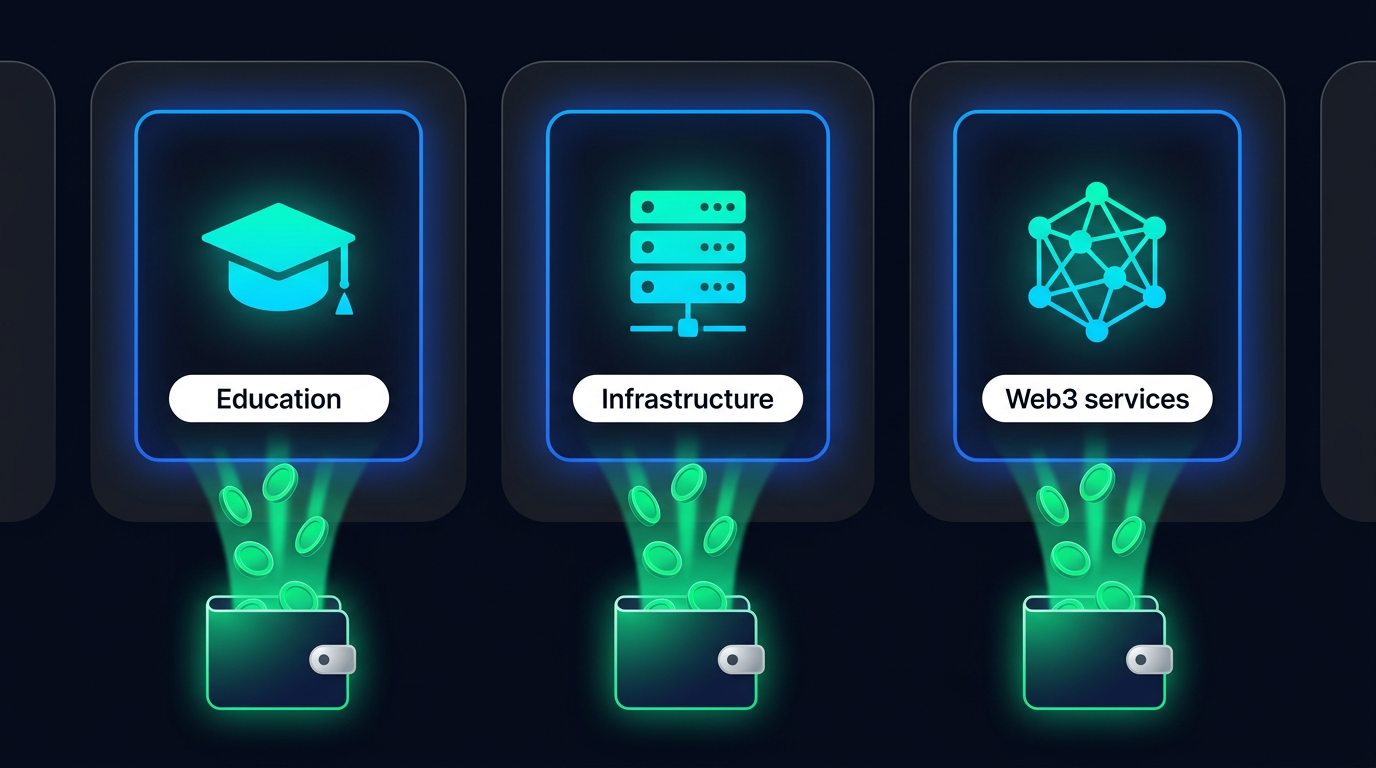
Not all Sepolia faucets are built the same. The type of faucet you should use depends on your situation - whether you're an absolute beginner who needs zero friction, or an active developer who wants larger daily amounts. There are three main categories:
- Education-platform faucets - built for learners, typically require only a Google sign-in or email verification, no mainnet ETH needed, daily amounts around 0.05-0.1 ETH
- RPC infrastructure faucets - offered by blockchain node providers, require account registration and an API key, but distribute larger amounts (up to 0.5 ETH per day)
- Web3 service faucets - integrated into broader developer ecosystems, often require holding a small mainnet ETH balance as a Sybil prevention measure, most developer-oriented
Sepolia Faucet Comparison Table
⚠ Note on Daily Limits
Daily limits and ETH amounts vary by provider and change over time. Always verify current terms directly on each faucet's website before relying on specific figures.
How to Use a Sepolia Faucet: Step-by-Step
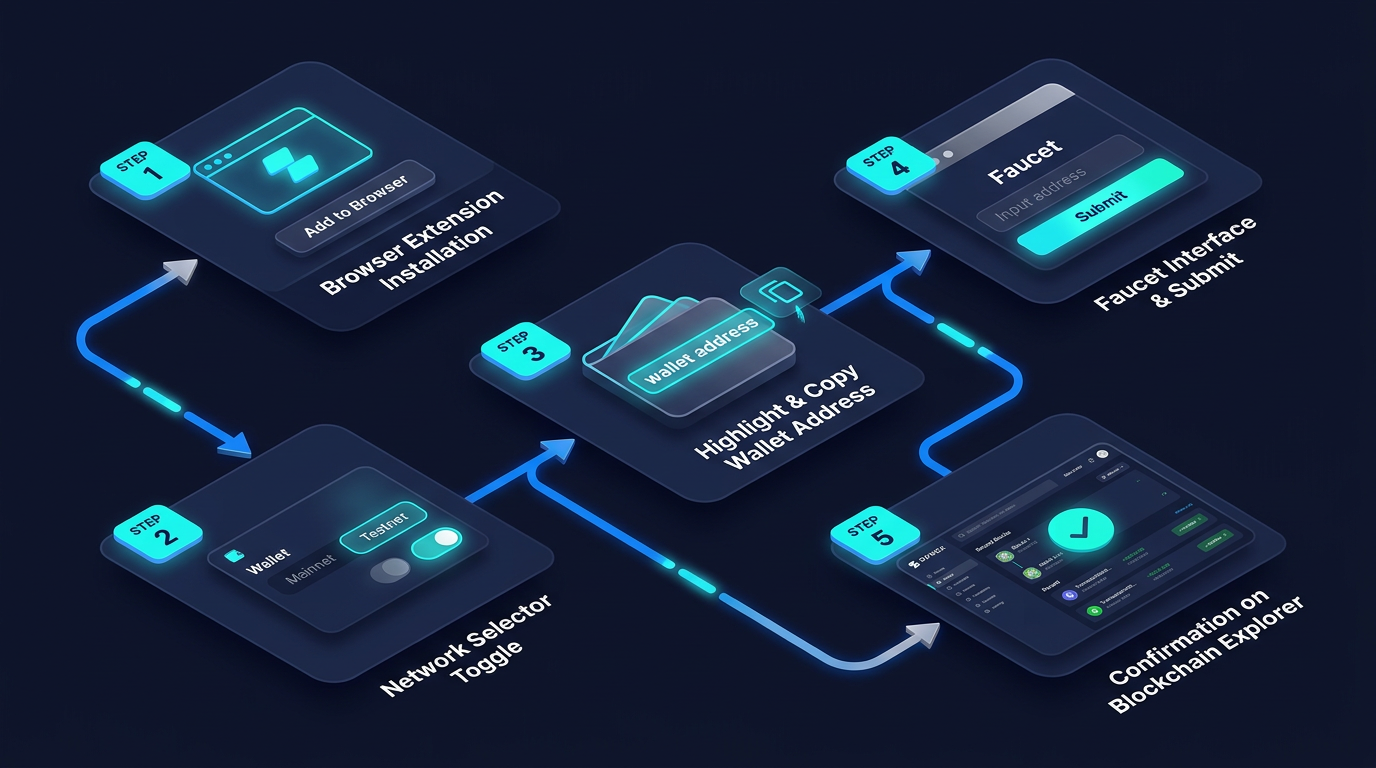
Getting your first test ETH takes under five minutes. Here's the full process:
1. Install MetaMask (or your preferred Ethereum wallet)
Download the MetaMask browser extension and create a new wallet. Store your seed phrase securely offline - never digitally.
2. Switch to the Sepolia Testnet
In MetaMask, open the network selector dropdown and choose "Sepolia Test Network." If it doesn't appear, enable "Show test networks" in MetaMask's settings.
⚠ Common Mistake
- Copying your address while on Ethereum Mainnet → your test ETH request won't appear on Sepolia. Always verify MetaMask shows "Sepolia" in the network header before proceeding.
3. Copy your Sepolia wallet address
Click your account name in MetaMask to copy the 0x address. This is your public address - sharing it is safe.
4. Visit a Sepolia faucet and submit your address
Paste your wallet address into the input field, complete any required verification (Google sign-in, API key, etc.), and click the request button.
5. Confirm receipt on Sepolia Etherscan
Open sepolia.etherscan.io, paste your wallet address, and you should see an incoming transaction within a few minutes. MetaMask should also update automatically.
Once you have test ETH, you can deploy Solidity contracts via Remix, test gas consumption, run dApp interactions, and build a full development workflow - all without touching real funds.
Why Sepolia? Understanding the Testnet Landscape
For years, Goerli was the go-to Ethereum testnet. It's now deprecated. Rinkeby is gone. Sepolia has emerged as the clear standard - and there are four concrete reasons why:
- Speed: Sepolia's smaller chain history means faster sync times and quicker transaction confirmations compared to legacy testnets
- Mainnet parity: Proof-of-stake consensus mirrors Ethereum mainnet behavior, so what works on Sepolia translates accurately to production
- No token cap: Unlike Goerli, Sepolia has no fixed token supply ceiling - reducing the faucet shortages that plagued Goerli in its final years
- Official support: Ethereum core developers and major infrastructure providers actively maintain Sepolia as the standard for 2026
If you've been using Goerli, migrate now. Sepolia is where the ecosystem has standardized.
Safety, Security & Best Practices for Sepolia Faucets
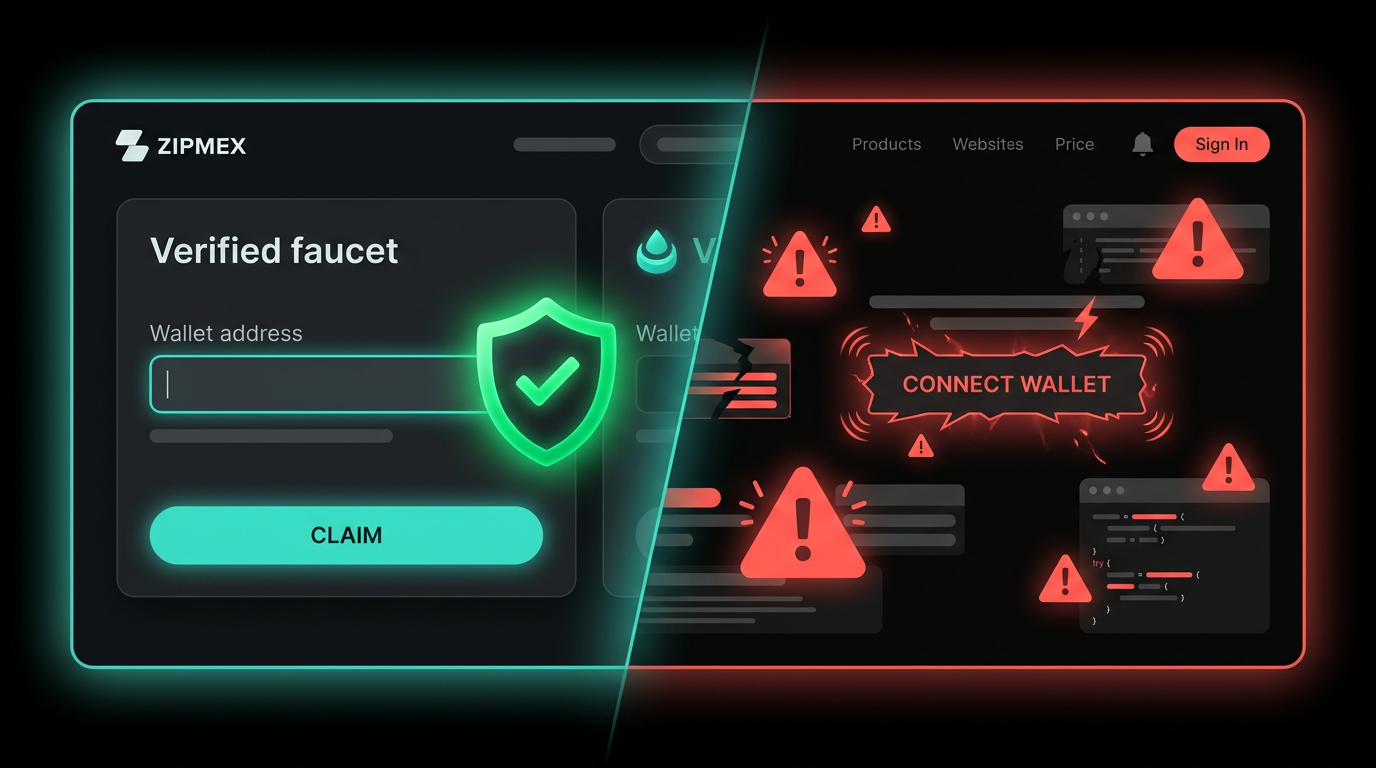
Here's the honest picture: using a legitimate Sepolia faucet carries essentially zero financial risk. Sepolia ETH has no value, so there's nothing to steal from the testnet side. The real risks are on the phishing side - fake faucet sites designed to steal your mainnet wallet.
✓ SAFE TO DO
- Submit your public 0x wallet address to a reputable faucet
- Complete OAuth sign-ins (Google, GitHub) for verification
- Use multiple faucets across cooldown periods
- Track transactions on Sepolia Etherscan
✕ NEVER DO
- Connect your mainnet wallet and approve a transaction to "receive" test ETH
- Enter your seed phrase or private key anywhere
- Use faucet sites without HTTPS
- Click a faucet link found via an ad - always navigate directly
The single biggest red flag: any faucet that asks you to connect your wallet and sign a transaction. Real faucets only need your public address. A wallet-connection prompt on a faucet site is a drainer, not a faucet.
A clean practice: keep a separate MetaMask wallet exclusively for testnet work. This completely isolates your development activity from any mainnet holdings. Learn more about secure crypto staking and wallet management to build good on-chain security habits from day one.
⚠ Risk Disclaimer
Crypto development involves real risk the moment you move to mainnet. Practice diligently on Sepolia before deploying contracts that handle real funds. Crypto trading and development involve substantial risk of loss and are not suitable for all users.
Start Building on Sepolia - The Testnet Is Ready When You Are
A Sepolia faucet hands you the keys to a full Ethereum development environment without putting a single dollar at stake. That's a genuinely powerful on-ramp into on-chain development.
My recommendation by user type:
- First-timers: Start with an education-platform faucet - zero friction, no API key required, you'll have test ETH in your wallet in under two minutes
- Active developers: Set up an RPC infrastructure faucet account for the higher daily amounts - the API key requirement is worth it
- Team projects: Use a Web3 service faucet; the Sybil protection via mainnet ETH balance is a reasonable tradeoff for reliable access
Platforms built on self-custody and on-chain verifiability - like Zipmex - reflect the same philosophy that makes Sepolia valuable: you control the experience, the outcomes are transparent, and there's no black box. Start on testnet, get comfortable with the mechanics, then bring that confidence to mainnet.
Last updated: March 2026.
Frequently Asked Questions
What is a Sepolia faucet?
A Sepolia faucet is a web tool that distributes free test ETH for use on Ethereum's Sepolia testnet. You submit your public wallet address, complete a basic anti-spam check (like a Google sign-in or API key), and the faucet sends a small amount of Sepolia ETH to your wallet - usually within a few minutes. That test ETH covers gas fees for deploying smart contracts, testing dApps, and running transactions on Sepolia. It has no real monetary value and can't be transferred to Ethereum mainnet or exchanged for real assets.
Is Sepolia ETH worth any real money?
No - Sepolia ETH has zero monetary value. It exists exclusively within the Sepolia testnet environment and cannot be bridged to Ethereum mainnet, traded on exchanges, or converted to any asset with real value. This is intentional by design: a valueless test token lets developers experiment freely without financial consequences. The Sepolia network simulates Ethereum's behavior - including gas fees, consensus mechanics, and smart contract execution - but everything that happens there is sandboxed. Think of it as a flight simulator: realistic enough to train on, no actual risk.
How much Sepolia ETH can I get from a faucet?
It depends on the faucet type. Education-platform faucets typically distribute 0.05-0.1 ETH every 24 hours - enough for dozens of test transactions and several smart contract deployments. RPC infrastructure faucets offer up to 0.5 ETH daily but require an API key. Most smart contract deployments consume between 0.001 and 0.01 ETH in gas on Sepolia, so even the smaller education faucets provide meaningful runway. If you need more test ETH between cooldown periods, claim from multiple faucets - there's no restriction against using more than one.
How do I add the Sepolia network to MetaMask?
Open MetaMask, click the network selector at the top, and look for "Sepolia Test Network" in the dropdown. If it's not visible, go to Settings → Advanced → scroll down and toggle on "Show test networks." Sepolia should then appear as a selectable option. Once connected, your wallet address is the same as your mainnet address - you're just operating on a different network. Confirm you're on Sepolia before copying your address for a faucet request. The wrong network is the most common reason test ETH appears to go missing.
Why isn't my Sepolia ETH showing up in my wallet?
The most common cause is being on the wrong network in MetaMask. Check that you're viewing "Sepolia Test Network" - not "Ethereum Mainnet." If the network is correct, wait 5-10 minutes; congestion occasionally slows delivery. You can verify the transaction status by pasting your wallet address into sepolia.etherscan.io - if the transaction appears there, your funds arrived successfully and MetaMask may just need a refresh. If the Etherscan transaction shows as pending for more than 15 minutes, try requesting again from an alternative faucet.
What is the Sepolia testnet used for?
Sepolia is Ethereum's primary testing environment for smart contract development. Developers use it to deploy Solidity contracts, test dApp functionality, simulate token transfers, verify gas cost estimates, and debug transaction logic - all before moving to Ethereum mainnet where real funds are at stake. Sepolia's proof-of-stake consensus mirrors mainnet behavior closely enough that code running correctly on Sepolia will typically behave identically in production. It's also widely used in developer bootcamps and educational programs as the hands-on environment for learning Solidity and on-chain development.
What's the difference between Sepolia and Goerli?
Goerli was Ethereum's primary developer testnet for several years before being deprecated in late 2023. Sepolia replaced it as the community standard. The key differences: Sepolia has no token supply cap (Goerli's capped supply caused persistent faucet shortages as demand grew), Sepolia syncs faster due to a smaller chain history, and Sepolia maintains active core developer support. Rinkeby, another legacy testnet, was similarly deprecated. If you're working from older tutorials referencing Goerli or Rinkeby, substitute Sepolia directly - the development workflow is essentially identical.