⚡ Quick Answer
The boiled frog theory describes how people fail to react to danger when change happens gradually - and in crypto, this cognitive blind spot is responsible for some of the biggest portfolio wipeouts on record. Investors who held LUNA through a 99.9% collapse, who ignored FTX's mounting red flags, or who watched their leveraged positions erode 80% without cutting losses - all became the boiled frog. Understanding this pattern is the first step to escaping it.
Every crypto investor has felt it: a coin starts drifting lower, margin calls inch closer, the project you believed in quietly stops updating its roadmap. Each day the water gets a little warmer. Each day feels manageable. Then one morning the position is gone.
This is the boiled frog theory in action - and it is one of the most dangerous cognitive patterns in financial markets. Unlike sudden crashes, which trigger immediate action, the gradual deterioration of a portfolio position can bypass every rational alarm system in the human brain. By the time the danger becomes undeniable, it is often too late to exit without catastrophic loss.
This guide explains what the boiled frog theory is, how it plays out across real crypto market events, and - most importantly - what you can do to make sure you are not the frog.

🐸 What Is the Boiled Frog Theory?
The Origin of the Metaphor
The boiled frog theory comes from a well-known metaphor - not a literal biological experiment. According to the Wikipedia entry on the boiling frog, the story goes that if you place a frog in cool water and slowly raise the temperature, the frog will fail to perceive the gradual danger and remain in the pot until it is too late. Drop it in already-boiling water, and it jumps out immediately.
Modern biology has confirmed that the story is not literally accurate - real frogs do attempt to escape when water becomes uncomfortable. But the metaphor has endured precisely because it is such an accurate description of how humans respond to gradual, incremental change. As Behavior Facts summarizes, the theory is "less about frogs and more about people - it warns of the dangers hidden in gradual change."
The metaphor appears in behavioral economics, organizational psychology, environmental science, and public policy. In 2026, it may be most relevant in a domain where gradual change can cause catastrophic financial harm: cryptocurrency markets.
Why It Mirrors Human Investor Psychology
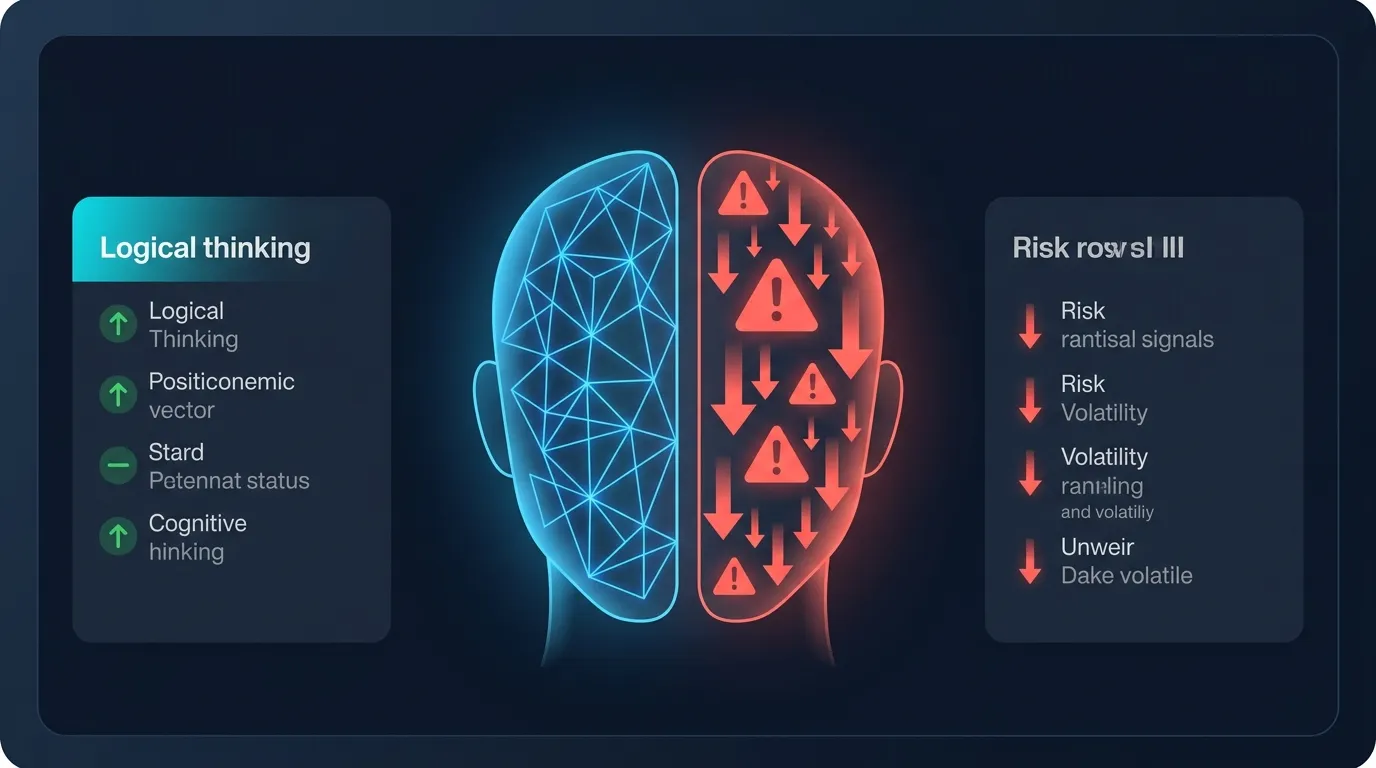
Human beings evolved to respond to sudden, dramatic threats - a predator leaping from the bushes, not a slow rise in carbon dioxide. Our brains are wired for what researchers call change blindness: the tendency to overlook differences that accumulate slowly over time.
In financial markets, this manifests as an investor's inability to recognize when a thesis has quietly broken down. The project that looked promising in January slowly posts fewer development updates, the token price gently slides, community activity fades. Each week's data point is a small change from the last. The investor adapts to each new "normal" - until the total change from the original position is enormous.
This is why the boiled frog theory is not just a metaphor for crypto investors. It is a behavioral finance framework that explains some of the costliest mistakes in modern portfolio management.
📉 Boiled Frog Theory in Crypto Trading
LUNA Collapse: A Textbook Boiled Frog Event
The May 2022 collapse of Terra's LUNA and UST tokens is the clearest illustration of the boiled frog theory in crypto history. At its peak in April 2022, LUNA traded above $119 with a market cap exceeding $40 billion. UST, the algorithmic stablecoin it supported, had over $18 billion in circulation.
The warning signs had been accumulating for months. The Terra ecosystem's yield product Anchor Protocol was offering 20% APY on UST - an unsustainable rate that required constant top-ups from the Luna Foundation Guard. On-chain analysts flagged the structural risk repeatedly. Yet the slow normalization of each red flag made inaction feel rational: "It's still paying 20%." "The team will fix this." "Everyone else is still in."
When UST lost its $1 peg on May 7, 2022, the frog finally felt the boiling water. Within 72 hours, LUNA had fallen from above $60 to fractions of a cent - a loss of over 99.9% of its value, according to CoinGecko. Investors who had normalized the mounting risks were left with virtually nothing.
⚠ Risk Warning
Unsustainably high yields (20%+ APY on stablecoins) are among the clearest early-warning signals for a boiled frog scenario. If the math does not add up, the temperature is already rising - even if nothing has broken yet.
FTX: When Red Flags Were Normalized
The collapse of FTX in November 2022 followed a remarkably similar pattern. Long before the exchange imploded, signals existed: Alameda Research's unusual balance sheet composition (reported by CoinDesk in November 2022), unusual withdrawal patterns, questions about FTT token backing. Each signal was contextualized, rationalized, or attributed to "FUD."
The Zipmex guide on spotting crypto scams identifies "too-good-to-be-true platforms with opaque operations" as a primary red flag - exactly the profile FTX presented to those who looked carefully. But gradual normalization had made the water feel warm rather than dangerous.
When the collapse came, FTX's implosion wiped out over $8 billion in customer assets, according to CoinDesk reporting on the subsequent legal proceedings.

🧠 The Psychology Behind the Pattern
Change Blindness and Crypto Markets
At the core of the boiled frog effect is a well-documented cognitive phenomenon: change blindness. Psychologists define it as the failure to notice visual or situational changes when they occur incrementally. In trading, change blindness means that a portfolio losing 2% per week for six months feels less alarming than losing 50% in a single day - even though the compounded outcome may be worse.
This is why the crypto investors most harmed by gradual declines are often the most experienced ones. They have seen volatility before. They know markets recover. Each week's small loss fits into a narrative of "normal crypto chop" rather than signaling a structural shift. As A Wealth of Common Sense notes in its analysis of the frog-in-pot phenomenon: investors react to the magnitude of price changes, not their absolute levels - making gradual deterioration almost invisible until it becomes dramatic.
Loss Aversion and Sunk Cost Fallacy
The boiled frog effect is amplified by two other cognitive biases that are particularly dangerous in volatile markets.
Loss aversion - the behavioral finance principle first described by Kahneman and Tversky - means that the psychological pain of a loss is roughly twice as powerful as the pleasure of an equivalent gain. This makes cutting a losing position feel disproportionately painful, causing investors to hold on through deterioration that rational analysis would demand they exit.
The sunk cost fallacy compounds this. The more capital an investor has already deployed into a declining position, the harder it becomes to exit - because doing so means accepting a loss on funds already spent. "I've already lost 40%, I might as well hold for the recovery" is a statement driven entirely by sunk cost thinking, not by any objective assessment of the asset's future prospects.
Together, these three forces - change blindness, loss aversion, and sunk cost fallacy - create the perfect psychological trap that the boiled frog metaphor describes. Understanding them is not just interesting psychology. It is a survival skill for anyone active in crypto markets. For a deeper look at how emotional patterns affect trading decisions, see the Zipmex analysis of crypto market navigation strategies for 2026.
🛡 How to Avoid Being the Boiled Frog
Set Hard Stop-Loss Rules Before You Enter
The most effective defense against the boiled frog effect is a pre-commitment mechanism: decide your exit condition before you are emotionally invested in the position. A hard stop-loss placed at the time of entry removes the psychological burden of making a loss-cutting decision under duress.
For volatile crypto assets, a widely cited framework is the 1-3% portfolio risk rule - never risk more than 1-3% of total portfolio value on a single trade. This means that even if a position goes to zero, the damage is contained. For leveraged positions specifically, data from the October 2026 liquidation cascade - where $19.16 billion was wiped out in under 24 hours, with 87% of liquidated positions being longs - underscores that leverage without pre-set stops is the fastest path to becoming the frog.
Use a Weekly Portfolio Audit Checklist
Beyond stop-losses, the second most powerful tool is a regular, structured portfolio review. This counters change blindness directly: by forcing yourself to compare your current position against objective entry criteria on a scheduled basis, you interrupt the gradual normalization process.
A simple weekly audit for each position might ask: Has the fundamental thesis changed since entry? Has the development activity declined? Have any of my original red-flag conditions been triggered? Has on-chain data shifted meaningfully?
This kind of systematic review is especially important for positions that have drifted from their original size due to market movements. As covered in the Zipmex guide to avoiding crypto scams, gradual warning signs - slowing updates, shifting team communications, unusual token movements - are detectable before they escalate, but only if you are looking for them.
📊 Boiled Frog Theory vs. Other Cognitive Biases
The boiled frog theory overlaps with - and is amplified by - several other well-documented behavioral finance patterns. Understanding how they interact helps you spot the compounded risk.
The FOMO bias and the boiled frog effect often appear together in a dangerous cycle: FOMO drives entry near the top of a rally, and the boiled frog effect prevents exit as the position gradually deteriorates. The rug pull dynamic follows the same structural pattern - scammers deliberately construct the gradual normalization of hype to keep investors in the water until the moment of the pull.
❓ Frequently Asked Questions
What is the boiled frog theory in simple terms?
The boiled frog theory is a metaphor describing how people fail to react to danger when it appears gradually. Just as a frog placed in slowly heated water may not notice the rising temperature until it is too late, investors can fail to recognize a deteriorating position when losses accumulate incrementally rather than all at once.
How does the boiled frog theory apply to crypto?
In crypto, the boiled frog theory explains why investors hold losing positions through months of warning signs - like LUNA holders in early 2022 or FTX users before the exchange's collapse. Gradual decline triggers the brain's adaptation response rather than its alarm response, making each new "normal" feel acceptable until the cumulative loss becomes catastrophic.
Is the boiling frog story scientifically accurate?
No. Modern biology confirms that real frogs do attempt to escape when water becomes uncomfortably warm. However, the metaphor accurately describes a well-documented human psychological tendency - change blindness - which is why it has endured as a concept in behavioral economics, psychology, and finance.
What is the best way to protect against the boiled frog effect in trading?
The most effective tools are: (1) pre-set stop-loss orders placed at the time of entry, before emotional attachment forms; (2) a regular weekly portfolio audit against your original thesis; and (3) position sizing rules that limit total portfolio exposure to any single asset to 1-3%, capping the maximum damage a boiled frog scenario can cause.
How is the boiled frog theory different from loss aversion?
Loss aversion describes the asymmetric pain of losses relative to gains - the unwillingness to accept a loss even when it is the rational choice. The boiled frog effect describes the failure to perceive that a loss is occurring in the first place. In practice, they compound each other: you do not notice the deterioration (boiled frog), and when you finally do, you cannot bring yourself to exit (loss aversion).
🏁 Conclusion
The boiled frog theory is not a curiosity from behavioral psychology - it is one of the most accurate descriptions of how real money gets lost in crypto markets. The LUNA collapse, the FTX implosion, and the $19.16 billion liquidation event of October 2026 all share the same structural fingerprint: warning signs that were present but normalized, red flags that accumulated without triggering action, and catastrophic outcomes that felt sudden despite building for months.
The good news is that recognizing the pattern is the first step to escaping it. Pre-set your exits before you enter. Review your positions on a schedule, not on a feeling. Limit position size so that no single boiled frog event can end your participation in the market. And remember: the frog that survives is not the one that tolerates the highest temperature - it is the one that jumps out early.
For more on how to position yourself through the current 2026 market cycle, see the Zipmex strategy guide for navigating crypto in 2026.
⚠ Disclaimer: The information provided in this article is not intended to provide investment or financial advice. Investment decisions should be based on the individual's financial needs, objectives, and risk profile. We encourage readers to understand the assets and risks before making any investment entirely. Cryptocurrency investments are subject to high market risk. Past performance does not guarantee future results.
ZIPMEX promotes trading on trade.zipmex.com. Promotions are labelled and kept separate from news coverage, which is selected and checked without regard to them. Perpetual futures are leveraged derivatives. Prices can move fast and you can lose all of your margin. Not available in every jurisdiction. Not investment advice.