If you've been playing Minecraft for years and started wondering whether there's a version where your builds actually earn you something - The Sandbox is the answer you've been looking for. It's a voxel-based, blockchain-powered metaverse that mirrors Minecraft's creative freedom almost pixel for pixel, then layers on true digital ownership, a live token economy, and real earning potential. The Sandbox as a Minecraft alternative isn't just hype - it's a fundamentally different ownership model wrapped in a familiar creative shell.
⚡ Key Takeaways
- The Sandbox is a Web3 voxel game built on Ethereum - the blockchain equivalent of Minecraft's creative mode, with real on-chain ownership of everything you build
- Core tokens: SAND (currency and governance), LAND (virtual real estate, capped at 166,464 plots), and ASSETs (NFT items and creations)
- Three free creator tools - VoxEdit, Game Maker, and the Marketplace - let you build, publish, and monetize without coding skills
- You can start exploring The Sandbox for free; buying LAND or ASSETs requires SAND tokens from a crypto exchange
- Best for: creative builders who want to monetize their work, crypto-native gamers, and DeFi users exploring on-chain gaming
What Is The Sandbox? The Minecraft Alternative Built on Blockchain
At its core, The Sandbox is a decentralized virtual world where users create, own, and monetize gaming experiences - all verified on-chain. Think Minecraft's voxel aesthetic and unlimited creative building, then imagine that every plot of land, every item you craft, and every game you build is an NFT that you genuinely own. Not licensed. Not "yours" until the company decides otherwise. Actually yours, recorded on the Ethereum blockchain.
The comparison to Minecraft isn't coincidental. Pixowl, the studio behind The Sandbox, explicitly positioned the platform as a Web3 answer to Minecraft from day one. Both games use block-based (voxel) graphics, both are driven by user-generated content, and both have built massive communities around creation rather than competition. The difference is ownership - and that difference is everything in 2026.
Pixowl launched The Sandbox as a mobile game back in 2011. After accumulating over 40 million downloads across iOS and Android, Animoca Brands acquired Pixowl in 2018 and pivoted the franchise to blockchain. The full Web3 version launched in November 2021, bringing the platform's creative community onto a decentralized foundation.
How The Sandbox Compares to Minecraft: Key Similarities and Differences
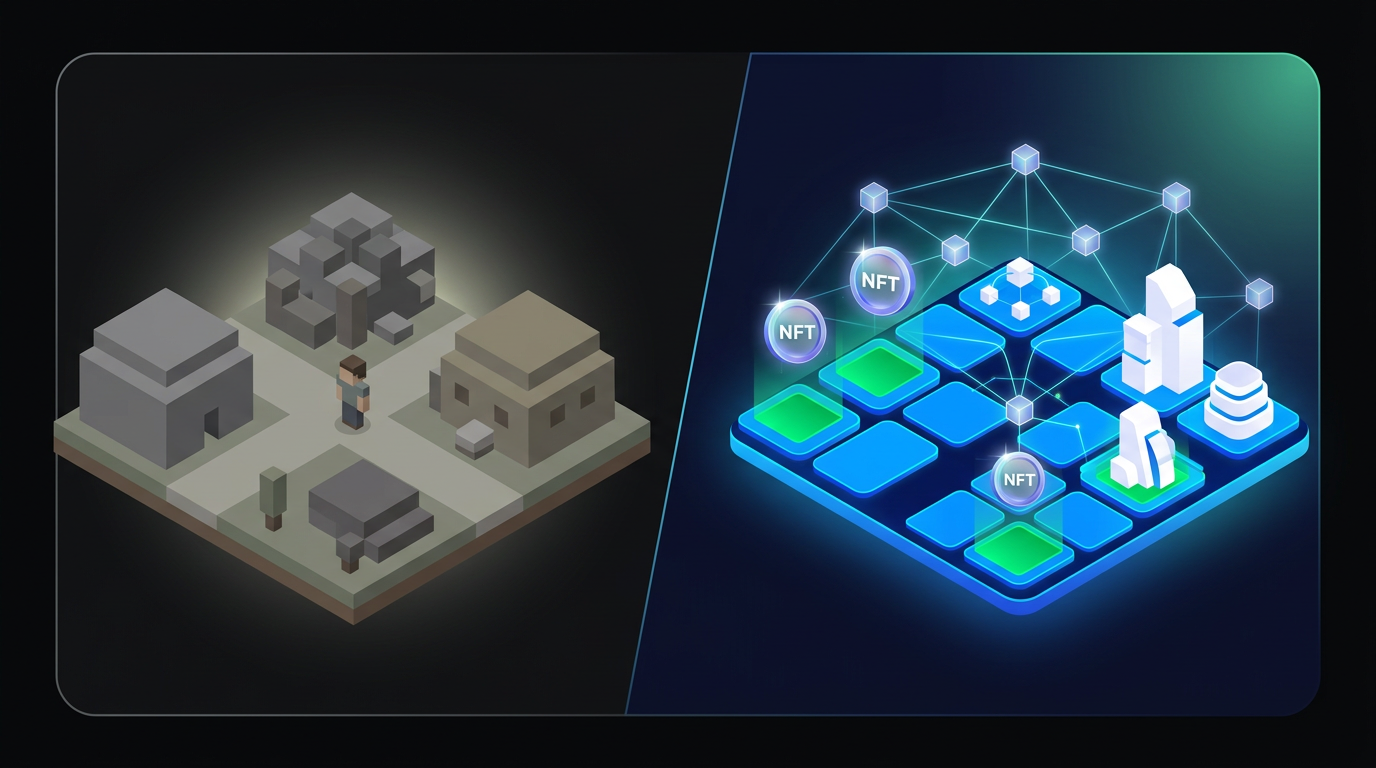
The similarities are real: both platforms run on voxel graphics, both give players unlimited creative freedom, and both are built around user-generated content ecosystems. That's where the common ground ends.
The pivotal moment came in July 2022, when Minecraft's owner Microsoft officially banned all blockchain technology - NFTs especially - from the platform. Projects like NFT Worlds that had built Minecraft-based blockchain experiences found themselves without a foundation overnight. The Sandbox, already established, absorbed a significant wave of creators who wanted the Minecraft experience with blockchain ownership attached.
On-chain verification means you can independently confirm ownership of any LAND or ASSET on the Ethereum blockchain - no need to trust the platform's internal database. That's a fundamentally different trust model than anything a centralized game can offer.
The History of The Sandbox: From Mobile Game to Web3 Metaverse
The timeline matters because it explains why The Sandbox has real staying power where many blockchain gaming projects failed. You can also explore The Sandbox in the context of broader blockchain gaming history to see how the landscape evolved.
THE SANDBOX - PLATFORM TIMELINE
2011
Pixowl launches The Sandbox as a mobile game for iOS and Android, positioning it as a competitor to Minecraft.
2016
The Sandbox Evolution launches, expanding the mobile experience. Combined downloads pass 40 million across both titles.
2018
Animoca Brands acquires Pixowl and begins the blockchain pivot. The established community gives the project something most crypto games lack: real users before any token existed.
2021 - Web3 Launch
The full Web3 version launches in November, introducing LAND sales, SAND token, VoxEdit and the Game Maker toolset.
2022 - Minecraft NFT Ban
Microsoft bans NFTs from Minecraft. The Sandbox absorbs a wave of displaced blockchain gaming creators and establishes itself as the definitive Web3 alternative.
That foundation - a decade of mobile gaming experience, a real user base, and institutional backing from Animoca Brands - is why co-founders Arthur Madrid (CEO) and Sebastien Borget (COO) could attract partners like Warner Music Group, Snoop Dogg, and Samsung to the platform.
The Three Core Tools: VoxEdit, Game Maker, and the Marketplace
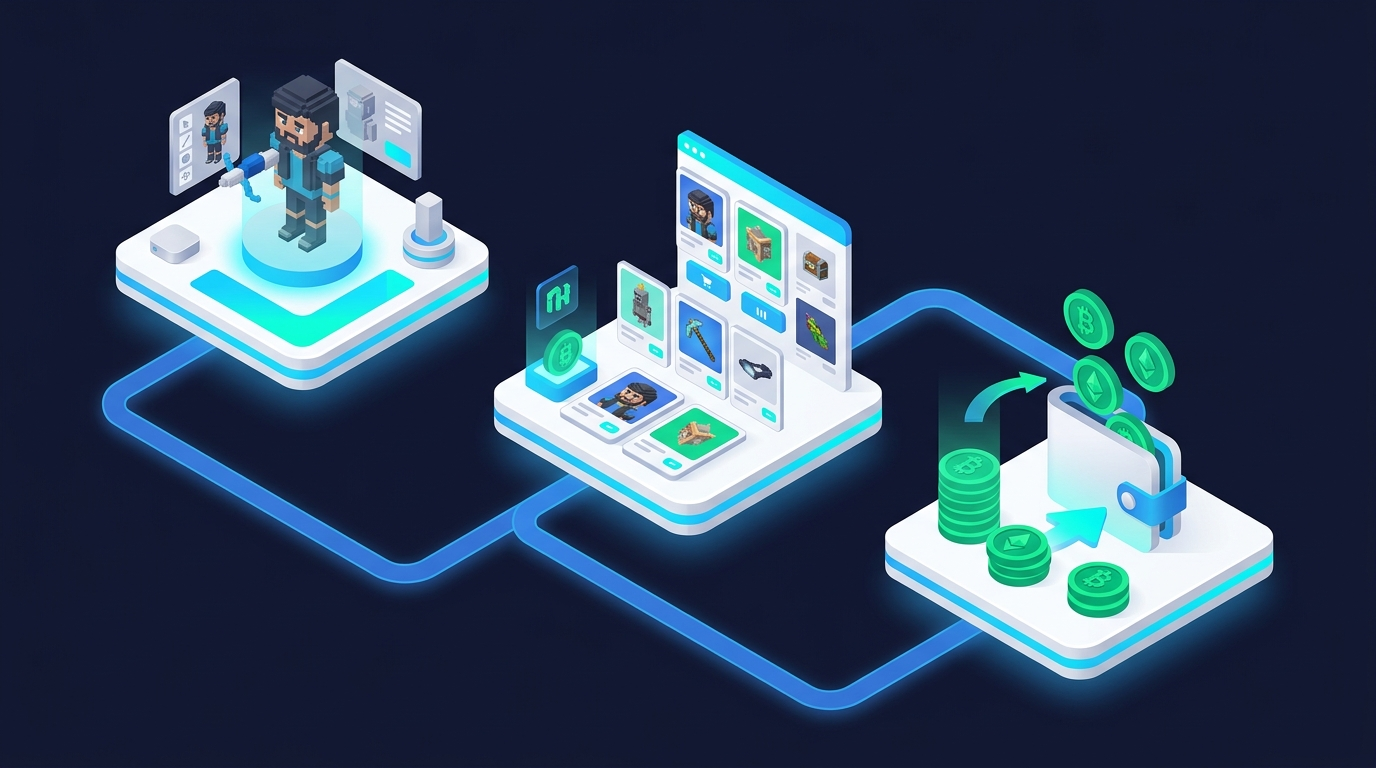
Three integrated products form the complete creator pipeline in The Sandbox. Understanding how they connect is what separates players who just explore from creators who actually earn. The pipeline works in one direction: Build → Publish → Earn - and every step is free to start.
VoxEdit - Build Like Minecraft, Own Like a Creator
VoxEdit is The Sandbox's free 3D modeling and animation tool, available on both Windows and Mac. Players use it to create voxel models - characters, weapons, animals, furniture, environmental props, you name it - then rig and animate them for in-game use.
Here's the Minecraft parallel: where Minecraft players build structures inside the game, VoxEdit players build standalone objects they can export and sell as NFT ASSETs. Create a dragon character, animate its flight sequence, export it to the Marketplace. Someone buys it for use in their game. You earn SAND. That's the loop.
The finished models are uploaded to IPFS for decentralized storage and recorded on the Ethereum blockchain to prove ownership. From that point, they become tradeable ASSETs - semi-fungible tokens using the ERC-1155 standard - that any player can buy and use in their own games or experiences.
Game Maker - Create Experiences Without Coding
Game Maker is where LAND comes to life. It's a no-code visual editor for building 3D games and interactive experiences on your LAND plots - no programming knowledge required. The Sandbox's Game Maker is closer to Minecraft's Redstone mechanics conceptually, but the output is dramatically more sophisticated: you can build racing games, fighting arenas, adventure quests, virtual galleries, or immersive social spaces.
Games and experiences built in Game Maker can charge other players for access. The catalog of brand-created games on the platform - from adventure games to music venues to virtual theme parks - demonstrates what the tool is capable of at scale.
Once you've built your experience, it lives on your LAND. Which brings us to the token economy that makes all of this possible.
Understanding SAND, LAND, and ASSETs: The Token Economy Explained
Three tokens run The Sandbox economy. Each has a specific role, a specific technical standard, and a specific relationship to the others. For a broader look at how NFT games use token economies, the mechanics here follow the same foundational model.
SAND is the native utility token. Every transaction on the platform - buying LAND, purchasing ASSETs, accessing token-gated experiences - runs through SAND. Beyond transactions, holding SAND gives you governance rights: SAND holders vote on platform decisions through The Sandbox's DAO structure. There's also a staking mechanism, though yields vary based on pool activity.
LAND is the most fundamentally scarce asset in The Sandbox. Only 166,464 plots will ever exist - each one a 96.96-meter NFT on Ethereum. Think of it as server real estate in Minecraft terms, except the ownership record is on-chain and immutable. Adjacent LANDs can be combined into ESTATEs: a 3.3 creates a small ESTATE, 6.6 a medium, 12.12 a large, 24.24 an X-Large. Groups of players can co-own an ESTATE and form a DISTRICT.
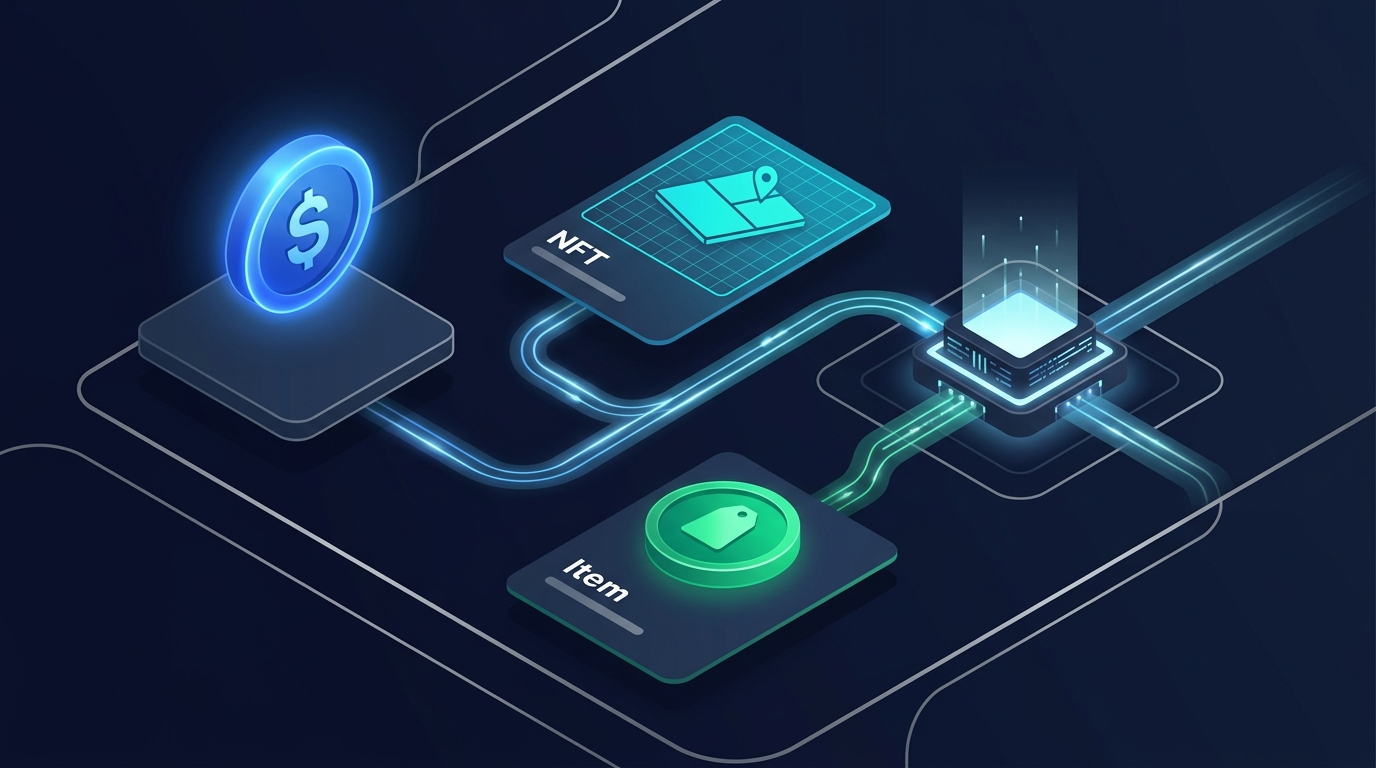
ASSETs are the items, characters, and props players create through VoxEdit. They're semi-fungible ERC-1155 tokens, meaning the same ASSET design can have multiple copies - each traceable and tradeable. Gems and Catalysts are supporting token types that determine an ASSET's attributes and rarity: Power, Defence, Speed, Magic, and Luck stats define what a creation can do in-game, while Catalyst quality determines how many stat slots it has.
LAND - The Finite Virtual Real Estate of The Sandbox
LAND scarcity is the central value proposition for anyone approaching The Sandbox as more than a game. With a hard cap of 166,464 plots ever, location and development quality drive value - similar to how server populations drove the value of good Minecraft plots, but with actual on-chain ownership records.
LAND goes on sale in waves on The Sandbox's official marketplace, typically announced weeks in advance. Missing a primary sale isn't the end - OpenSea hosts active secondary market trading for LAND at various price points. The official Sandbox map shows which LAND is owned, what's been built on it, and - critically - what's adjacent to high-traffic brand parcels. Proximity to major brand LAND (a music venue, a major IP's headquarters) drives significant visitor traffic to neighboring plots.
The 2021-2022 era was dominated by speculative LAND purchases at inflated prices. The current phase is different: the value conversation has shifted from "buy LAND and flip it" to "build something people visit." Co-founder Sébastien Borget has been explicit about this shift - the platform's future runs on content creation, not land speculation.
How to Get Started in The Sandbox: A Step-by-Step Guide for Minecraft Players
You don't need to buy anything to start. That's worth repeating: The Sandbox has a meaningful free tier, and Minecraft players accustomed to a one-time purchase model can explore the platform before spending a single dollar. Here's the full onboarding path:
- Set up a crypto wallet (MetaMask recommended) - MetaMask is a browser extension and mobile app that acts as your on-chain identity. Install it at metamask.io, create a wallet, and securely store your seed phrase. This is the equivalent of creating a Minecraft account, except you own the wallet completely - no platform controls it.
- Acquire SAND tokens if you plan to transact - For pure exploration, you don't need SAND yet. When ready, SAND is available on major exchanges including Binance, Coinbase, and Uniswap. Transfer purchased SAND to your MetaMask wallet.
- Connect your wallet to The Sandbox - Visit sandbox.game, click "Connect Wallet," and link your MetaMask. Your wallet address becomes your platform identity.
- Download VoxEdit (free) - Available for Windows and Mac at sandbox.game/en/create/voxedit/. Start building voxel models. No LAND required - you're building portable ASSETs that exist independently of any plot.
- Explore the map and free experiences - The Sandbox's interactive map shows all LAND and the experiences built on it. Many experiences are free to visit. Spend time here to understand what good content looks like before you build.
- Optionally purchase LAND - When you're ready to publish games and experiences publicly, you'll need LAND. Check upcoming LAND sale announcements on The Sandbox's official channels, or browse OpenSea for secondary market options.
The learning curve for a Minecraft player is primarily crypto-related, not gaming-related. The building mechanics feel familiar fast. The wallet setup, gas fees, and token mechanics are where most players need the most time.
How to Evaluate The Sandbox as a Minecraft Alternative: What to Consider
The question isn't really "is The Sandbox better than Minecraft?" - they serve overlapping but distinct audiences. The real question is: what does The Sandbox add that Minecraft structurally cannot offer?
Digital ownership is The Sandbox's structural advantage - and it's not a small one. In Minecraft, your creations exist at Microsoft's discretion. Server closures, policy changes, or account bans can erase years of work. In The Sandbox, your LAND and ASSETs are on-chain NFTs. If Pixowl shut down tomorrow, your ownership record would still exist on Ethereum.
The real risk to weigh is SAND token volatility. Your earnings from ASSET sales or game revenue are denominated in SAND - and SAND, like all cryptocurrency, moves dramatically with market conditions. A great month of in-game earnings can be worth significantly less in fiat if the token drops before you sell. This isn't a problem unique to The Sandbox, but any honest evaluation has to name it.
⚠ Risk Disclosure
- Token volatility → The value of SAND, LAND, and ASSETs can decrease significantly with market conditions
- No guaranteed returns → Crypto and DeFi participation involve substantial risk of loss
- Assess your risk tolerance → Do not commit capital you cannot afford to lose to any blockchain gaming platform
Free vs. Paid vs. Premium Experience: Business Models in The Sandbox
Three participation tiers exist, and understanding them helps Minecraft players find their entry point:
The free tier is genuinely useful, not just a trial. Exploring existing experiences, learning the toolset, and building a VoxEdit portfolio before spending anything is a legitimate strategy. Many successful ASSET creators built their reputation on the Marketplace before ever touching LAND.
Creators can earn SAND without owning LAND - through ASSET sales alone. This is an important distinction for players who want Minecraft-equivalent access without upfront land investment.
Red Flags and Risks: What Minecraft Players Should Know Before Switching
Honest coverage of The Sandbox means addressing what can go wrong. The platform has genuine strengths, but entering without understanding the risks leads to poor decisions. Here are the five areas where players get burned:
⚠ Five Risk Areas to Understand Before Entering The Sandbox
- Token Volatility → SAND price fluctuates dramatically with market cycles. LAND and ASSET values are denominated in SAND - a strong quarter of building can be worth significantly less in fiat if the token drops before you sell. Budget only what you can afford to lose.
- Wallet and Crypto Learning Curve → MetaMask, gas fees, seed phrase security, smart contract approvals - none of this is intuitive for players who've never held cryptocurrency. Rushing this setup leads to costly mistakes.
- Platform Dependency Risk → The Sandbox runs on Animoca Brands' ecosystem. If funding shifts or the development roadmap changes, platform activity can slow significantly. On-chain ownership of your NFTs persists, but their value is tightly coupled to platform health.
- Speculative LAND Market Legacy → LAND prices during 2021-2022 were driven by speculative fever, not utility. Research LAND location, traffic data, and development history before any purchase.
- NFT Scam Risk → Phishing sites mimicking The Sandbox's official marketplace are common. Always verify you're on the official sandbox.game domain. Never approve wallet transactions from unfamiliar smart contracts.
These risks apply to blockchain gaming broadly, not only to The Sandbox. Understanding them doesn't mean avoiding the platform - it means entering with the right expectations.
How to Use The Sandbox Like a Pro: Strategies for Minecraft Players
The Sandbox isn't just an alternative to Minecraft - it's a different kind of platform that rewards strategic thinking alongside creative skill. Here's how experienced players approach it.
Think of ASSET creation like selling items in a Minecraft economy server, but the currency is actual cryptocurrency and the marketplace is global. A well-crafted animated character that fills a gap in the Marketplace - say, a specific style of avatar or a prop type nobody has built yet - can generate passive SAND income for months. The skill ceiling matters here: players who put real craft into VoxEdit creations outperform those who churn out low-effort models.
For game creation, traffic is everything. Games built near high-traffic brand LAND (Snoop Dogg's neighborhood, a major IP's headquarters, a branded concert venue) get visitor spillover. Planning LAND location before purchasing - not just affordability - is how serious creators approach the investment.
Earning Strategies: ASSET Sales, Game Revenue, and LAND Monetization
Three distinct earning models exist, each with a different risk/reward profile:
ASSET Creator Model - Build and sell voxel models through the Marketplace. No LAND required. Your earning potential is purely skill-based: the quality, originality, and demand for your creations determines your SAND income. This is the lowest barrier to entry and the most Minecraft-adjacent - you build, and someone buys what you built. Top-tier ASSET creators report consistent Marketplace income, though actual SAND earnings depend on market conditions at time of sale.
Game Host Model - Build a compelling experience in Game Maker on your LAND, charge for access, and earn from player traffic. This requires owning LAND (upfront cost) and investing significant time in quality game design. The upside: a popular game generates recurring SAND income without ongoing effort once built. Think of it as building a server in Minecraft except you own the infrastructure and pocket the revenue directly.
LAND Owner/Landlord Model - Purchase LAND in strategic locations, develop it partially or fully, then rent it to other creators or sell it at appreciation. This is the highest-capital model with the most volatile return profile. Location selection - proximity to brand LAND, major experience hubs, and high-traffic areas - determines value far more than raw square meterage.
All three models generate SAND earnings. All three are subject to SAND price fluctuation. Diversifying across creator work and LAND development is how experienced players manage platform-specific risk.
Alternatives to The Sandbox for Minecraft Players
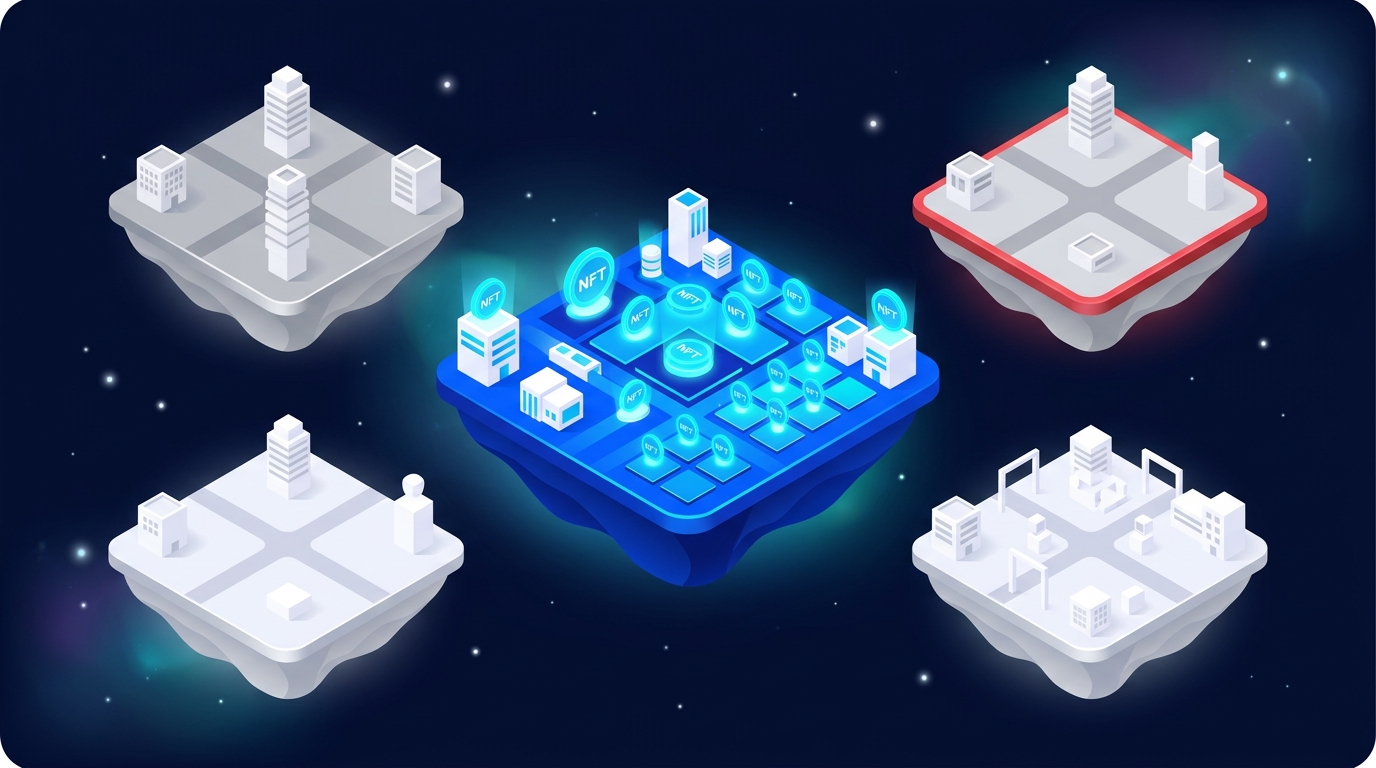
A fair evaluation includes what you might choose instead. For a deeper look at the top NFT marketplaces where these assets trade, the ecosystem context helps explain each platform's positioning.
Decentraland (MANA) is The Sandbox's closest competitor in the blockchain metaverse space. It's less game-focused and more oriented toward virtual events, art exhibitions, and social spaces. If your primary interest is attending virtual concerts and galleries rather than building games, Decentraland may suit you better. Creative freedom is lower - the toolset is less developed than VoxEdit/Game Maker.
Roblox is the most Minecraft-adjacent in terms of game mechanics and community demographics, but it's entirely centralized - no blockchain, no NFTs, no on-chain ownership. Creator earnings go through Robux, a platform-controlled currency that requires a payout process with its own restrictions. For a Minecraft player interested in pure game creation without the crypto layer, Roblox is legitimate. For anyone seeking digital ownership and on-chain earnings, it's not comparable.
NFT Worlds is worth mentioning specifically because it was the most direct Minecraft-blockchain hybrid that existed - games built within actual Minecraft servers. Microsoft's July 2022 NFT ban terminated that project's foundation. It's no longer operational as originally designed. It serves as a reminder of platform dependency risk when your blockchain product is built on someone else's centralized game.
Axie Infinity pioneered play-to-earn in the mainstream but is fundamentally a structured combat/breeding game, not a sandbox creator platform. The comparison is more about blockchain gaming broadly than Minecraft alternatives specifically.
For a Minecraft player specifically seeking creative freedom with on-chain ownership and earning potential, The Sandbox remains the strongest available option in 2026. No other platform combines the voxel building aesthetic, the creator toolset depth, and the active NFT economy at the same scale.
Conclusion: Is The Sandbox the Right Minecraft Alternative for You?
The answer depends entirely on what you want from a game.
The Creative Builder - If you love Minecraft for the building mechanics and want your work to have actual value beyond the game, The Sandbox delivers. VoxEdit gives you a professional-grade tool that Minecraft's in-game building can't match for exportable, sellable assets. The earning model is real, the ownership is genuine, and the community of creators is active.
The Gamer - If Minecraft holds you for the gameplay experience - survival, combat, exploration, community servers - The Sandbox's game library is still growing and doesn't yet match Minecraft's depth or volume. Worth supplementing your gaming diet with, not replacing it.
The Crypto-Native Investor - LAND and ASSET investment in The Sandbox offers real on-chain exposure to the gaming metaverse sector. The risk profile is genuine: SAND price volatility, platform health, and market cycles all affect returns. Enter with capital you can hold through a full market cycle, not money you need back next quarter.
The Newcomer - The free tier is genuinely accessible. Start by exploring experiences, downloading VoxEdit, and learning the tools before spending anything. The wallet setup has a learning curve, but it's one-time friction. Once you're on-chain, the ecosystem opens up considerably.
The broader trajectory of gaming is moving toward player-owned economies and verifiable digital assets. Platforms built on self-custody principles - where on-chain verifiability means users control their assets without platform intermediaries - represent where the industry is heading. The Sandbox was early to that model, and the shift Sébastien Borget described at GITEX 2023 toward content creation over land speculation signals a platform maturing into its long-term form. For players who want to understand the full on-chain landscape beyond gaming, exploring how NFT projects have evolved provides useful context for where the Sandbox economy sits in the broader ecosystem.
Crypto and blockchain gaming involve substantial risk of loss. The value of SAND tokens, LAND NFTs, and in-game ASSETs can decrease significantly. Nothing in this article constitutes financial advice. Assess your own risk tolerance before participating in any blockchain gaming platform or purchasing any cryptocurrency.
Last updated: April 2026.
Frequently Asked Questions
What is The Sandbox and how is it related to Minecraft?
The Sandbox is a blockchain-based virtual world built on Ethereum where players create, own, and monetize gaming experiences using voxel (cube-based) graphics - the same visual style that defines Minecraft. Pixowl originally launched it as a mobile game in 2011 specifically to rival Minecraft. After Animoca Brands acquired Pixowl in 2018 and pivoted to Web3, The Sandbox became the definitive blockchain alternative to Minecraft: same creative premise, radically different ownership model. Where Minecraft players build for fun, Sandbox players build and retain verifiable on-chain ownership of everything they create.
Is The Sandbox free to play like Minecraft?
Partially. The Sandbox has a genuine free tier: you can explore existing experiences, download and use VoxEdit and Game Maker, and build without owning LAND - all at no cost. Minecraft, by contrast, requires a one-time purchase. Where The Sandbox becomes paid is when you want to transact: buying LAND, purchasing ASSETs, or entering token-gated experiences requires SAND tokens. For pure exploration and tool learning, The Sandbox is more accessible than Minecraft from a financial entry point. For players who want to publish games and earn, the costs are real - LAND, gas fees, and SAND for transactions.
What is the SAND token and what is it used for?
SAND is The Sandbox's native ERC-20 utility token running on the Ethereum blockchain. It serves three primary functions: currency for all in-platform transactions (buying LAND, ASSETs, and accessing experiences), governance participation (SAND holders vote on protocol decisions through the DAO), and staking. The maximum supply is capped at 3 billion tokens. SAND is available on major exchanges including Binance, Coinbase, and Uniswap. As with all cryptocurrencies, its price fluctuates with market conditions - earnings and assets denominated in SAND carry price volatility risk.
What is LAND in The Sandbox?
LAND is the virtual real estate of The Sandbox metaverse - an ERC-721 NFT representing a unique 96.96-meter plot in the game world. Owning LAND gives you the ability to build and publish games and experiences using Game Maker, charge other players for access, rent your plot to other creators, or hold it as a scarce digital asset. The critical fact about LAND is its fixed supply: only 166,464 LAND plots will ever exist. That hard cap, combined with on-chain ownership verification, creates genuine scarcity. LAND can be purchased during official Sandbox sales or on secondary markets like OpenSea.
Can I earn real money in The Sandbox?
Yes - but with an important distinction. Earnings in The Sandbox are denominated in SAND tokens, which have real monetary value but fluctuate with cryptocurrency market conditions. ASSET creators earn SAND from Marketplace sales. Game hosts earn SAND when players pay to access their experiences. LAND owners can earn SAND by renting plots to other creators. Converting SAND to fiat currency requires selling it on a crypto exchange at the prevailing market price. Earnings are real and on-chain verifiable - but they're not denominated in stable fiat currency, and they carry the price volatility risk of any cryptocurrency asset.
How does The Sandbox differ from Decentraland?
Both are Ethereum-based metaverses with virtual LAND and native tokens, but their focus diverges significantly. The Sandbox is primarily game-oriented - the creator tools (VoxEdit, Game Maker) are designed for interactive gaming experiences, and the aesthetic skews toward Minecraft-style voxel gaming. Decentraland (MANA) leans toward virtual events, galleries, social spaces, and commercial activations. The Sandbox has a stronger gaming community; Decentraland has a stronger events and commerce community. For Minecraft players specifically, The Sandbox's toolset and aesthetic are the far closer match. The two platforms coexist as differently positioned products rather than direct substitutes.
What are the risks of investing in The Sandbox?
The primary risks are: SAND token price volatility (all in-platform earnings and asset values fluctuate with token price), platform dependency (The Sandbox's health is tied to Animoca Brands' continued support), LAND market liquidity (LAND can be difficult to sell quickly at target prices in bear markets), NFT scams and phishing attacks, and the general execution risk of a developing platform. On-chain ownership of your NFTs persists independently of platform status - but the monetary value of those NFTs is deeply correlated with platform activity. Crypto and gaming asset investments involve substantial risk of loss and are not suitable for all participants.