Balancer (BAL) is one of the most versatile DeFi protocols on Ethereum - a self-balancing portfolio manager, a customizable automated market maker, and a decentralized exchange rolled into a single on-chain system. If you've spent time in DeFi, you've probably heard the name. What you might not know is just how differently Balancer operates compared to the AMMs most people default to.
This guide covers everything: how Balancer's algorithm works, what the different pool types actually do, what the BAL token is worth holding, how to get started as either a trader or a liquidity provider, and where the risks genuinely sit. No fluff, no vague promises - just a clear breakdown of a protocol that's been a foundational piece of DeFi infrastructure since 2020.
⚡ Key Takeaways
- Balancer is a DeFi protocol on Ethereum functioning as both an AMM and a self-balancing portfolio manager
- Unlike standard DEXes, Balancer supports up to 8 tokens per pool with fully custom weight ratios
- BAL is the governance token - earned through liquidity mining and used to vote on protocol decisions
- veBAL (vote-escrowed BAL) lets long-term holders boost rewards and earn a share of protocol fees
- Impermanent loss and smart contract risk are the two primary risks for liquidity providers
- Balancer V3 introduces 100% Boosted Pools, deploying all idle liquidity into lending markets for additional yield
What Is Balancer? Understanding the DeFi Protocol
Balancer is a decentralized exchange and programmable liquidity platform built on Ethereum. At its core, it's an automated market maker - but calling it "just an AMM" undersells what it does.
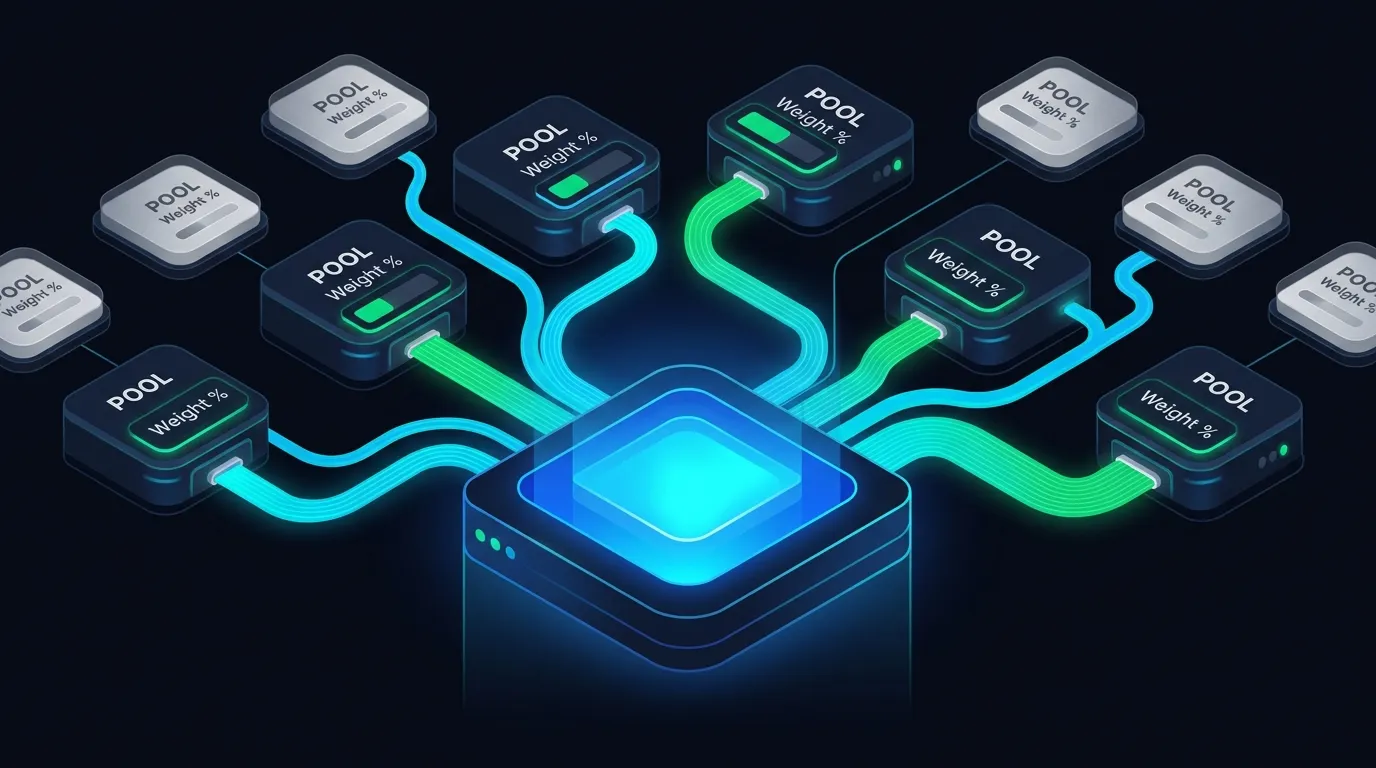
Most AMMs lock you into predefined pool structures. Uniswap V2 requires 50/50 token pairs. Curve optimizes for stablecoins. Balancer takes a different approach entirely: it lets anyone create a liquidity pool with up to eight different tokens in any ratio they choose. A pool could be 80% ETH and 20% WBTC. It could be 33% ETH, 33% DAI, and 34% WBTC. The weights are set at pool creation and enforced algorithmically via smart contracts.
The closest traditional finance analogy is an index fund - but with the fee structure flipped. In a traditional index fund, you pay management fees to a fund manager who rebalances your holdings. In a Balancer pool, the protocol rebalances automatically, and the fees go to liquidity providers, not to an intermediary. That inversion is one of DeFi's most elegant structural improvements over legacy finance.
How Balancer's AMM Algorithm Works
The mechanism behind Balancer's rebalancing is the Constant Mean Market Maker (CMMM) formula - an evolution of Uniswap's simpler x*y=k equation. Where Uniswap forces equal weighting, Balancer's CMMM maintains a constant weighted geometric mean across all tokens in a pool, regardless of how many tokens it contains or what their target ratios are.
Here's how that plays out in practice. Say a pool holds 80% wBTC and 20% wETH by value. Bitcoin's price spikes 20% overnight.
📊 How a Balancer Pool Rebalances - Step by Step
- wBTC's market price increases, making the pool's wBTC allocation worth more than the target 80%
- The CMMM formula adjusts the pool's internal wBTC price downward relative to external markets
- Arbitrage traders spot the discrepancy and buy wBTC from the pool, selling wETH into it
- These trades push the pool back toward the 80/20 ratio
- Liquidity providers earn trading fees on every arbitrage trade that facilitates the rebalancing
This process happens thousands of times per day across all Balancer pools.
A practical implication worth noting: liquidity providers earn fees while their portfolio gets rebalanced. Traditional index fund investors pay for that service. That difference compounds over time.
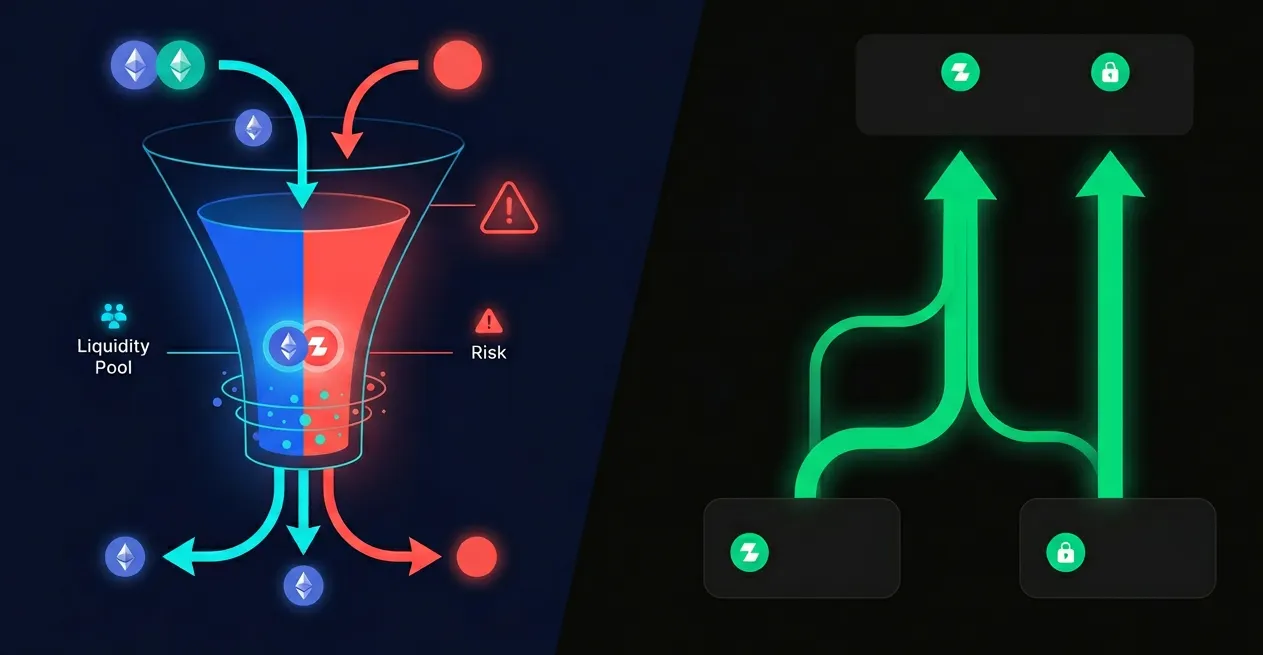
One risk this creates is impermanent loss - if token prices diverge significantly from their ratios at the time of deposit, you may receive fewer of the higher-performing token when you exit the pool than you would have by simply holding. More on that in the risks section.
Types of Balancer Pools Explained
Balancer offers four distinct pool structures, each designed for different risk appetites and use cases.
Public pools are the simplest entry point - parameters are locked before launch, anyone can add liquidity, and they're best suited for set-and-forget strategies on the most liquid token pairs.
Private pools function more like actively managed funds. The creator controls everything: swap fees, token weights, which tokens the pool accepts, and who can deposit. Asset managers with specific portfolio mandates tend to use these.
Smart pools are where Balancer's programmable nature becomes most apparent. They're private pools governed by smart contracts rather than a human creator, enabling features like dynamic fee adjustments based on market volatility, liquidity caps, and temporary trading pauses.
Liquidity Bootstrapping Pools (LBPs) deserve special attention. New crypto projects often face a chicken-and-egg liquidity problem at launch. LBPs solve this by launching with a token ratio heavily weighted toward the project token (say 90/10 project token vs. paired stablecoin), then gradually shifting the weight downward over time. This creates natural downward price pressure that disadvantages bots trying to front-run the launch, allows genuine price discovery, and lets retail participants enter at more equitable prices.
⚡ Which Pool Type Is Right for You?
- Depositing idle crypto and earning passive fees? → Public pool
- Running a specific portfolio strategy as a manager? → Private pool
- Building a DeFi protocol that needs custom liquidity logic? → Smart pool
- Launching a new token with limited initial capital? → LBP

What Is the BAL Token and Why Does It Have Value?
BAL is Balancer's governance token - but its value goes beyond just voting rights, particularly with the introduction of veBAL.
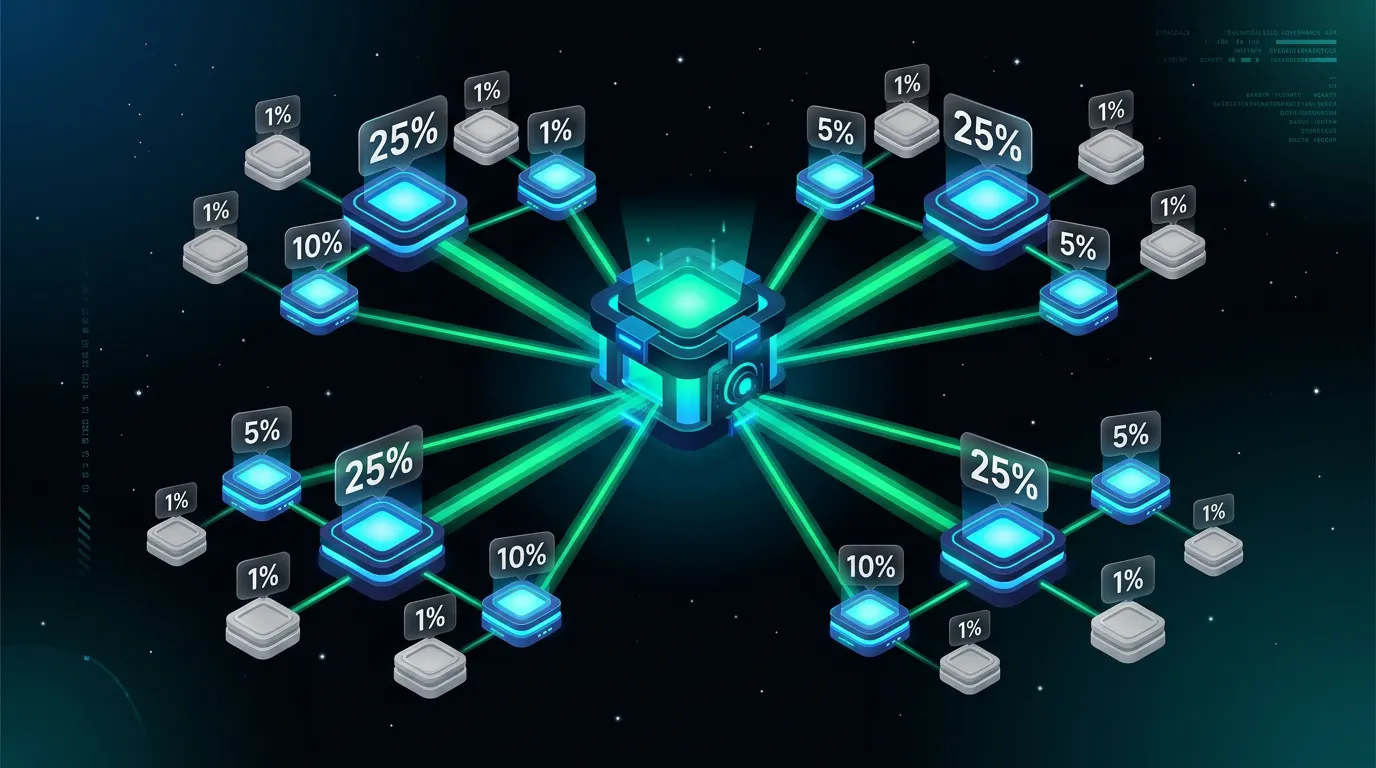
The total BAL supply is capped at 100 million tokens (source: Balancer Labs). The initial distribution at launch allocated 25 million BAL to founders, team members, advisors, and early investors (subject to vesting schedules), with 5 million sold in the 2020 seed round. The remaining 75 million BAL were designated for distribution to liquidity providers through ongoing liquidity mining over time.
BAL tokens are distributed to liquidity providers on a weekly basis, with the allocation weighted by how much liquidity - and specifically which pools - a provider has capital in. Like Bitcoin's halvening, Balancer's BAL emissions are programmatically reduced over time, introducing a scarcity dynamic that tightens supply without requiring manual intervention.
BAL Tokenomics and Supply Schedule
The more sophisticated value capture mechanism is veBAL - vote-escrowed BAL. Holders lock a BAL/WETH liquidity pool token (called BPT) for a period of up to one year and receive veBAL in return. The longer the lock period, the more veBAL received, and the greater the holder's governance weight and fee entitlements. veBAL holders vote on the gauge system - which liquidity pools receive BAL emission allocations - and earn a direct share of protocol-level trading fees.
It's a flywheel: sophisticated participants lock their BAL to direct rewards toward their own pools, earning both amplified emissions and protocol fee revenue simultaneously. Check current circulating supply figures on CoinGecko before making any decisions, as distribution is ongoing.
Who Created Balancer and What Is Its History?
Balancer originated as a research project at BlockScience, a blockchain research and consulting firm, in 2018. Fernando Martinelli (CEO) and Mike McDonald (CTO) were the core architects. The project spun out as Balancer Labs and raised a $3 million seed round in March 2020.
BALANCER PROTOCOL - KEY MILESTONES
2018
CMMM research begins at BlockScience; Fernando Martinelli and Mike McDonald lay groundwork
March 2020
Balancer Labs closes $3M seed round; 5M BAL sold to investors
June 2020
BAL governance token launches; weekly liquidity mining begins - protocol decentralization starts
Spring 2021
Balancer V2 launches with single Vault architecture - major gas efficiency and security improvements
May 2021
$24.25M token purchase from DeFiance Capital, Blockchain Capital, and other strategic investors
2022-2023
veBAL model introduced; gauge voting system activated - community fully controls emissions
2024-2026
Balancer V3 development and rollout - 100% Boosted Pools and simplified custom pool creation
Balancer V2 was the protocol's most significant architectural upgrade. Its core innovation was consolidating all pool assets into a single Vault contract rather than holding assets in individual pool contracts. This separation of token accounting from pool logic dramatically improved gas efficiency (multi-hop trades execute at a fraction of the previous cost), enhanced security by centralizing asset management into one audited contract, and made building custom pool logic far simpler for developers.
Balancer V3 focuses on three priorities: simplified custom pool creation (lower barrier for developers), 100% Boosted Pools (all idle liquidity automatically deployed into lending protocols like Aave for additional LP yield), and enhanced developer tooling.
How to Get Started with Balancer - Step by Step
Balancer is a non-custodial protocol - you connect your wallet, you control your assets. There's no account to create, no KYC process, no withdrawal queue. That also means you're fully responsible for managing your own security.
Prerequisites before you begin:
- A compatible Ethereum wallet (MetaMask is the most common; Coinbase Wallet and WalletConnect-compatible wallets also work)
- ETH for gas fees (gas costs on Ethereum mainnet vary significantly - off-peak hours typically run 30-60% cheaper than peak congestion periods)
- ERC-20 tokens you want to trade or provide as liquidity
Swapping Tokens on Balancer DEX
- Navigate to app.balancer.fi and click "Connect Wallet"
- Select your input token (the token you're selling) and output token (the token you're buying)
- Review the quoted price and slippage tolerance - for standard trades, 0.5% is reasonable; for volatile tokens or low-liquidity pairs, consider setting 1-2% to avoid failed transactions
- Examine the route - Balancer's Smart Order Routing automatically scans all pools to find the best execution price, sometimes splitting your trade across multiple pools for optimal fill
- Confirm the transaction in your wallet and wait for on-chain confirmation
Smart Order Routing is a meaningful differentiator from simpler DEXes. Rather than routing your entire trade through a single pool, Balancer's algorithm identifies the combination of pools that minimizes total price impact - particularly valuable for token pairs that don't have a single dominant liquidity pool. For large trades, check the price impact figure before confirming - if it shows more than 1-2%, consider splitting into smaller transactions.
Becoming a Liquidity Provider on Balancer
- Browse available pools on app.balancer.fi - filter by TVL to surface the most liquid pools, and check the current fee tier (typically 0.1% to 1% of each trade)
- Select a pool that matches the tokens you already hold long-term (this reduces impermanent loss impact - if prices move against you, you would have held the same tokens anyway)
- Decide your deposit amount - Balancer supports both single-asset entry and multi-asset entry for most pools
- Confirm the deposit - your wallet will request approval for each token you're depositing, then a second transaction to add liquidity
- Receive BPT (Balancer Pool Tokens) - these represent your proportional share of the pool and are always redeemable for the underlying assets
- Track your earnings - trading fees accrue automatically; BAL liquidity mining rewards are distributed weekly and can be claimed on the platform
The BPT token itself is transferable and can be staked in gauges to earn BAL rewards - or used as collateral in compatible DeFi protocols. Your position is fully composable within the broader DeFi ecosystem.
How to Evaluate Whether Balancer Is Right for You
Not every DeFi user gets the same value from Balancer. The protocol rewards depth of engagement - passive depositors get one experience; active governance participants get another.
When evaluating whether a specific pool makes sense, Total Value Locked (TVL) is your most useful single metric. Higher TVL signals deeper liquidity, which translates directly to lower slippage and more consistent fee generation. Real-time TVL data is available on DeFiLlama for the Balancer protocol broken down by individual pool.
Balancer vs. Uniswap vs. Curve - Which DEX Fits Your Needs?
All three protocols coexist in the DeFi stack, and sophisticated participants frequently use all three depending on what they're doing. They optimize for different things.
Key Risks of Using Balancer
Entering DeFi without a clear view of the risks is how people lose capital. These four risks are specific to Balancer and material enough to understand before depositing.
⚠ Key Risks for Balancer Users
- Impermanent Loss (High) → Token price divergence from deposit ratios reduces LP value vs. simple holding
- Smart Contract Vulnerability (Medium) → Despite audits, complex pool interactions can contain exploitable logic
- Gas Fee Spikes (Low-Medium) → Ethereum mainnet gas costs can make small transactions economically unviable
- BAL Token Volatility (Medium) → BAL rewards are denominated in a token whose price can drop significantly
Impermanent loss deserves a concrete example:
Smart contract risk is non-theoretical. A June 2020 flash loan attack on Balancer V1 (documented by Decrypt) exploited a specific interaction between multi-token pools and deflationary tokens, resulting in approximately $500K in losses. Balancer's V2 Vault architecture addressed several similar attack surfaces. Always allocate only capital you're comfortable having at protocol risk.
Strategies for Using Balancer Effectively
Understanding how Balancer works is one thing. Using it in a way that aligns with your actual goals and risk tolerance is another.
Passive LP Strategy - Set and Earn
The lowest-friction way to use Balancer is to deposit into a high-TVL public pool and collect trading fees plus weekly BAL rewards without active management.
⚡ Passive LP Pool Selection Checklist
- TVL above $10M (signals consistent volume and fee generation)
- Fee tier appropriate for token volatility (volatile pairs: 0.3-1%; stable pairs: 0.05-0.1%)
- Pool contains tokens you'd hold long-term regardless (minimizes impermanent loss impact)
- Gauge-eligible pool (receiving BAL emissions - check the gauge list on app.balancer.fi)
- No concentrated exposure to a single low-cap token with high volatility
- V3 Boosted Pool status if available (additional lending yield on idle capital)
Stablecoin-adjacent pools - pools with a significant allocation to USDC, DAI, or USDT - carry structurally lower impermanent loss exposure because the stablecoin component is anchored near $1. The tradeoff is typically lower fee generation and BAL rewards compared to volatile-token pools. Dollar-cost averaging into an LP position over several weeks also reduces entry timing risk.
veBAL Lock Strategy - Maximizing Long-Term Rewards
The veBAL system is Balancer's most powerful yield mechanism for committed, long-term participants.
The key insight: veBAL holders don't just govern passively. They actively direct which pools receive BAL liquidity mining rewards each week. Protocols and LPs with large veBAL positions use their votes strategically to concentrate emissions in pools they're participating in - creating a compounding advantage over passive LPs who earn base-rate rewards without the boost. The maximum lock period is one year; your veBAL balance decays linearly to zero at expiry.
Alternatives to Balancer - Other DeFi Options to Consider
Balancer is the right tool for specific use cases. These alternatives are worth knowing, depending on what you're actually trying to accomplish.
Each of these protocols exists for a reason, and the most effective DeFi participants use multiple protocols rather than committing to one. If you want to swap stablecoins, Curve beats Balancer on slippage. If you want exposure to a concentrated ETH/USDC range, Uniswap V3 is purpose-built for that. If you're managing a multi-token portfolio or building programmable liquidity infrastructure, Balancer's toolset is purpose-built for that use case.
The trajectory of DeFi liquidity infrastructure is moving toward customization and composability - away from rigid, one-size-fits-all pool structures. Platforms built on self-custody and on-chain verifiable mechanics, where every parameter is auditable in real time and users retain full control of their assets, represent that direction. That principle - transparent, self-custodial infrastructure that generates real yield from actual platform activity - is what separates durable DeFi protocols from those that depend on unsustainable token emissions to attract capital. Zipmex reflects the same ethos: real yield from real activity, fully verifiable on-chain.
Conclusion - Is Balancer BAL Worth Your Attention in 2026?
Balancer occupies a specific and defensible position in the DeFi stack. It's not trying to be Uniswap. It's not trying to be Curve. What it offers is genuinely distinct: multi-token pools with custom ratios, a governance model that rewards long-term commitment through veBAL, and a developer-grade liquidity infrastructure that V3 is extending into territory no other AMM currently covers.
Whether it's worth your attention depends entirely on which profile fits you:
The BAL token has two genuine value drivers in 2026: governance rights over an increasingly sophisticated protocol, and the veBAL fee-sharing mechanism that ties long-term holders to real protocol revenue. Neither is speculative in the way a pure emission-dependent yield is speculative - both are grounded in actual on-chain activity that you can verify independently at any time.
Balancer V3's 100% Boosted Pools represent the protocol's clearest statement of ambition: become the default liquidity layer for DeFi by ensuring that no capital deposited into the protocol ever sits idle. The architectural groundwork, as covered in this guide, is more solid than at any point in Balancer's six-year history. Whether that translates to sustained TVL growth depends on execution - but the on-chain logic is sound.
For further context on how automated market makers changed the DeFi stack, or to understand impermanent loss in greater depth before committing capital, those guides cover the underlying mechanics in detail.
Crypto trading and DeFi participation involve substantial risk of loss. Providing liquidity exposes participants to impermanent loss, smart contract risk, and token price volatility. Nothing in this article constitutes financial advice. Always conduct your own research and only commit capital you can afford to lose.
Last updated: April 2026.
Frequently Asked Questions
What is Balancer (BAL) in simple terms?
Balancer is a decentralized finance protocol on Ethereum that functions as both an automated market maker (AMM) and a self-balancing portfolio manager. Users can create liquidity pools containing up to eight different cryptocurrencies in any ratio - unlike most DEXes that require fixed 50/50 token pairs. Those pools automatically rebalance via smart contracts, generating trading fees that go directly to liquidity providers. BAL is the native governance token earned by contributing capital to these pools.
How does Balancer differ from Uniswap?
The fundamental difference is pool flexibility. Uniswap V2 requires standard 50/50 token pairs; Uniswap V3 allows concentrated liquidity but still works with two-token pairs. Balancer supports up to eight tokens per pool with fully customizable weight ratios - a pool could hold 60% ETH, 20% WBTC, and 20% USDC if that matches a provider's strategy. Balancer also uses a Constant Mean Market Maker (CMMM) formula rather than Uniswap's x*y=k, enabling more sophisticated rebalancing across multi-asset positions.
What is the BAL token used for?
BAL serves two primary functions. First, it's a governance token - holders vote on Balancer Improvement Proposals covering fee structures, token emissions, and protocol upgrades. Second, BAL is the foundation of the veBAL system: by locking BAL/WETH Balancer Pool Tokens for up to one year, holders receive veBAL, which grants amplified voting power, boosted BAL rewards on LP positions (up to ~2.5x), and a share of protocol-level trading fees. BAL is also tradeable on major exchanges and earned passively through liquidity provision.
What is impermanent loss on Balancer?
Impermanent loss occurs when the market prices of tokens in your pool diverge from their price ratio at the time of deposit. Because Balancer's CMMM algorithm maintains fixed target weight ratios, arbitrageurs continuously buy the relatively underpriced token from the pool - meaning you end up holding more of the token that performed worse. The "loss" is impermanent because it resolves if prices return to the original deposit ratio, but it becomes permanent when you withdraw. A detailed explanation of the mechanics is available in our impermanent loss guide.
What is veBAL and how does it work?
veBAL (vote-escrowed BAL) is Balancer's mechanism for rewarding long-term protocol alignment. To receive veBAL, you lock a BAL/WETH Balancer Pool Token for between 1 week and 1 year. The longer the lock, the more veBAL you receive and the higher your governance weight and reward boost. veBAL holders vote weekly on the gauge system - determining which liquidity pools receive BAL emissions - and receive a share of all protocol-level trading fees. Your veBAL balance decays linearly toward zero as the lock approaches expiry, incentivizing active re-locking.
Is Balancer safe to use? Has it been hacked?
Balancer V1 was exploited in June 2020 through a flash loan attack targeting specific multi-token pools containing deflationary tokens, resulting in approximately $500K in losses as reported by Decrypt. The V2 Vault architecture addressed several structural vulnerabilities that made this attack possible. Balancer has undergone multiple security audits across its contract versions. That said, no smart contract is immune to all exploits - the complexity of programmable pool logic introduces inherent attack surface. Only deploy capital you're prepared to have at risk.
How does Balancer compare to traditional index funds?
The structural parallel is strong - both hold a diversified basket of assets at target weight allocations and rebalance automatically when those weights drift. But the incentive structure is inverted. Traditional index funds charge management fees (typically 0.03%-1% annually) that flow to the fund manager. Balancer pools charge trading fees on each swap - these flow to liquidity providers rather than intermediaries. LPs effectively run an index fund where the "management fee" is reversed: instead of paying to rebalance, they earn fees while the protocol rebalances for them.
ZIPMEX promotes trading on trade.zipmex.com. Promotions are labelled and kept separate from news coverage, which is selected and checked without regard to them. Perpetual futures are leveraged derivatives. Prices can move fast and you can lose all of your margin. Not available in every jurisdiction. Not investment advice.