Any honest zilliqa price prediction has to start with one uncomfortable fact: ZIL trades around $0.004 - 98% below its all-time high. The technology is real, the February 2026 hard fork was substantial, and yet the token has spent most of the past four years erasing gains. That's the baseline. This guide covers ZIL price forecasts from 2026 through 2030, the technical levels that matter right now, a full breakdown of the Zilliqa 2.0 upgrade, and a balanced assessment of what could push this project up - or keep it down.
⚡ Key Takeaways
- Current ZIL price: ~$0.004 (as of April 2026)
- Zilliqa 2.0 hard fork shipped February 5, 2026 - migrated to Proof-of-Stake, added full EVM compatibility, 1.5-second block times
- 2026 base case: $0.010-$0.025 if Bitcoin recovers and developers migrate; $0.004-$0.008 without macro tailwind
- 2030 planning range: $0.05-$0.20 in a bull scenario with real adoption; bear case keeps ZIL below $0.032
- Nothing in this article is financial advice. Crypto involves substantial risk of loss.
What Is Zilliqa (ZIL)? A Quick Primer
Zilliqa is a Layer-1 blockchain built around sharding - a technique for splitting network processing across parallel chains running simultaneously. Founded in 2017 by researchers at the National University of Singapore, it launched mainnet in January 2019 as one of the first public blockchains to implement sharding in production, not just on paper. The ZIL token powers the network: gas fees, smart contract execution, and staking all run on ZIL. Total supply is capped at 21 billion ZIL, with approximately 19.36 billion currently in circulation.
Before 2026, Zilliqa ran on a hybrid Proof-of-Work consensus combined with its sharded architecture. That changed with the February 2026 hard fork - arguably the most significant upgrade in the project's history.
Zilliqa 2.0 - What Changed in the February 2026 Hard Fork
The Zilliqa 2.0 hard fork shipped on February 5, 2026, deploying node version 0.20.0. Four changes define this upgrade:
- Proof-of-Stake consensus - PoW is gone entirely, cutting energy consumption by 99% and removing the mining overhead that complicated the network's economics
- Full EVM compatibility - Solidity contracts deploy directly on Zilliqa; developers no longer need to learn Scilla, the network's original smart contract language
- 1.5-second block times with 5-second finality - competitive with Solana and Avalanche on raw speed metrics
- 99% energy reduction - aligns Zilliqa with modern PoS standards and removes ESG objections from institutional consideration
The market reacted: on February 2, ZIL spiked 70% in 24 hours with a 922% surge in derivatives open interest. Two early ecosystem signals worth noting: ElizaOS added Zilliqa support, and the GOAT framework for connecting AI agents to on-chain applications now supports Zilliqa wallets. Neither is a major adoption indicator on its own, but both suggest developer tooling awareness is growing.
What the upgrade doesn't do is automatically fill the chain with users. Lower technical barriers matter - but they don't move TVL on their own. That's the 2026-2027 story still being written.
ZIL Price History - Where It Has Been
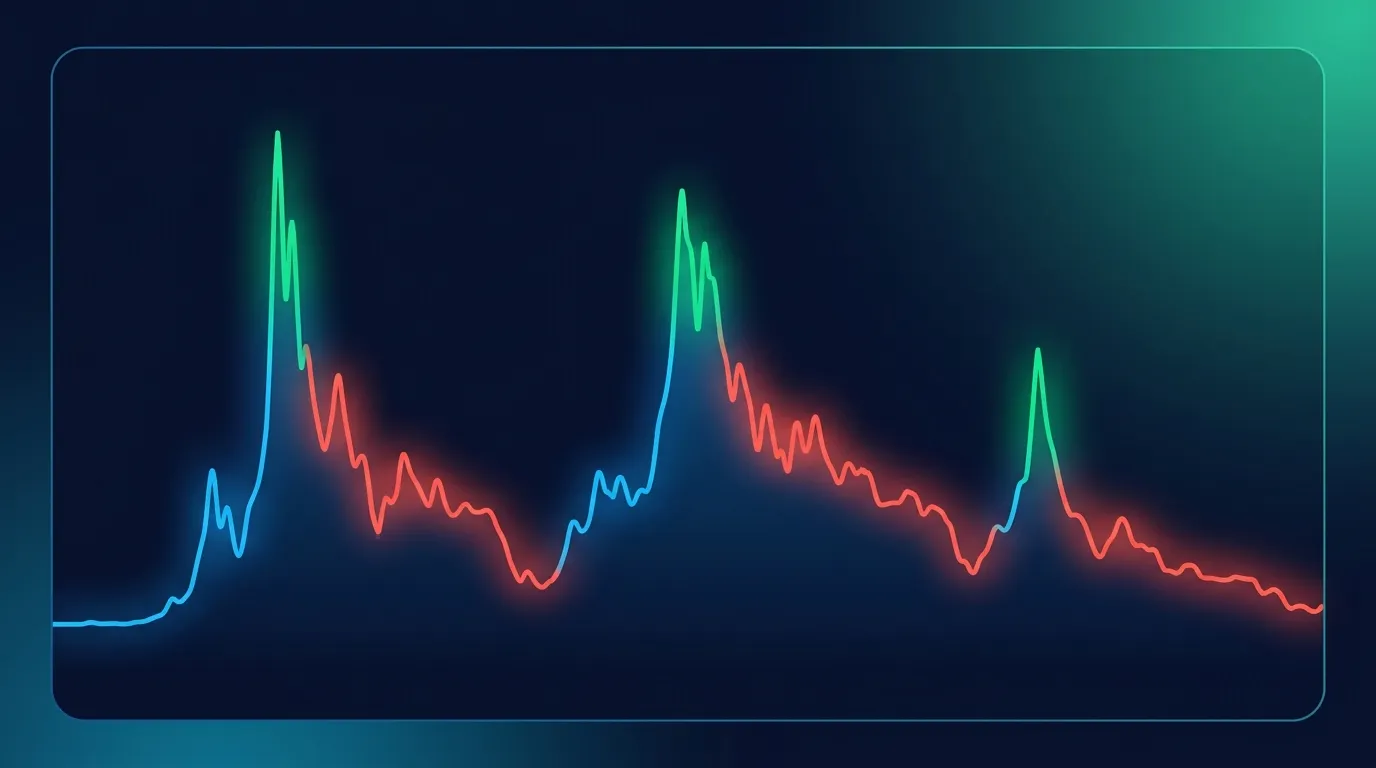
ZIL raised $22 million in its ICO in late 2017. For the first two years post-mainnet, it drifted in the $0.005-$0.03 range while building infrastructure in relative obscurity.
The 2021 bull market changed the narrative completely. ZIL rode the altcoin wave to $0.2563 in May 2021 - roughly a 50x from COVID crash lows. Then the bear market hit. By the end of 2022, ZIL was back below $0.05. The Metapolis metaverse partnership announcement gave it one final spike to $0.18 in April 2022, but that faded as fast as it came.
By 2023, ZIL had drifted below $0.02. The February 2025 X-Bridge exploit - a vulnerability in one of the platform's token manager contracts - drained funds and damaged market confidence at exactly the wrong moment. ZIL v2 buzz through 2025 drove a partial rebound into the $0.010-$0.015 range. Then the Bitcoin crash in late 2025 and early 2026 pulled it back to $0.004, where it sits now.
ZIL PRICE HISTORY - KEY MILESTONES
Late 2017
ICO raises $22M. Zilliqa launches as one of the first sharding-based Layer-1 blockchains.
January 2019
Mainnet goes live. ZIL ranges between $0.005-$0.03 as the team builds infrastructure quietly.
May 2021 - All-Time High
ZIL peaks at $0.2563 - a 50x from COVID lows. Bear market begins shortly after.
April 2022
Metapolis metaverse announcement spikes ZIL to $0.18. Retraces within weeks.
February 2025
X-Bridge exploit drains funds from a token manager contract. Market confidence damaged.
February 5, 2026 - Hard Fork
Zilliqa 2.0 launches. ZIL spikes 70% to $0.023 in 24 hours, then retraces to ~$0.004.
April 2026 - Current
ZIL trades ~$0.004. 98% below ATH, 69% below year-ago levels.
Against Bitcoin specifically, ZIL has been in a multi-year downtrend. That's the signal that matters most for long-term holders - it means even during crypto bull markets, ZIL has mostly underperformed. That pattern is one of the most important bear signals for any 2026-2030 price projection.
Understanding where ZIL has been is essential context for evaluating where analysts think it's headed.
Zilliqa Price Prediction 2026 - Short-Term Outlook
The zilliqa price prediction for 2026 splits sharply between analysts, and that divergence is itself informative. Here's what the major models project:
The honest base case sits at $0.010-$0.025 by year-end - a 2-5x from current levels - but only if two conditions are met: Bitcoin stages a sustained recovery, and developers actually start deploying applications on the EVM-compatible Zilliqa 2.0 chain. Without Bitcoin's macro tailwind, most algorithmic models pin ZIL in the $0.004-$0.008 range for the rest of 2026.
The bull case from Telegaon ($0.076-$0.27) isn't implausible, but it requires a full crypto market recovery plus Zilliqa-specific catalyst flow - a major dApp launch, institutional RWA announcement, or significant TVL growth. CoinCodex's bearish range ($0.003-$0.0047) is the most disciplined model available. Their view: competitive headwinds from Ethereum and Solana are structural, not cyclical, and the EVM upgrade alone doesn't shift developer mindshare in Zilliqa's favor.
Key Technical Levels - Support, Resistance & Indicators
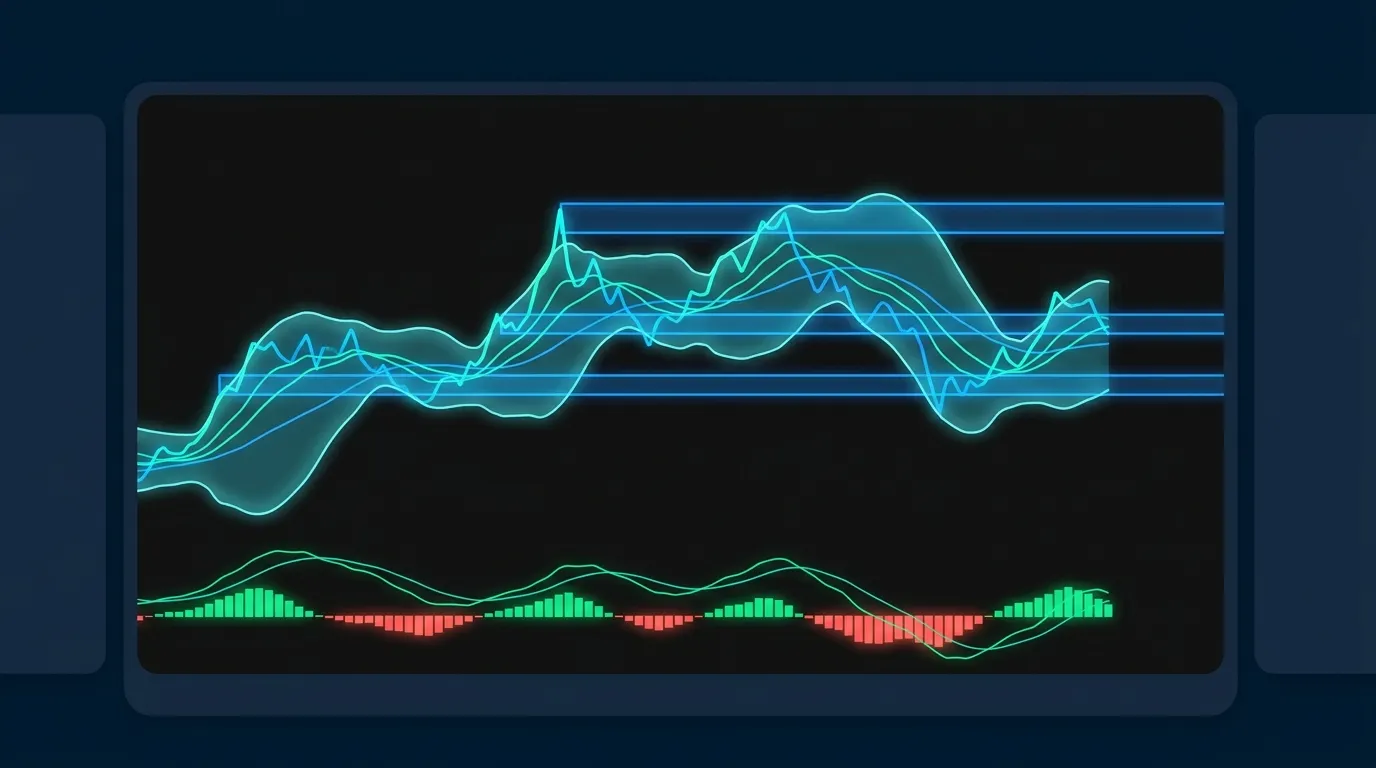
ZIL is currently trading below both the 50-day and 200-day simple moving averages - a textbook bearish setup. The RSI at ~50 signals neither oversold conditions nor momentum, consistent with a directionless market waiting for a catalyst.
Support levels: $0.0040-$0.0043 (long-term floor, tested repeatedly without breaking) . $0.0035 (extended bear case) . $0.0025 (COVID crash low)
Resistance levels: $0.0065 (first meaningful resistance) . $0.010-$0.012 (zone that has capped rallies multiple times) . $0.023 (February 2026 hard fork high) . $0.058 (2025 cycle high) . $0.256 (all-time high)
For traders using MACD, watch for a bullish crossover above the signal line on the weekly chart as confirmation of any breakout from the $0.004-$0.0043 support zone. Bollinger Band squeezes on the daily timeframe often precede ZIL's sharper moves - current compression is consistent with a pending directional move.
One level stands above the others as a signal: a sustained weekly close above $0.012 would be the first genuine evidence that Zilliqa 2.0 is generating real market interest, not just short-term speculation.
Zilliqa Price Prediction 2027-2030 - Long-Term Forecasts
The zilliqa price prediction for 2030 ranges from $0.011 to $1.23 depending on the source - a gap so wide it reflects genuine uncertainty rather than forecasting precision. Here's how the numbers break down by time horizon.
ZIL Price Prediction 2027 - Thesis Year
By 2027, the Zilliqa 2.0 thesis will either be proving out or it won't. That binary makes 2027 the most consequential year in ZIL's near-term history.
✓ PATH A - DEVELOPER ADOPTION
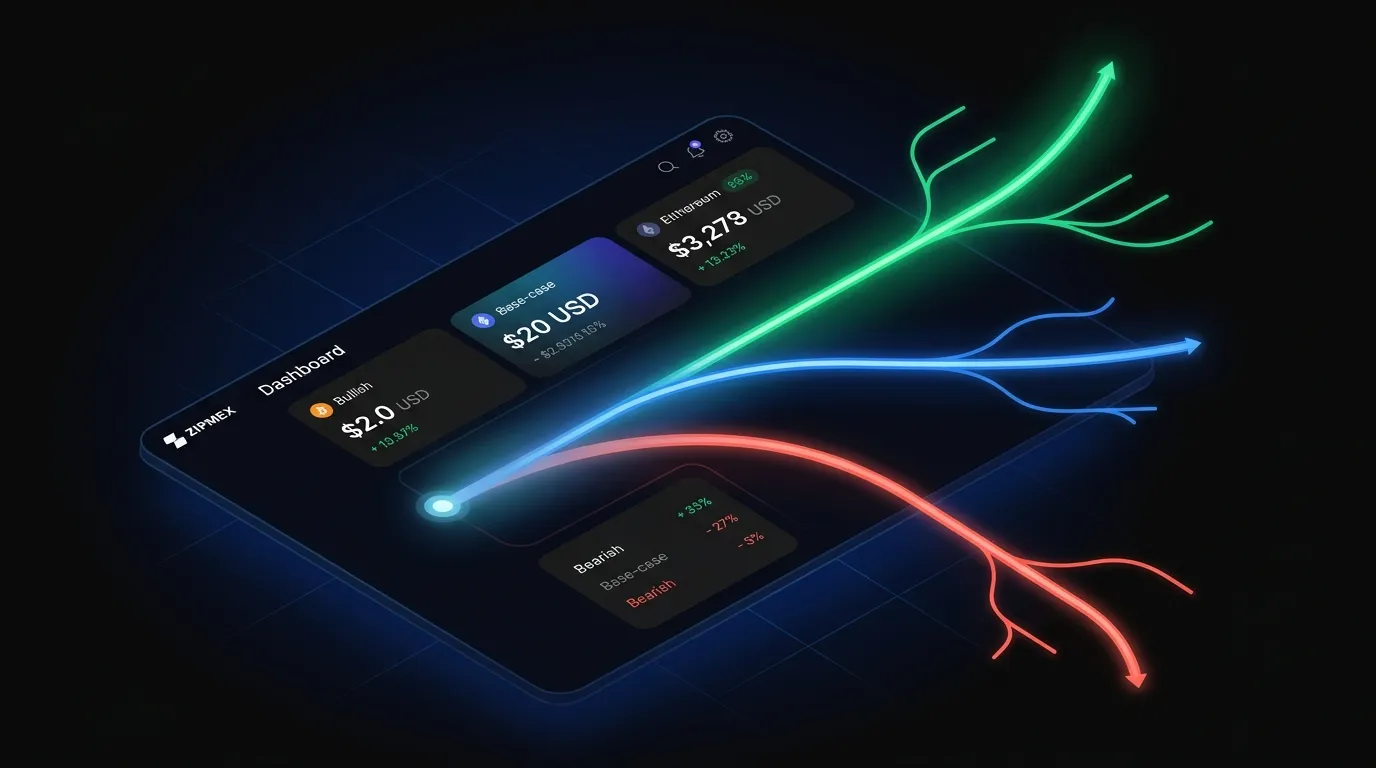
EVM compatibility drives measurable dApp deployment and DeFi TVL growth → Target range: $0.030-$0.065. Key catalysts: X-shards launch, top-tier DeFi protocol deployment, TVL > $50M.
✕ PATH B - ECOSYSTEM STAGNATION
Developer mindshare stays concentrated on ETH/SOL and no major dApps launch → Target range: $0.003-$0.005. Signal: TVL stays below $5M, GitHub commit frequency declines.
The X-shards roadmap phase - customizable application-specific shards for cross-chain smart contracts - is targeted for the 2026-2027 period. If it ships on schedule and attracts application developers, that separates Path A from Path B. The April 2024 Bitcoin halving historically feeds into an altcoin expansion cycle 12-18 months later. ZIL hasn't responded yet, which is itself a data point.
ZIL Price Prediction 2030 - Bull, Base, and Bear Scenarios
The RWA angle deserves specific attention. The tokenized real-world asset market is projected to reach $18.9 trillion by 2033. Zilliqa is explicitly positioning as compliance-ready regulated DeFi infrastructure - a niche the larger chains aren't specifically targeting. CoinCodex's lifetime maximum of $0.032 (by 2050 in their model) is the most disciplined bear projection - it treats Zilliqa as technically sound but institutionally irrelevant.
The sensible planning range for 2030 is $0.05-$0.20, achievable in a bull environment with Zilliqa 2.0 showing real traction.
Why Zilliqa Could Succeed - And Why It Might Not
Here's the honest assessment. Both sides of this trade have legitimate arguments.
The network effects problem is the one that keeps coming back. Ethereum has billions in liquidity and thousands of active developers. Solana has consumer apps with genuine daily active users. Zilliqa has technical superiority in specific dimensions and a market cap of $85 million. Breaking the "developers follow users, users follow developers" cycle is the hardest problem in Layer-1 blockchain - and Zilliqa hasn't cracked it yet despite being technically ahead on throughput since 2019.
The best realistic path isn't head-on competition with ETH or SOL. It's carving out the compliance-ready, regulated DeFi, and RWA tokenization niche - a vertical where Zilliqa's specific combination of speed, EVM compatibility, and low cost creates genuine differentiation.
Zilliqa Roadmap - Onyx, Carnelian, and Citrine Phases
Roadmap execution is the key variable. Price predictions become meaningfully more reliable as each phase ships on schedule and generates real adoption metrics.
Should You Invest in Zilliqa in 2026? Key Considerations
This is not a recommendation to buy or sell ZIL. Crypto trading involves substantial risk of loss, and leveraged positions amplify that risk significantly.
The asymmetric small-cap case: At an $85M market cap, ZIL sits in a range where a small speculative allocation carries meaningful upside potential relative to the downside. If Zilliqa captures even a fraction of the RWA or regulated DeFi market, the current price reflects none of that.
The position sizing caveat: ZIL has been "technically promising" for roughly seven years without that translating into sustained price appreciation. Sizing a ZIL position should reflect the possibility that it stays flat or declines further for another multi-year period.
The pattern risk: The "upgrade announced → price spikes → fades back to lows" pattern has repeated enough times - 2021 ATH, 2022 Metapolis spike, 2026 hard fork spike - that treating it as a structural tendency rather than isolated bad luck is rational risk management.
⚠ Before Investing in ZIL: 5 Things to Monitor
- BTC market trend → ZIL rarely appreciates in a Bitcoin downtrend
- ZIL weekly close above $0.012 → first confirmation that 2.0 adoption is real
- TVL data → on-chain total value locked is the most honest adoption metric
- Developer activity → GitHub commit frequency and new protocol deployments
- X-shards timeline → Onyx phase delivery date and initial application deployments
Portfolio diversification across multiple assets remains the most straightforward risk management approach for any speculative crypto position. No single Layer-1 bet should represent a concentration risk - ZIL included.
⚠ Risk Disclaimer
Crypto trading involves substantial risk of loss and is not appropriate for all investors. Nothing in this article constitutes financial advice or an investment recommendation. Always conduct your own research before making any investment decisions.

Alternatives to Zilliqa - Other Layer-1 Blockchains to Consider
If Zilliqa's risk profile doesn't fit your needs, or you're comparing options before allocating, here's how the major Layer-1 alternatives stack up:
The critical differentiator: Zilliqa is specifically pursuing compliance-ready regulated DeFi and RWA tokenization infrastructure - a positioning none of the above chains are actively targeting with the same specificity. Platforms built on on-chain verifiability and true self-custody reflect exactly the direction decentralized infrastructure needs to move - toward systems where outcomes are verifiable, not just claimed.
Conclusion - ZIL Price Prediction Summary and Final Outlook
Any zilliqa price prediction for 2026 and beyond comes down to one question: will the Zilliqa 2.0 hard fork finally translate technical excellence into real-world adoption? The technical setup is the best it's ever been - PoS, EVM compatibility, 1.5-second blocks. What's equally clear is that the market has seen this pattern before and been disappointed.
SHORT-TERM TRADER
Technical setup is neutral-to-bearish: price below both SMAs, Fear & Greed at 23. Key entry signal: sustained weekly close above $0.012. Until that close, momentum does not confirm a trend reversal.
LONG-TERM SPECULATOR
At 98% below ATH and $85M market cap, ZIL offers asymmetric upside for a small, appropriately sized position. 2030 base case of $0.05-$0.20 requires Zilliqa 2.0 adoption - not certain, but not implausible.
DEVELOPER / BUILDER
EVM compatibility makes Zilliqa a legitimate deployment option. Sub-cent gas, 1.5-second blocks, and X-shards roadmap create a technically compelling environment for gaming, DeFi, and RWA-adjacent applications.
What to watch through 2026: TVL data (most honest adoption metric), major dApp launches on the EVM chain, X-shards / Onyx phase delivery timeline, and Bitcoin's macro direction. Those four variables will do more to determine ZIL's actual price trajectory than any model published today.
Crypto trading involves substantial risk of loss. This article is for informational purposes only and does not constitute financial or investment advice. Always conduct your own research before making any investment decisions.
Last updated: April 2026.
Frequently Asked Questions
What is the Zilliqa price prediction for 2026?
The zilliqa price prediction for 2026 ranges from bearish ($0.003-$0.0047 per CoinCodex) to moderately bullish ($0.018-$0.045 per Coinpedia). The base case across most models sits at $0.010-$0.025 by year-end, conditional on a Bitcoin market recovery and measurable developer deployment on the EVM-compatible Zilliqa 2.0 chain. Without a BTC recovery, most algorithmic models expect ZIL to remain in the $0.004-$0.008 range. Telegaon's bull case reaches $0.076-$0.27, requiring full market recovery and Zilliqa-specific catalysts.
What is the ZIL price prediction for 2030?
The zilliqa price prediction for 2030 spans from $0.011 to $1.23 depending on the source. The sensible planning range is $0.05-$0.20. The base case requires Zilliqa to establish a functioning niche as a Layer-1 for regulated DeFi and RWA tokenization. The bull case ($0.20-$0.50+) requires capturing a meaningful slice of the projected $18.9 trillion RWA market. CoinCodex sees a lifetime maximum of just $0.032, projecting structural decline due to competitive capital concentration. This is not financial advice.
What is Zilliqa 2.0 and why does it matter for the price?
Zilliqa 2.0 is the network's most significant architectural upgrade since mainnet launch. The February 5, 2026 hard fork migrated the chain from Proof-of-Work to Proof-of-Stake, added full EVM compatibility (Solidity contracts deploy directly), cut block times to 1.5 seconds with 5-second finality, and reduced energy consumption by 99%. The price relevance is direct: EVM compatibility removes the biggest developer adoption barrier. When the upgrade dropped, ZIL spiked 70% in 24 hours. Whether adoption materializes determines whether the upgrade has lasting price impact.
What are the key technical levels for ZIL right now?
Key support levels: $0.0040-$0.0043 (long-term floor, repeatedly tested without breaking), $0.0035 (extended bear case), $0.0025 (maximum downside scenario). Key resistance levels: $0.0065 (first meaningful resistance), $0.010-$0.012 (zone that has capped multiple rally attempts), $0.023 (February 2026 hard fork high). The most actionable signal is a sustained weekly close above $0.012 - the first confirmation of genuine Zilliqa 2.0 adoption momentum. Current 50-day SMA sits at $0.004450 and 200-day SMA at $0.007102; price is below both.
What are the risks of investing in Zilliqa?
Key risk factors for ZIL include: consistent multi-year underperformance versus Bitcoin; the X-Bridge exploit in February 2025 demonstrated contract-level vulnerabilities persist even on technically sophisticated chains; the "upgrade spike → fade" pattern has repeated multiple times; layer-1 competition from Ethereum and Solana creates structural headwinds for developer and user acquisition; heavy macro correlation to Bitcoin means ZIL requires a broader market recovery as a near-prerequisite. Crypto trading involves substantial risk of loss. This is not financial advice.
How does Zilliqa's sharding technology work?
Zilliqa's sharding splits the network into smaller parallel processing groups - called shards - that each process a subset of transactions simultaneously. As more nodes join and more shards are added, throughput scales proportionally with network size. This linear scalability is the core innovation Zilliqa pioneered in production blockchain. Each shard runs consensus among its member nodes using a Practical Byzantine Fault Tolerant protocol, and a Directory Service committee coordinates across shards. The result: the ability to process thousands of transactions per second without sacrificing security - making Zilliqa one of the few chains where scalability is provably, not theoretically, achieved.
Where can I buy or trade Zilliqa (ZIL)?
ZIL is listed on major centralized exchanges including Binance, MEXC, and OKX, where it trades primarily against USDT. It's also available on decentralized exchanges with ZIL liquidity pools. For perpetual futures trading on ZIL - enabling both long and short positions - several on-chain derivatives platforms list ZIL pairs. When trading or holding ZIL, using a self-custodial wallet ensures you maintain control of your private keys. The Zilliqa network is compatible with standard EVM wallets post-2.0, including MetaMask. Always verify you're using the correct contract address when bridging or trading on DEXs.
ZIPMEX promotes trading on trade.zipmex.com. Promotions are labelled and kept separate from news coverage, which is selected and checked without regard to them. Perpetual futures are leveraged derivatives. Prices can move fast and you can lose all of your margin. Not available in every jurisdiction. Not investment advice.