The Axie Marketplace is the official NFT trading platform for the Axie Infinity ecosystem - built by Sky Mavis and running on the Ronin Network, Ethereum's purpose-built gaming sidechain. If you've ever wondered how players buy, sell, or breed digital creatures worth real money, this is where it all happens. With over $4.2 billion in all-time trading volume, it briefly ranked as the #2 NFT blockchain by total volume, trailing only Ethereum mainnet.
This guide breaks down exactly what the Axie Marketplace is, what you can trade there, how the fees work, and how to extract real value - without the hype or misinformation that still dominates most articles on the subject.
⚡ Key Takeaways
- The Axie Marketplace is the exclusive NFT trading hub for the Axie Infinity ecosystem, operated by Sky Mavis on the Ronin Network
- You can buy, sell, and breed four types of NFTs: Axies, Land Plots, Land Items, and Accessories
- Sellers pay a 4.25% platform fee; buyers pay only minimal Ronin gas fees
- A Ronin Wallet is required - all transactions are self-custodial and settle on-chain
- The ecosystem is evolving fast: Mavis Market is becoming the primary Ronin NFT hub as the platform expands beyond Axie Infinity
What Is the Axie Marketplace?
The Axie Marketplace isn't a general NFT platform. It's an exclusive, dedicated trading hub built specifically for assets within the Axie Infinity universe - and that distinction matters. Unlike OpenSea, which lists everything from PFPs to music NFTs across dozens of chains, the Axie Marketplace deals only in Axie ecosystem assets: the creatures, land, and items that make up Lunacia, the game's persistent virtual world.
Sky Mavis built this exclusivity intentionally. By controlling the official marketplace, they could ensure on-chain settlement, enforce fee structures that fund the Community Treasury, and integrate trading directly into the App.Axie hub at app.axieinfinity.com. Every transaction is recorded on the Ronin Network - an Ethereum sidechain Sky Mavis developed specifically to reduce gas costs to near-zero while maintaining the security guarantees of ERC-721 token standards.
How the Axie Marketplace Works
Every transaction on the Axie Marketplace settles on-chain through smart contracts - no counterparty trust required. To interact with the platform at all, you need a Ronin Wallet connected to your App.Axie account. Trades execute automatically once both sides confirm, with the smart contract handling asset transfer and fee collection simultaneously.
Payments are made primarily in WETH (Wrapped ETH bridged to Ronin), though the marketplace also accepts AXS, SLP, RON, and USDC. The Sweep Mode feature deserves a mention here: it allows bulk purchases of floor-priced Axies in a single transaction - useful for breeders or investors acquiring multiple units without repeated approvals.
Here's the standard buying flow:
- Connect Ronin Wallet to app.axieinfinity.com
- Browse and filter listings by class, stats, parts, breed count, or price
- Click "Buy Now" on a listing (or submit an Offer below asking price)
- Confirm the transaction in your Ronin Wallet
- NFT appears in your inventory - typically within seconds given Ronin's block times
The Offer feature is worth using. Many sellers price optimistically; counter-offers often succeed, especially for Axies that have been listed for more than a week.
Types of NFTs Available on the Axie Marketplace
Four distinct NFT categories trade on the marketplace. Understanding each one changes how you approach the platform:
Special categories exist within Axies worth knowing: Origin Axies (created in the earliest breeding pools) and Mystic Axies (containing rare Mystic parts) carry significant premiums over standard Axies. If you're speculating on Axie NFTs, these are the collectibles with historical scarcity backing them.
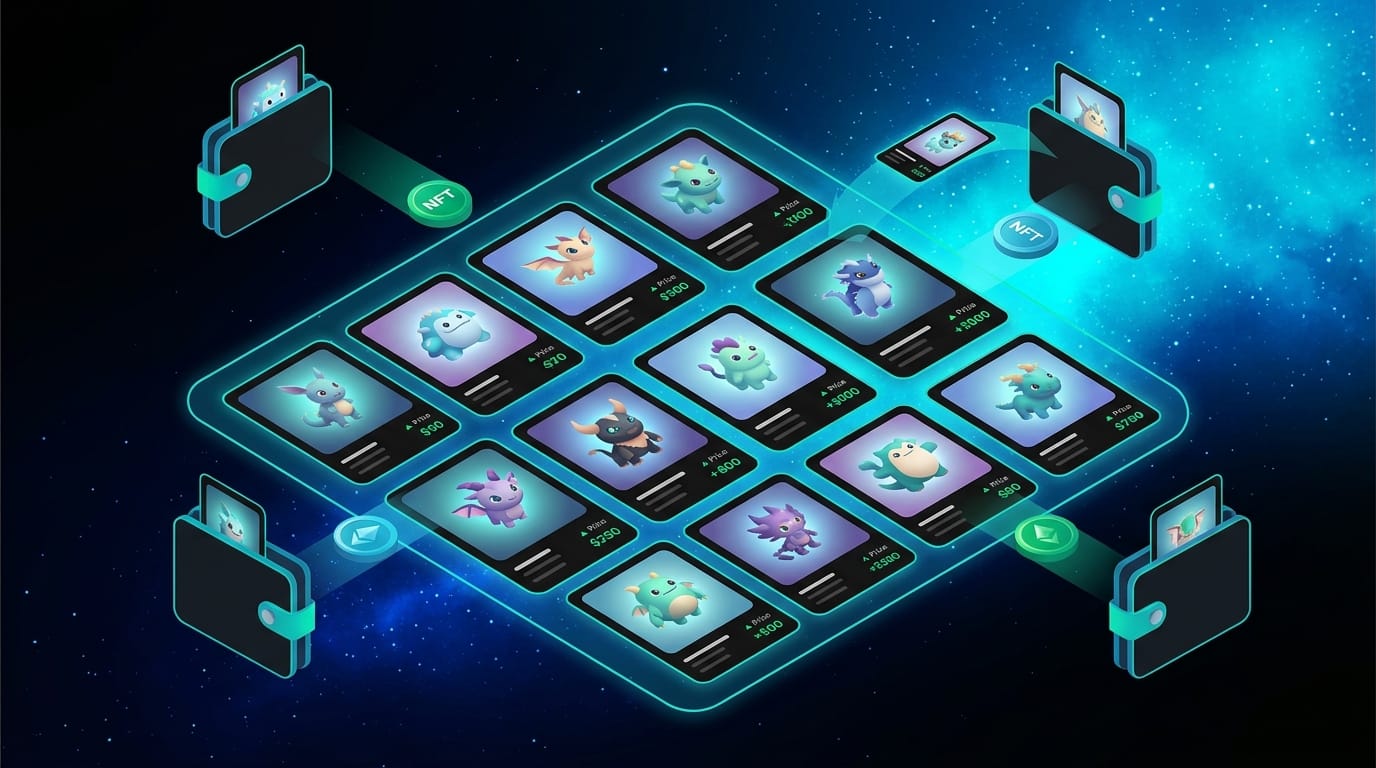
What Can You Do on the Axie Marketplace?
The marketplace is more than a listing board. Four core actions define how players interact with the Axie economy: buying, selling, breeding, and - to a lesser degree - using AXS staking to earn from platform activity.
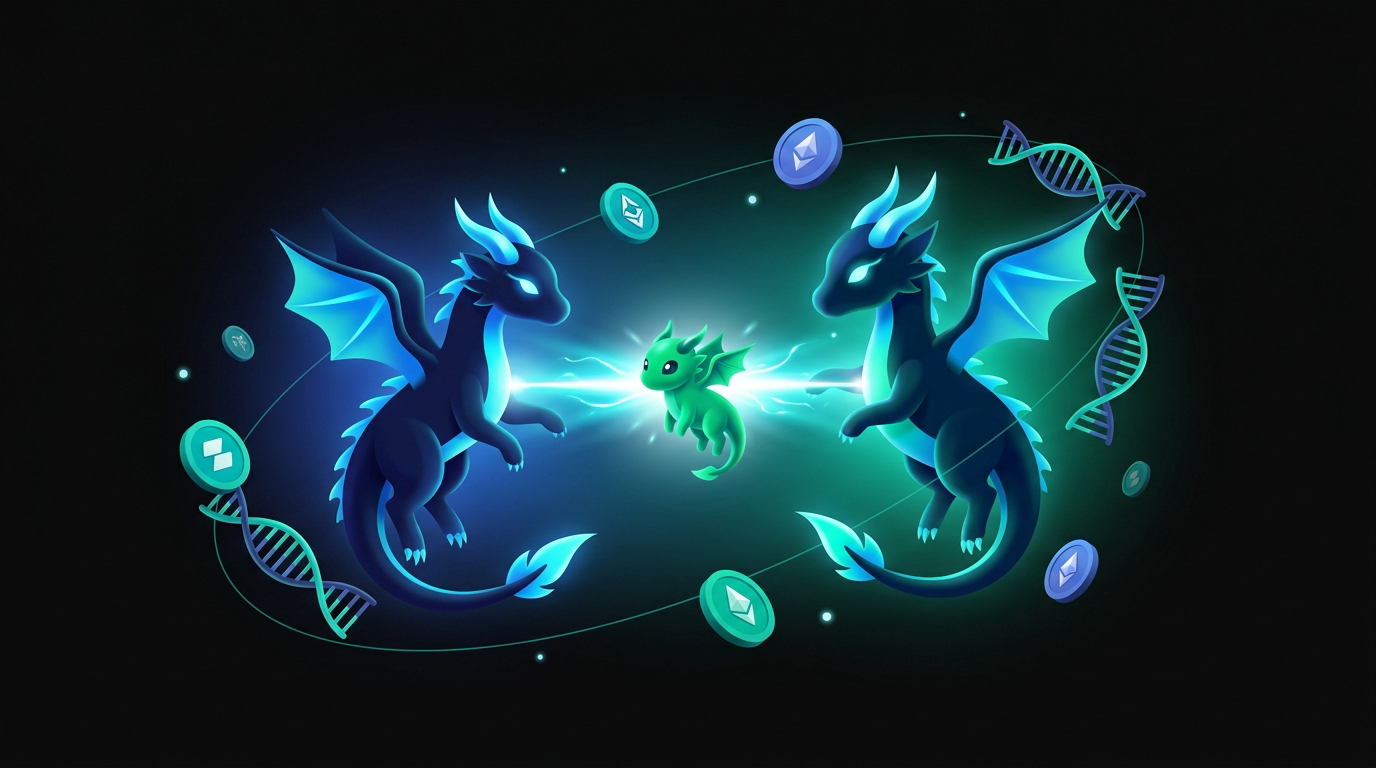
Buying and selling are self-explanatory. Breeding is where things get economically interesting. Two Axies can be combined to produce offspring with genetic traits drawn from both parents - consuming both AXS and SLP tokens in the process. That offspring becomes a new tradeable NFT on the marketplace immediately. The economic loop is elegant: play to earn SLP → breed offspring → sell on marketplace → reinvest or extract. At its 2021 peak, this loop was generating meaningful income for hundreds of thousands of players in Southeast Asia.
The breeding mechanism ties the marketplace directly to token economics. When SLP prices fall, breeding becomes cheaper, which increases Axie supply, which pressures floor prices. Understanding this relationship is essential if you're approaching the marketplace with any profit intent - which the strategy section covers fully.
Buying and Selling Axies - Step by Step
Getting your first Axie requires a small setup chain. Here's exactly how it works:
To Buy:
- Set up a Ronin Wallet - download from wallet.roninchain.com
- Acquire ETH on a centralized exchange (Coinbase, Binance, Kraken)
- Fund your Ronin Wallet - two options: (a) bridge ETH via the Ronin Bridge, or (b) withdraw RON directly from a CEX that supports Ronin withdrawals (avoids bridge fees entirely)
- Swap for WETH if needed using the in-wallet swap function
- Log into App.Axie, browse with filters, and click Buy Now
- Confirm in Ronin Wallet - transaction settles on-chain in seconds
📊 Pro Tip: Skip the Bridge
If your CEX supports direct Ronin Network withdrawals (Binance does), skip the bridge entirely. You avoid bridge fees and the occasional delay. Withdraw RON or ETH directly to your Ronin address. Ramp Network integration on App.Axie also allows credit/debit card funding - convenient for beginners, though conversion fees run higher than bridging.
To Sell:
- Navigate to your inventory in App.Axie
- Select the NFT you want to list
- Set your asking price in WETH (or RON, depending on the asset)
- Set listing duration (1-7 days)
- Confirm - no upfront fee. The 4.25% marketplace fee deducts automatically at sale
The Offer system works in reverse: buyers send offers below your asking price, and you can accept, counter, or ignore. Don't neglect this - it's free price discovery.
Breeding Axies for Marketplace Profit
Each Axie can breed a maximum of 7 times - a hard cap built in by Sky Mavis to control supply inflation. Every breeding event costs both AXS and SLP, with the amounts scaling as the breed count increases:
Note: Verify current AXS and SLP costs at app.axieinfinity.com before breeding - figures are subject to governance updates.
The 7-breed ceiling isn't arbitrary. It prevents infinite dilution. An Axie that's been bred 6 times has lost most of its future breeding utility - and the market prices that in. Virgin (0-breed) Axies with desirable parts for the current competitive meta command premium prices, while high-breed-count Axies trade near floor.
Breeding profitability comes down to one question: do the offspring's expected sale prices exceed the AXS + SLP input costs? When token prices are elevated and meta-relevant traits are scarce, the margin can be substantial. When SLP is inflated and Axie floors are depressed, breeding loses money fast.
Axie Marketplace Fees and Economics
Sellers pay a 4.25% fee on every completed transaction. Buyers pay nothing beyond the minimal Ronin gas costs, which typically run a fraction of a cent - one of the genuine advantages of building on an Ethereum sidechain rather than mainnet.
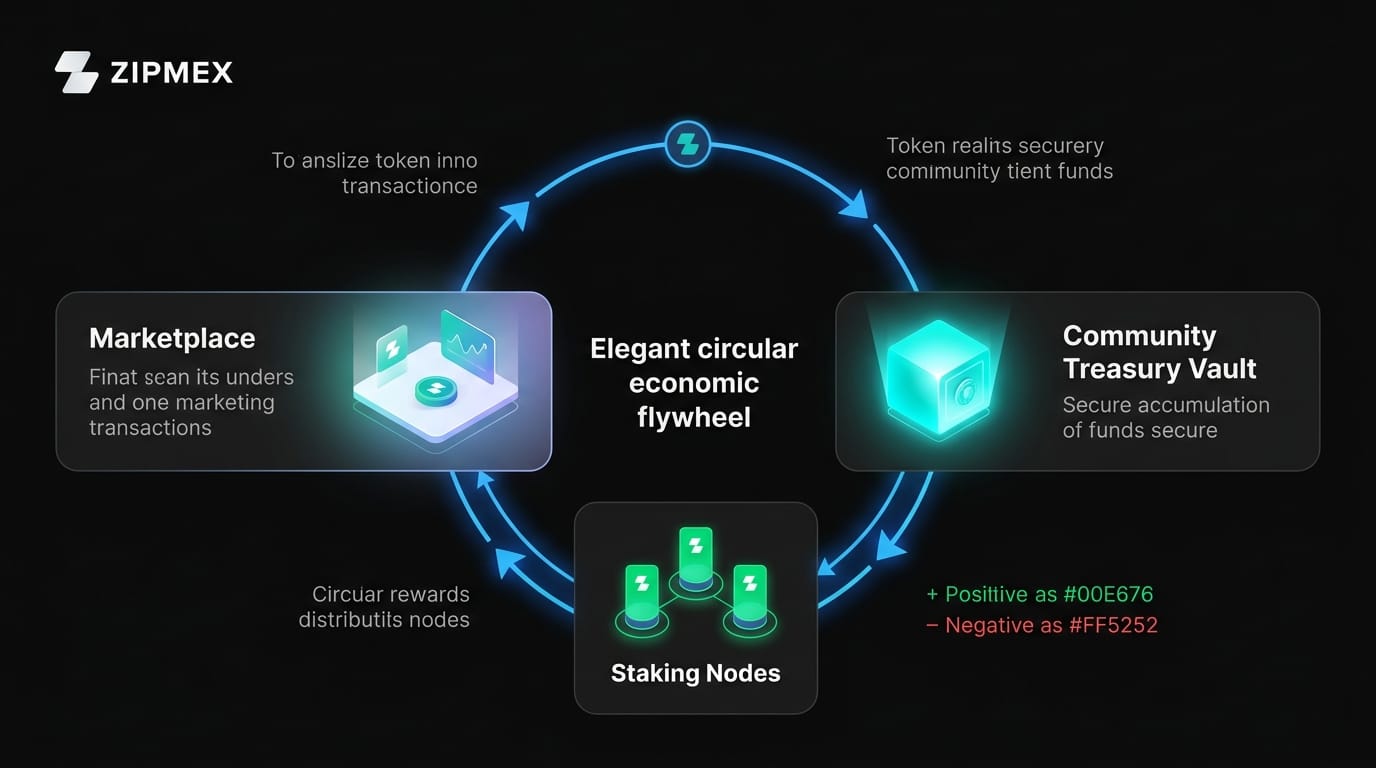
Where does the 4.25% go? It flows directly into the Community Treasury - the on-chain fund that rewards AXS stakers. This creates an economic flywheel: marketplace activity generates fees → fees fund the treasury → treasury rewards AXS holders → AXS demand incentivizes ecosystem participation → more trading activity. It's a closed-loop design that, at its best, aligns platform success with token holder incentives.
For comparison, here's how fee structures look across the three main platforms where Axie assets trade:
Axie Marketplace vs Mavis Market vs OpenSea - Comparison
Choosing where to trade isn't just about fees - it's about liquidity and relevance. For pure Axie Infinity assets, App.Axie has the deepest liquidity and the most integrated experience. Mavis Market is Sky Mavis's newer platform, built for the entire Ronin ecosystem: it supports third-party games like Kuroro Beasts and Lumiterra alongside Axie assets, uses RON as the primary settlement currency, and has a noticeably lower fee structure (2.5% total vs 4.25%).
A notable inflection point came in early 2026: Mavis Market trading volume began consistently exceeding Axie Marketplace volume, a meaningful signal that Sky Mavis is successfully positioning Mavis Market as the primary Ronin NFT hub. The Axie Marketplace isn't going anywhere - its role is simply narrowing toward dedicated Axie-focused trading.
OpenSea lists some Axie NFTs, but without native Ronin integration, the experience is clunkier and fees are higher. Unless you're specifically targeting cross-chain liquidity, OpenSea isn't the right venue for Axie assets.
Red Flags and Risks on the Axie Marketplace
The Axie Marketplace's history includes one of the most significant security incidents in crypto history. Understanding what went wrong - and what protections exist now - is non-negotiable before you put real money in.
⚠ Risk Warning
- Crypto trading and NFT ownership → involve substantial risk of loss
- NFT floor prices → can decline by 90%+ in bear markets
- Token values → are highly volatile
- Past performance → does not guarantee future results
- Nothing in this article → constitutes financial or investment advice
Here are the five risks every Axie Marketplace participant needs to understand:
- Phishing sites - Fake URLs impersonating App.Axie (e.g., axie-infinity.io, app-axie.com) are designed to capture Ronin Wallet credentials. Always verify you're at app.axieinfinity.com before approving any transaction.
- NFT price volatility - Axie floor prices peaked above $700 per Axie in late 2021. By 2026, floors had dropped dramatically. That's not a typo. The market can and does move by orders of magnitude.
- The 2022 Ronin Bridge hack - North Korea's Lazarus Group exploited a vulnerability in the Ronin Bridge and stole approximately $620 million in ETH and USDC. Sky Mavis reimbursed affected users in full and rebuilt the bridge security infrastructure, but it demonstrated that smart contract risk is real, not theoretical.
- P2E sustainability risk - Play-to-earn models depend on new player inflows to sustain token prices. When growth slows, the economic loop runs in reverse: token prices fall → breeding loses value → new player acquisition drops → prices fall further.
- Third-party marketplace fraud - Fake "Axie Marketplace" sites on other chains claim to list legitimate Axies. If you're not buying directly from App.Axie on the Ronin Network, you're exposed to counterfeit listings with no recourse.
Common Scam Tactics Targeting Axie Players
The scam vectors are specific enough to detail:
Enable 2FA on any email account linked to your Ronin Wallet. Never store your seed phrase digitally. These aren't suggestions - they're the baseline for participating in any self-custodial ecosystem safely.
How to Maximize Value on the Axie Marketplace
Three real strategies exist for generating value from the Axie Marketplace. Each has a distinct risk profile, capital requirement, and time commitment. None of them work without understanding the market mechanics covered above.
Play-to-Earn and Trading Strategies for Axie Players
1. Floor Axie Flipping - Buy Axies at or near floor price during market dips; sell when meta shifts push demand for specific traits or classes. This is essentially swing trading applied to NFTs. The key variable is meta knowledge: when Axie Origins releases a new season and certain Axie cards become dominant, Axies with those parts spike in price. Position before the shift, not after.
2. Breed-to-Sell - Acquire two Axies with meta-relevant traits and breed up to 7 times, listing offspring immediately. Profitability hinges on the AXS + SLP input cost vs expected offspring sale price. When SLP is cheap and floor prices are elevated, margins are solid. Model it before you breed - the math is transparent.
3. Scholarship/Delegation - Lend your Axies to players who can't afford their own, typically via guild platforms, and split the SLP earnings. The revenue split has historically ranged from 40/60 to 70/30 in favor of the scholar. Counterparty risk is the main concern; established guild platforms offer better accountability than one-off arrangements.
4. Competitive Play - Earn AXS and SLP through ranked play in Axie Origins seasons. No external capital required beyond your starter team. For players who genuinely enjoy the game, this is the cleanest earn path.
⚠ Strategy Disclaimer
- None of these strategies → guarantee profit
- All strategies → depend on market conditions that can change rapidly
- P2E earnings → should be treated as variable and speculative, not assured
Risk Management for Axie Marketplace Participants
The specific risks here are worth quantifying, not just naming:
The broader principle: in on-chain economies, all outcomes are verifiable, but none are predictable. The on-chain transparency is a genuine trust feature - you can audit smart contract mechanics, verify fee distributions, and confirm that stated rules are enforced by code. That's real. The price risk is equally real.
Alternatives to the Axie Marketplace
If your needs go beyond Axie Infinity specifically, three alternatives are worth knowing. Browse the top NFT marketplaces in 2026 for a broader comparison across chains and asset types.
For Axie Infinity players specifically, App.Axie remains the most integrated and liquid option. Mavis Market makes the most sense if you're building exposure across the broader Ronin ecosystem - especially as new games like Kuroro Beasts and Lumiterra gain traction.
The Future of the Axie Marketplace - What's Coming in 2026
Sky Mavis has made its strategic direction unmistakably clear. The company is positioning Ronin as a general-purpose Web3 gaming blockchain - not a single-game platform with a marketplace attached. For a deeper look at where blockchain gaming is heading, the future of blockchain gaming explores the broader industry trends shaping this transition.
The 2024 financials support this shift. Sky Mavis reported a significant increase in net profitability in FY2024, driven by platform-level activity: trading fees across Mavis Market, Ronin Network validator rewards, and expanding third-party game integrations. Axie Infinity remains the flagship property, but it's no longer the only engine.
Key developments shaping the platform through 2026:
- Ronin Developer Console - opened the network to third-party game studios, with multiple titles in active development
- Ronin Wallet reach - over 10 million downloads, confirming that the infrastructure layer has grown significantly beyond the Axie playerbase
- Mavis Market as primary hub - trading volumes have shifted toward Mavis Market as the ecosystem diversifies
AXIE INFINITY ECOSYSTEM TIMELINE
2018
Sky Mavis founded; Axie Infinity launched
2021 - Peak
P2E peak: $700+ Axie floors, ~$164 AXS, millions of active players. Marketplace reaches $4.2B+ all-time volume
2022 - Crisis
Ronin bridge hack ($620M stolen by Lazarus Group). Sky Mavis reimbursed all victims. P2E model unwinds; bear market begins
2023
Recovery phase. Axie Origins relaunch. Sky Mavis rebuilds bridge security and community trust
2024
Strategic pivot: Ronin platform expansion. Sky Mavis profitability recovers significantly. Ronin Developer Console launches
2026 - Now
Ronin as multi-game Web3 gaming chain. Mavis Market becomes primary NFT hub. 10M+ Ronin Wallet installs
For Axie Infinity itself, the Origins competitive season format provides ongoing reasons to hold, breed, and trade Axies. The game isn't dead - it's in a maturation phase typical of any gaming economy that hit its speculative ceiling and recalibrated.
Conclusion
The Axie Marketplace is the economic infrastructure of Axie Infinity - the trading layer that makes player-owned digital assets meaningful. After several years covering this space, my honest read is this: the 2021 peak was speculative excess, the 2022 crash was a painful correction, and what remains in 2026 is a more mature, more sustainable ecosystem with real on-chain fundamentals.
⚡ Who Should Do What
- Beginners exploring Web3 gaming - start with Starter Axies on Origins; learn the mechanics before committing capital
- Players looking to earn - P2E income exists, but it's competitive, meta-dependent, and nowhere near 2021 levels. Treat it as supplemental
- NFT traders and speculators - Ronin's ecosystem growth creates longer-term optionality worth monitoring; platform fundamentals are stronger than during the peak hype phase
- Developers - the Ronin Developer Console is a real on-ramp; battle-tested infrastructure with an established user base
Start at app.axieinfinity.com. Set up a Ronin Wallet. Explore with a small budget you're prepared to learn from. The on-chain transparency that defines this ecosystem - every trade verifiable, every fee accounted for, every smart contract auditable - is the model that Web3 gaming's future is being built on. Platforms that commit to that architecture, where users genuinely control their own assets, are where the meaningful projects are landing.
Crypto trading and NFT participation involve substantial risk of loss. Past performance of any asset does not guarantee future results. This article is for informational purposes only and does not constitute financial or investment advice.
Last updated: March 2026.
Frequently Asked Questions
What is the Axie Marketplace?
The Axie Marketplace is the official NFT trading platform for the Axie Infinity ecosystem, developed and operated by Sky Mavis on the Ronin Network. It's a dedicated marketplace - not a general-purpose platform - where players can buy, sell, and breed four types of digital assets: Axies, Land Plots, Land Items, and Accessories. All transactions settle on-chain via smart contracts, meaning the platform is trustless and self-custodial. With over $4.2 billion in all-time trading volume, it ranks among the highest-volume NFT platforms ever built.
What wallet do I need for the Axie Marketplace?
You need a Ronin Wallet - the self-custodial wallet native to the Ronin Network. It's available as a browser extension and mobile app at wallet.roninchain.com. The Ronin Wallet is non-custodial, meaning only you hold your private keys and seed phrase. No third party can access, freeze, or move your assets. This self-custody model is fundamental to how the Axie ecosystem works - your NFTs and tokens are genuinely yours, verifiable on-chain at any time.
What is the fee to sell on the Axie Marketplace?
Sellers pay a 4.25% marketplace fee on every completed sale. The fee deducts automatically from the sale proceeds - no upfront payment required to list. These fees flow into the Community Treasury, which distributes rewards to AXS stakers. This creates economic alignment between marketplace activity and token holder incentives: the more trading volume the marketplace generates, the greater the treasury reward pool. There are no listing fees, no renewal fees, and no hidden charges beyond the 4.25% at sale.
Is the Axie Marketplace safe to use?
The official Axie Marketplace at app.axieinfinity.com is as safe as any on-chain platform can be - transactions execute via audited smart contracts, assets remain in your self-custodial wallet, and Sky Mavis has no ability to seize your NFTs. The primary safety risks are external: phishing sites impersonating the official platform, social engineering scams targeting new users, and the inherent smart contract risk that the 2022 Ronin bridge hack demonstrated. Using only the official URL, never sharing your seed phrase, and limiting on-chain balances to what you're actively using are the baseline precautions.
What is the difference between the Axie Marketplace and Mavis Market?
The Axie Marketplace is Sky Mavis's original NFT platform, exclusively serving Axie Infinity ecosystem assets (Axies, land, items). Mavis Market is Sky Mavis's newer, broader NFT marketplace supporting all games built on the Ronin Network, not just Axie. Mavis Market has a lower total fee (approximately 2.5% vs 4.25%), uses RON as its primary currency, and has been growing its volume share - Mavis Market volume has recently exceeded Axie Marketplace volume for the first time. Both platforms are accessible at app.axieinfinity.com and mavismarket.roninchain.com respectively.
What is the play-to-earn model in Axie Infinity?
Play-to-earn (P2E) refers to Axie Infinity's economic model in which players earn real-value tokens (AXS and SLP) through competitive gameplay. Earned tokens can be sold on exchanges for fiat currency, making the game a potential income source. At its peak in 2021, some players in Southeast Asia were earning more from playing Axie than from traditional employment. The model works when new player growth sustains demand for Axie NFTs and tokens. When growth stalls, the economic loop reverses. Sky Mavis has evolved the model in Origins to be more sustainable - focusing on competitive gaming rewards rather than pure inflation-based earnings.
What is the future of the Axie Marketplace in 2026?
Sky Mavis is actively transitioning the Axie ecosystem from a single-game P2E platform to a broader Web3 gaming infrastructure. The Axie Marketplace remains the official venue for Axie Infinity assets, but Mavis Market is increasingly handling broader Ronin ecosystem volume. The Ronin Developer Console is bringing third-party game studios onto the network, expanding the Ronin Wallet's utility beyond Axie. Through 2026, expect the Axie Marketplace to remain active but increasingly complemented by Mavis Market as the primary Ronin NFT hub.