Most blockchains are islands - powerful on their own, but unable to talk to each other. Polkadot was built to fix that. It's a Layer-0 protocol that connects independent blockchains into a single unified network, and in 2026 it's undergone its most significant upgrade yet.
⚡ Quick Answer
Polkadot (DOT) is a Layer-0 blockchain protocol that connects multiple independent blockchains - called parachains - allowing them to share data, assets, and security. Created by Ethereum co-founder Gavin Wood, DOT trades at around $1.21-$1.27 as of May 2026, with a market cap of roughly $2.04 billion. DOT is used for governance, staking (earning 8-15% APY on-chain), and bonding new parachains.
What Is Polkadot?
Polkadot is an open-source, sharded multichain protocol that connects and secures a network of specialized blockchains. Unlike Ethereum or Bitcoin - which operate as standalone networks - Polkadot functions as interoperability infrastructure: a foundational layer that lets other blockchains communicate, transfer value, and share security without requiring trust or intermediaries.
The project was conceived by Dr. Gavin Wood, who co-founded Ethereum and coined the term "Web 3.0" in 2014. Wood published the Polkadot whitepaper in 2016, and the mainnet launched in May 2020.
The Problem Polkadot Solves
Before Polkadot, blockchains were siloed. Bitcoin couldn't talk to Ethereum. Ethereum couldn't access data from Solana. Developers building cross-chain applications had to rely on bridges - and as the Hyperbridge exploit of April 2026 showed (roughly $2.5 million in losses), bridges remain a critical security weakness in the ecosystem.
Polkadot's answer is native interoperability: connecting blockchains at the protocol level, so they share one security umbrella and communicate trustlessly by default.
🎯 Key Takeaways
- Polkadot is a Layer-0 metaprotocol - it's not a smart contract platform, but a platform for blockchains themselves.
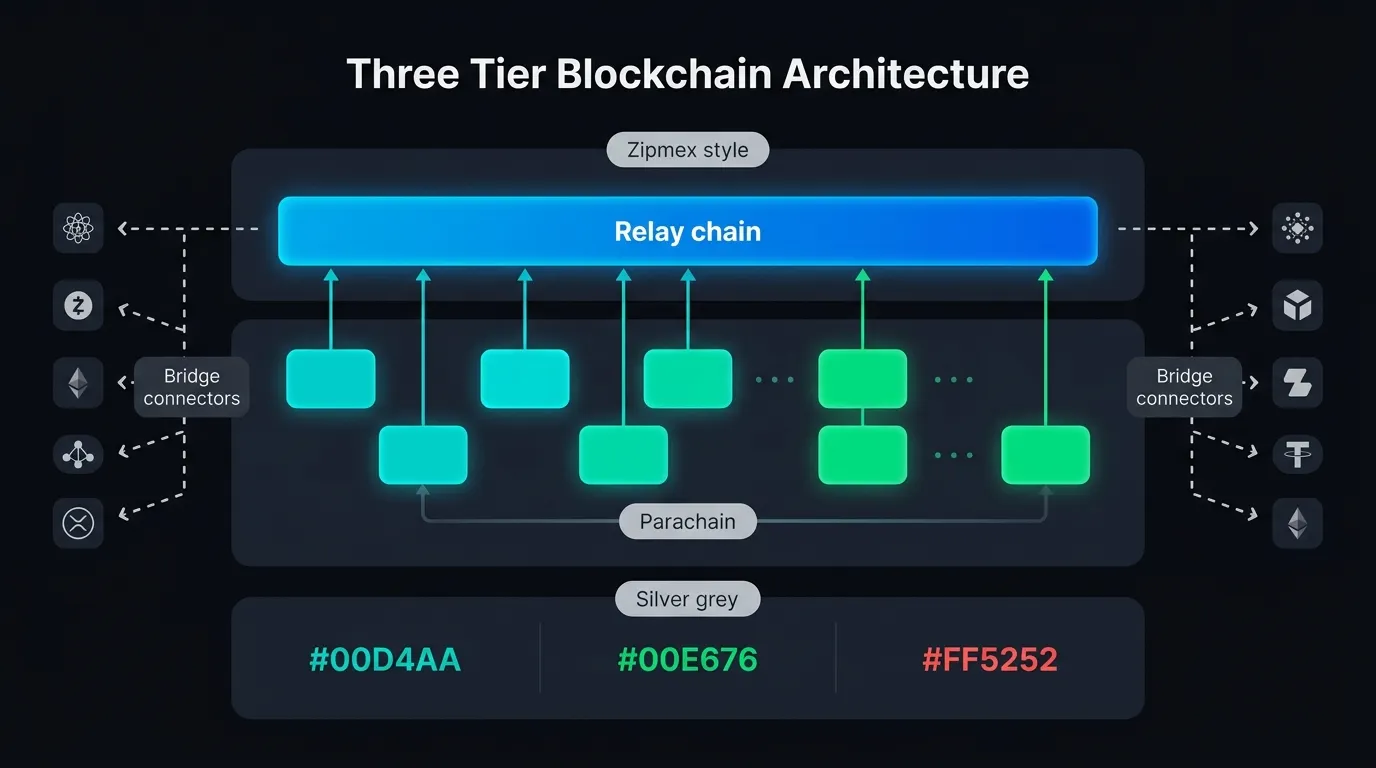
- Its three-part architecture (Relay Chain + Parachains + Bridges) enables shared security and trustless cross-chain messaging.
- DOT's March 2026 tokenomics overhaul introduced a 2.1 billion hard supply cap and cut issuance by 53.6%.
- DOT staking yields 8-15% APY on-chain (as of 2026), with pools starting at just 1 DOT.
How Does Polkadot Work?
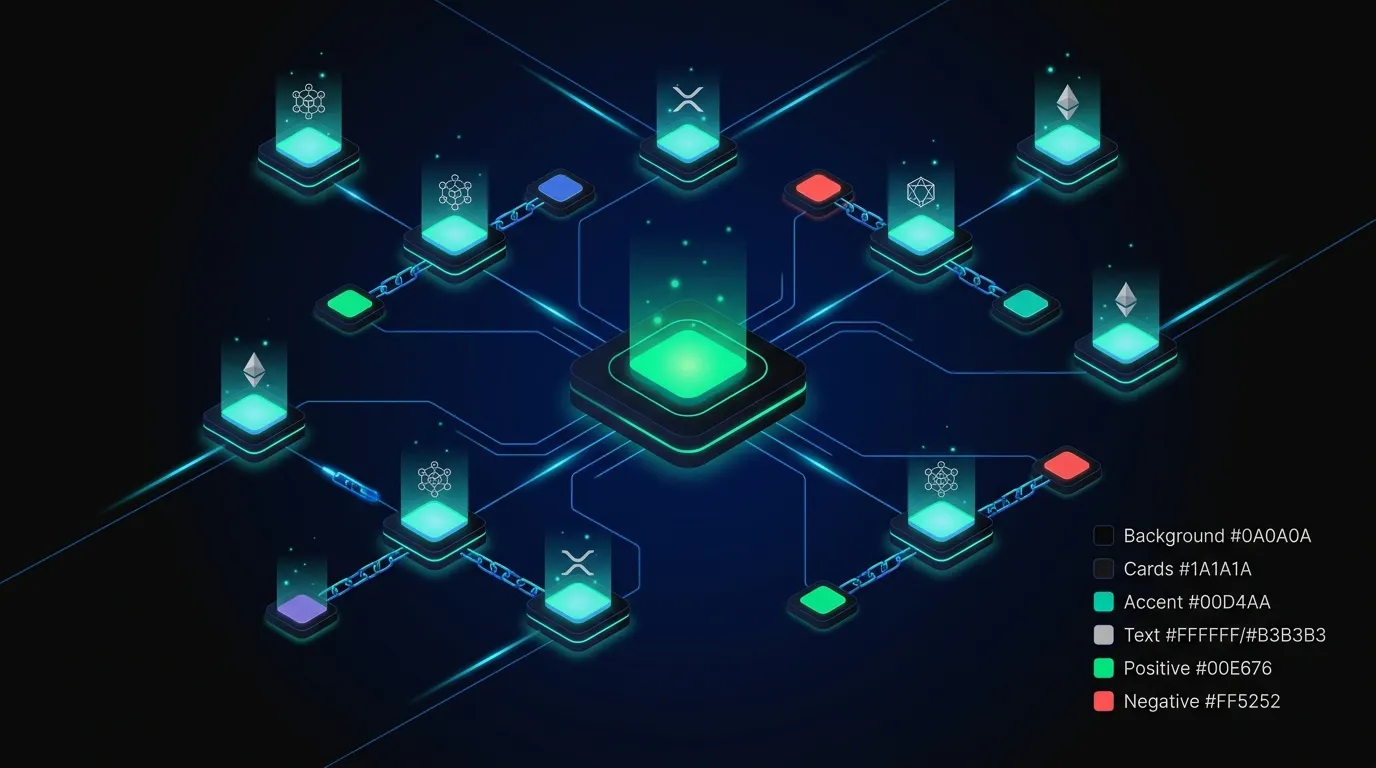
Polkadot's architecture is built on three interlocking layers. Understanding these helps explain why the network claims to offer both scale and security simultaneously.
Relay Chain
The Relay Chain is Polkadot's central coordination layer. It handles consensus, security finality, and cross-chain messaging - but deliberately does not support smart contracts or general computation. This minimalism is intentional: by offloading application logic to parachains, the Relay Chain stays lean, fast, and highly secure.
All parachains connected to the Relay Chain automatically inherit its security. A new blockchain joining Polkadot doesn't need to bootstrap its own validator set from scratch - it plugs into shared security immediately.
Parachains
Parachains are independent, application-specific blockchains that run in parallel and connect to the Relay Chain. Each parachain is fully sovereign - it can have its own token, governance model, transaction rules, and runtime logic - while still benefiting from Polkadot's pooled security.
Polkadot's unique architecture allows innovative startups to lease secure slots on the network, often raising funds through crowdloans that function similarly to early-stage token sales. Because the ecosystem is constantly onboarding fresh dApps and specialized chains, it's a prime hunting ground for early investors. To capitalize on these ground-level opportunities, keep a close watch on our guide to upcoming ICOs, TGEs and new crypto narratives 2026 currently shaping the market.
As of 2026, Polkadot hosts over 65 active parachains covering a wide range of use cases:
- Moonbeam - an Ethereum-compatible parachain enabling Ethereum developers to deploy apps using familiar tools
- Hydration - a DeFi liquidity and exchange protocol holding roughly $74 million in TVL
- Acala - a DeFi hub offering stablecoins, swaps, and staking
- Zeitgeist - a prediction market parachain
In 2026, Polkadot shifted from a chain-focused to an application-focused model called Polkadot 2.0 / Coretime. Instead of parachains paying for perpetual slot leases, they now purchase "coretime" - computational capacity - on demand. This dramatically lowers entry barriers for new projects.
Polkadot's unique parachain architecture allows innovative startups to lease secure slots on the network, often raising funds through crowdloans that function similarly to early-stage token sales. Because the ecosystem is constantly onboarding fresh dApps and specialized chains, it's a prime hunting ground for early investors. To capitalize on these ground-level opportunities, you should keep a close watch on the upcoming token generation events and new crypto narratives currently shaping the market.
Bridges
Bridges connect Polkadot to external blockchains like Ethereum, Bitcoin, and others. They extend interoperability beyond the Polkadot ecosystem. However, bridge security remains a known weakness in cross-chain infrastructure - the April 2026 Hyperbridge exploit is a reminder that bridge code requires extreme scrutiny.
When interacting with interoperability protocols and transferring assets across different blockchain networks, smart contract vulnerabilities can lead to sudden and catastrophic losses. Surviving these technical exploits requires strict capital preservation rules and proper diversification. To protect your portfolio from unforeseen ecosystem hacks, read our comprehensive guide on how to manage risk in crypto trading.
What Is the DOT Token Used For?
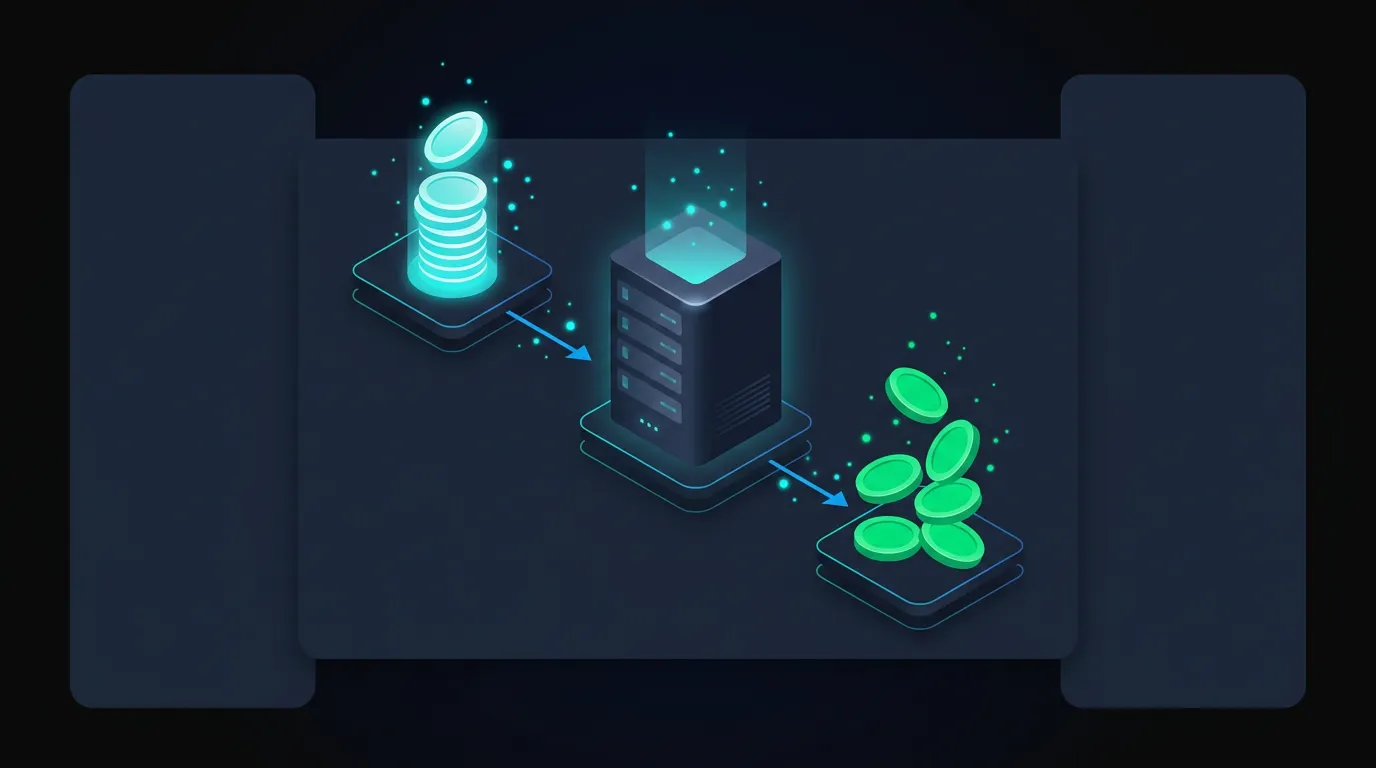
DOT is Polkadot's native token, and it serves three distinct functions within the protocol - making it far more than a simple trading asset.
🔢 DOT Tokenomics (May 2026)
Price
~$1.21-$1.27
Market Cap
~$2.04B
Circulating Supply
1.68B DOT
All-Time High
$54.98 (Nov 2021)
Hard Supply Cap
2.1B DOT
Staking APY (on-chain)
8-15%
Governance. DOT holders vote directly on protocol upgrades, parameter changes, and treasury spending via Polkadot's OpenGov system. Unlike many blockchains that require hard forks, Polkadot can upgrade its own codebase autonomously based on on-chain votes - no coordination chaos required.
Staking. DOT is used to nominate validators in the Nominated Proof-of-Stake (NPoS) mechanism. Validators secure the network; nominators back validators and share in block rewards. This keeps the network decentralized and running 24/7.
Bonding (Coretime). Under the Polkadot 2.0 model, DOT is used to purchase coretime - computational blockspace - for new parachains. This replaced the older auction-based slot lease system and lowers the cost of launching on Polkadot's network.
Polkadot Staking: How to Earn DOT Rewards
Staking DOT is one of the most straightforward ways to generate passive income within the Polkadot ecosystem. In 2026, following the Pi Day tokenomics overhaul on March 14, 2026, on-chain staking rewards range from 8% to 15% APY, depending on total network participation.
There are two main staking approaches:
Direct Nomination requires a minimum bond of ~250 DOT. You select up to 16 validators, monitor their performance, and receive rewards directly. Higher effort, but maximum yield.
Nomination Pools let you start with as little as 1 DOT. A pool operator manages validator selection on your behalf. Ideal for beginners or smaller holders.
Key mechanics to know:
- Unbonding period: 28 days to unlock DOT after unstaking
- New in 2026: Pool members are now "unslashable" - only validators' own 10,000 DOT bond is at risk, not your nomination
- Reward claiming: On-chain rewards must be claimed manually every 84 days; exchange staking pays automatically
You can also stake through platforms like Ledger (~14% APY), centralized exchanges like Binance or Coinbase (~5.3% APY), or liquid staking providers like Bifrost (vDOT) which allow you to keep your DOT liquid while earning yield.
⚠ Risk Warning
Exchange staking is custodial - the exchange holds your DOT. If the exchange is hacked or becomes insolvent, your staked tokens could be at risk. For large holdings, consider native on-chain staking or a hardware wallet like Ledger.
Polkadot vs Ethereum: What's the Difference?
Polkadot and Ethereum are often discussed together, but they operate at different layers of the blockchain stack. Understanding this distinction is key for developers and investors alike.
⚖ Polkadot vs Ethereum - Quick Comparison
| Feature | Polkadot (DOT) | Ethereum (ETH) |
|---|---|---|
| Layer | Layer-0 | Layer-1 |
| Primary Purpose | Connect blockchains | Smart contracts & dApps |
| Consensus | NPoS (GRANDPA) | PoS (Gasper) |
| TPS (theoretical) | 1,000+ | ~30 |
| Smart Contracts | Via parachains (e.g. Moonbeam) | Native |
| Staking APY (2026) | 8-15% (on-chain) | ~3-4% |
| Supply Cap | 2.1B DOT (hard cap, 2026) | None (deflationary via burns) |
Polkadot and Ethereum are not really competitors in the same way Ethereum and Solana are. Ethereum is where users deploy apps; Polkadot is the infrastructure that allows chains - including Ethereum-compatible ones - to connect.
While Polkadot focuses on providing a Layer-0 foundation for multiple independent blockchains to run in parallel, Ethereum relies on off-chain rollups to solve its high gas fees and scaling issues. To better understand how these competing architectural approaches stack up against each other, it is highly beneficial to explore our complete guide on what is Arbitrum and how Layer-2 solutions compare to Polkadot's native parachain model.
Projects like Moonbeam are specifically built to let Ethereum developers deploy on Polkadot without changing their tooling.
That said, for investors in 2026, Ethereum's superior network effects, developer ecosystem, and DeFi TVL mean it remains a more proven asset. Polkadot's edge is its architecture - but architecture alone doesn't generate fee revenue.
While Polkadot focuses on providing a Layer-0 foundation for multiple independent blockchains to run in parallel, Ethereum has historically relied on a congested single mainnet. However, the Ethereum ecosystem is rapidly evolving to solve its high gas fees through off-chain rollups. To better understand how these competing architectural approaches stack up against each other, it is highly beneficial to explore how Layer-2 scaling solutions like Arbitrum actually work compared to Polkadot's native parachain model.
Is Polkadot a Good Investment in 2026?
This is the question most readers actually came here to answer. Here's a balanced look at the bull and bear cases.
📈 Bullish Factors
- Tokenomics overhaul (March 2026): A hard cap of 2.1B DOT and a 53.6% issuance reduction make DOT structurally scarcer - similar to a halving event.
- #1 in developer commits (2026): Polkadot leads all major blockchains in total code commits, signaling active, well-resourced development.
- First US Spot ETF: 21Shares launched TDOT on Nasdaq in March 2026, creating a regulated institutional entry point.
- Staking yield: At 8-15% APY on-chain, DOT offers one of the highest native staking yields among top-20 assets.
- Polkadot 2.0 (Coretime): The shift to on-demand blockspace purchasing dramatically lowers barriers for new parachain projects.
📉 Bearish Factors
- Price performance: DOT is down ~97.8% from its ATH of $54.98 and has lost ~70% over the past year as of May 2026.
- Near-zero fee revenue: The Polkadot relay chain generated $0 in transaction fees on some days in April 2026 - a troubling signal for fundamental valuation.
- ETF underperformance: TDOT launched with only $11M in seed capital - tepid demand relative to Bitcoin and Ethereum ETFs.
- Bridge vulnerabilities: The Hyperbridge exploit (~$2.5M, April 2026) reinforced cross-chain security risks in the ecosystem.
- Competition: Ethereum, Solana, and Cosmos are all competing for developer mindshare in the interoperability space.
The honest summary: Polkadot has strong technology and a genuinely improved economic model in 2026, but it trades at a significant "hope premium" relative to its actual network revenue. Its staking yield makes it interesting for income-focused holders, but pure price appreciation requires actual growth in parachain activity and fee revenue.
Deciding whether to allocate capital to DOT requires looking beyond the project's technical milestones and analyzing the broader macroeconomic environment. Even fundamentally strong networks like Polkadot are heavily influenced by global liquidity and shifting market trends. To build a resilient portfolio and time your entries correctly, we highly recommend reviewing our expert strategies on how to navigate crypto in 2026 before making long-term commitments.
Deciding whether to allocate capital to DOT requires looking beyond the project's technical milestones and analyzing the broader macroeconomic environment. Even fundamentally strong networks like Polkadot are heavily influenced by global liquidity and shifting market trends. If you want to build a resilient portfolio and time your entries correctly, we highly recommend reviewing our expert strategies on how to navigate the crypto market in 2026 before making long-term commitments.

Polkadot's Road Ahead: Key Milestones
📅 Polkadot Timeline
2016
Gavin Wood publishes the Polkadot whitepaper
May 2020
Polkadot mainnet launches; genesis block released
November 2021
DOT reaches ATH of $54.98; first parachain auctions go live
January 2026
Performance upgrade: reduced execution latency, full Ethereum developer stack compatibility
March 14, 2026 ("Pi Day")
Tokenomics overhaul: 2.1B hard cap introduced, issuance cut 53.6%; first US spot DOT ETF (TDOT) launches on Nasdaq
April 2026
Hyperbridge exploit: ~$2.5M in losses; Binance delists DOT/BTC margin pair
Frequently Asked Questions
What is Polkadot in simple terms?
Polkadot is a "blockchain of blockchains." It's a Layer-0 protocol that connects independent blockchains - called parachains - so they can share data, assets, and security. Think of it as the internet's TCP/IP layer, but for blockchains: invisible infrastructure that makes everything else work together.
How does Polkadot differ from Ethereum?
Ethereum is a Layer-1 smart contract platform where developers deploy apps. Polkadot is a Layer-0 that connects other blockchains. They're complementary, not identical competitors - in fact, Moonbeam is an Ethereum-compatible parachain built directly on Polkadot.
What is DOT used for?
DOT serves three roles: governance (voting on protocol changes via OpenGov), staking (securing the network via Nominated Proof-of-Stake), and bonding/coretime (purchasing blockspace for parachains). It also trades freely on major exchanges like Binance, Coinbase, and Kraken.
How much can I earn by staking DOT?
On-chain staking via Polkadot's native Staking Dashboard currently yields approximately 8-15% APY depending on network participation levels. Exchange staking (e.g., Binance, Coinbase) typically yields around 5.3% APY. Nomination pools allow staking with as little as 1 DOT.
Is Polkadot a good investment in 2026?
Polkadot's 2026 tokenomics upgrade (hard supply cap, reduced issuance) improved the asset's fundamentals. However, DOT trades ~97.8% below its 2021 ATH, and on-chain fee revenue remains near zero - raising questions about whether the market cap reflects actual utility or speculative premium. It may suit income-seeking stakers more than pure growth investors at current valuations.
Who created Polkadot?
Polkadot was created by Dr. Gavin Wood, an Ethereum co-founder and the person who coined the term "Web 3.0" in 2014. The project is backed by the Web3 Foundation and developed by Parity Technologies. Since launch, governance has been fully decentralized to DOT token holders via on-chain voting.
What is the difference between Polkadot and Kusama?
Kusama is Polkadot's "canary network" - a live, experimental version of Polkadot where new features are battle-tested before being deployed to the main network. It uses the KSM token and has faster governance parameters, making it ideal for early-stage projects that want to launch before securing a Polkadot parachain slot.
Conclusion
Polkadot remains one of the most technically sophisticated protocols in crypto. Its Layer-0 architecture, shared security model, and the 2026 tokenomics overhaul make a compelling long-term case for the network's role in Web3 infrastructure. The addition of a US spot ETF and record developer activity reinforce that Polkadot is far from a dead project.
The challenge is bridging the gap between technological promise and real revenue. Until parachain adoption drives meaningful fee generation, DOT's valuation rests heavily on belief in the roadmap. For those interested in exposure, staking offers a way to earn while you wait - with 8-15% APY on-chain being among the highest in the top-50.
If you want to explore DOT further or add it to your portfolio, check the live DOT coin info page on Zipmex for current pricing and trading options.
⚠ Disclaimer: The information provided in this article is not intended to provide investment or financial advice. Investment decisions should be based on the individual's financial needs, objectives, and risk profile. We encourage readers to understand the assets and risks before making any investment entirely. Cryptocurrency investments are subject to high market risk. Past performance does not guarantee future results.
ZIPMEX promotes trading on trade.zipmex.com. Promotions are labelled and kept separate from news coverage, which is selected and checked without regard to them. Perpetual futures are leveraged derivatives. Prices can move fast and you can lose all of your margin. Not available in every jurisdiction. Not investment advice.