You don't need a crypto wallet, a seed phrase, or a crypto exchange account to get Bitcoin exposure in 2026. With the Grayscale Bitcoin ETF, you can buy it directly from your brokerage - the same way you'd buy Apple or Tesla stock.
⚡ Quick Answer
The Grayscale Bitcoin ETF (GBTC) is a spot Bitcoin exchange-traded fund that trades on NYSE Arca, allowing investors to gain Bitcoin exposure through a regular brokerage account. Launched as a trust in 2013 and converted to a spot ETF in January 2024, GBTC currently holds approximately ~$10.5 billion in assets and charges a 1.50% annual fee. It is one of the largest and most liquid Bitcoin ETFs in the world.
What Is Grayscale Bitcoin Trust (GBTC)?
Grayscale Bitcoin Trust (GBTC) is the world's oldest and one of the largest institutional Bitcoin investment vehicles. It was launched by Grayscale Investments in 2013 - a full decade before spot Bitcoin ETFs were approved in the United States.
For most of its life, GBTC operated as a closed-end trust. Investors could buy shares representing a slice of pooled Bitcoin holdings, but they couldn't directly redeem those shares for BTC. This structure frequently caused the share price to trade at a significant premium or discount relative to the actual Bitcoin held by the fund.
Everything changed on January 11, 2024, when the U.S. Securities and Exchange Commission approved GBTC's conversion into a spot Bitcoin ETF. This was a landmark moment - and the result of a multi-year legal battle that Grayscale ultimately won against the SEC in August 2023.
Today, GBTC is a fully regulated spot Bitcoin ETF, trading on NYSE Arca under the ticker symbol GBTC. The fund holds actual Bitcoin - not futures contracts - and the price of each share closely tracks the real-time spot price of BTC.
🎯 Key Takeaways
- Founded: 2013 - the first publicly traded Bitcoin fund in the U.S.
- Converted to ETF: January 11, 2024, after winning a landmark legal case vs. the SEC
- Trades on: NYSE Arca under ticker GBTC
- Asset Manager: Grayscale Investments, a subsidiary of Digital Currency Group (DCG)
- Custodian: Coinbase Custody Trust Company, LLC
Who Is Grayscale Investments?
Grayscale Investments is the world's largest crypto-focused asset manager, founded in 2013 by Barry Silbert. It operates as a subsidiary of Digital Currency Group (DCG) and is headquartered in Stamford, Connecticut. The firm now offers a diverse product lineup - from single-asset ETFs like GBTC to multi-coin funds like the GDLC CoinDesk Crypto 5 ETF, which holds BTC, ETH, XRP, SOL, and ADA.
Grayscale has over 130 cumulative years of traditional finance leadership across its team, making it one of the most institutionally credible names in the crypto asset management space as of 2026.
How Does the Grayscale Bitcoin ETF Work?
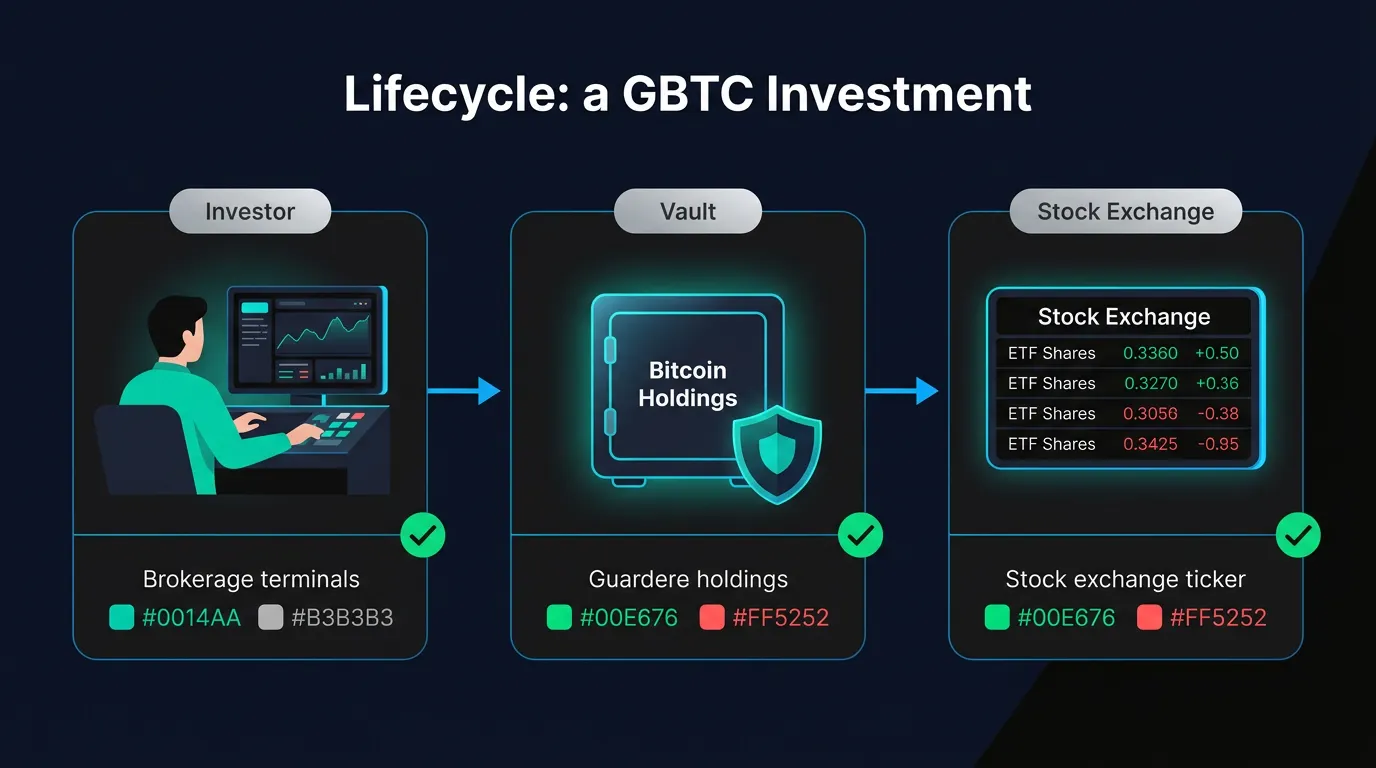
The grayscale bitcoin etf works like any other exchange-traded fund - just with Bitcoin as the underlying asset. Here's the full mechanics:
1. Grayscale holds real Bitcoin. The fund stores actual BTC in secure custody through Coinbase Custody Trust Company. These are cold-storage wallets managed at an institutional level - not your typical hot wallet.
2. The fund issues shares. Each GBTC share represents a proportional ownership stake in the fund's total Bitcoin holdings. As of early 2026, GBTC held approximately 156,000 BTC, reflecting significant outflows since the January 2024 ETF conversion.
3. Shares trade on stock exchanges. Investors can buy and sell GBTC shares on NYSE Arca during market hours, just like a stock. The price tracks the real-time spot price of Bitcoin.
4. Authorized participants maintain price accuracy. Since converting to a spot ETF, GBTC uses a creation and redemption mechanism. This allows institutional "authorized participants" to create or redeem large blocks of shares, keeping the ETF price closely aligned with the net asset value (NAV) of the underlying Bitcoin - eliminating the severe premiums and discounts that plagued the old trust structure.
What Happens to the Annual Fee?
Grayscale charges a 1.50% annual management fee on GBTC. This fee is deducted directly from the fund's Bitcoin holdings over time, meaning the Bitcoin-per-share ratio gradually decreases each year. It doesn't come out of your brokerage account separately - it's already reflected in the share price.
You can track GBTC's current price, NAV, and holdings on Yahoo Finance.
Grayscale Bitcoin ETF Fees - What Investors Pay
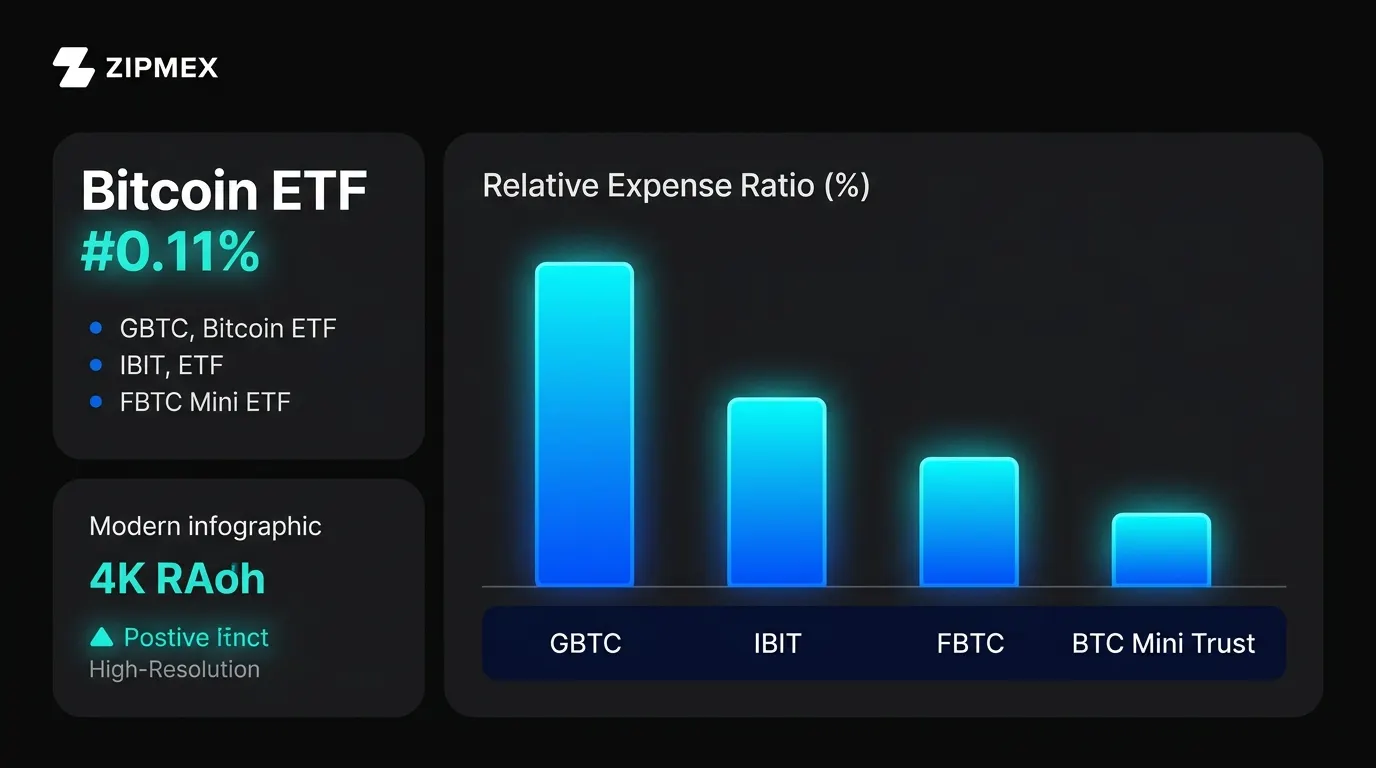
The fee question is arguably the most important factor when comparing Bitcoin ETFs in 2026. Here's how the major spot Bitcoin ETFs stack up:
Sources: Yahoo Finance - GBTC, SEC Filing - BTC Mini Trust, CoinGecko - ETF comparison
Why Is GBTC's Fee So High?
GBTC's 1.50% expense ratio is a legacy of its trust structure era, when it was the only institutional Bitcoin vehicle available and had pricing power. When it converted to a spot ETF in January 2024, it only partially reduced its fee (from 2.00% to 1.50%).
New entrants like BlackRock (IBIT) and Fidelity (FBTC) immediately undercut GBTC with a 0.25% fee, triggering significant investor outflows from GBTC in 2024 and into 2025.
Grayscale's strategic response was to launch the Bitcoin Mini Trust (ticker: BTC) in July 2024, with a market-leading 0.15% expense ratio and $3.5 billion AUM as of March 2026. If you're cost-sensitive, the Mini Trust may be the smarter choice.
⚠ Risk Warning
Over a 10-year holding period, a 1.50% annual fee compounds significantly against a 0.15% fee. On a $10,000 investment, this fee difference can cost thousands of dollars in foregone returns depending on Bitcoin's price performance.
Many traditional investors look to GBTC because Bitcoin has historically been viewed as a digital alternative to gold. As macroeconomic conditions shift and fiat currencies lose their purchasing power, holding a piece of the flagship cryptocurrency through a regulated vehicle becomes increasingly attractive. If you're building a defensive portfolio, you might also want to explore other top investments to hedge against inflation to see how digital assets compare to traditional asset classes.
Grayscale Bitcoin ETF vs BlackRock IBIT - Which Is Better?
This is the most common question institutional and retail investors ask in 2026. Both are spot Bitcoin ETFs holding real BTC - but their profiles differ meaningfully.
⚖ GBTC vs IBIT: Key Differences
| Factor | GBTC (Grayscale) | IBIT (BlackRock) |
|---|---|---|
| Expense Ratio | 1.50% | 0.25% |
| Track Record | 10+ years (since 2013) | Since Jan 2024 |
| Liquidity | Very high (legacy) | Highest (market leader) |
| AUM (approx.) | ~$10.5B | Largest Bitcoin ETF |
| Custodian | Coinbase Custody | Coinbase Custody |
| Manager | Grayscale / DCG | BlackRock iShares |
When GBTC Makes Sense
Despite the higher fee, GBTC is not without advantages. Some institutional traders and funds prefer it specifically because of its deep liquidity and decade-long operational track record. For large block trades where execution efficiency matters more than a few basis points of annual fee, GBTC remains a preferred vehicle.
For most retail investors looking to hold long-term, however, the fee difference strongly favors IBIT, FBTC, or Grayscale's own Bitcoin Mini Trust (BTC).
If you're looking to compare crypto ETFs more broadly, there's a whole spectrum of products beyond just Bitcoin - from Ethereum staking ETFs to multi-asset funds.
The price action of GBTC and its premium or discount to net asset value (NAV) can shift rapidly based on institutional flows and regulatory news. Staying ahead of these market movements requires real-time information rather than waiting for mainstream financial news coverage. To keep your finger on the pulse of institutional crypto flows and ETF approvals, it's highly recommended to follow the most reliable crypto accounts on Twitter that provide instant market alerts.
How to Invest in the Grayscale Bitcoin ETF
Investing in GBTC is straightforward - no crypto wallet or exchange account required. Here's the step-by-step process:
Step 1: Open a Brokerage Account
GBTC is accessible through virtually any major brokerage platform: Fidelity, Charles Schwab, Vanguard, TD Ameritrade, Robinhood, and Interactive Brokers. If you already have a brokerage account, you're ready to go.
Step 2: Fund Your Account
Deposit USD into your brokerage account. Standard bank transfers typically take 1-3 business days.
Step 3: Search for GBTC
In your brokerage's search bar, type GBTC (Grayscale Bitcoin Trust ETF). Confirm it trades on NYSE Arca before placing an order.
Step 4: Place Your Order
Choose your order type - market order (executes immediately at current price) or limit order (executes only at your specified price). Start with the minimum your brokerage allows - even fractional shares are available on platforms like Robinhood.
Step 5: Monitor Your Investment
GBTC trades during regular U.S. stock market hours (9:30 AM - 4:00 PM ET, Monday-Friday). Unlike buying Bitcoin directly, you won't be able to trade 24/7 - but you also won't need to worry about wallet security or private key management.
📈 Benefits of Investing via GBTC
- No crypto wallet needed: Your brokerage handles custody
- Tax simplicity: Gains reported like regular ETF capital gains (varies by jurisdiction)
- IRA / 401(k) eligible: Some platforms allow GBTC in retirement accounts
- Regulated product: SEC-approved ETF with established operational framework
- Institutional-grade custody: Bitcoin held by Coinbase Custody
📉 Risks to Consider
- High expense ratio: 1.50%/year erodes returns vs. competitors at 0.15-0.25%
- Bitcoin price volatility: GBTC tracks BTC - all Bitcoin market risk applies
- Trading hours only: Unlike spot BTC, GBTC can't be traded on weekends or after-hours
- No staking rewards: GBTC shares don't generate yield; Bitcoin doesn't pay dividends
- Not direct BTC ownership: You own fund shares, not actual Bitcoin
If you're new to crypto investing, start with our guide on safe cryptocurrency trading practices to understand risk management before committing capital.
Beyond GBTC: Grayscale's Full ETF Lineup in 2026
The Grayscale Bitcoin ETF is just one product in a growing portfolio. As of May 2026, Grayscale offers a wide range of crypto investment vehicles:
Single-Asset Spot ETFs:
- GBTC - Grayscale Bitcoin Trust ETF (1.50% fee)
- ETHE - Grayscale Ethereum Staking ETF (distributes staking rewards)
- BTC - Grayscale Bitcoin Mini Trust ETF (0.15% fee)
- GSOL - Grayscale Solana ETF
- GXRP - Grayscale XRP ETF
- GDOG - Grayscale Dogecoin ETF
Multi-Asset ETFs:
- GDLC - Grayscale CoinDesk Crypto 5 ETF - holds BTC, ETH, XRP, SOL, ADA with a 0.59% fee; the first U.S.-listed ETF solely invested in a basket of large-cap digital assets
Income-Focused ETFs:
- BPI - Grayscale Bitcoin Premium Income ETF - writes covered call options on Bitcoin ETPs and distributes income bi-weekly
For a broader overview of the crypto ETF landscape, Grayscale is now one of many issuers competing for institutional and retail capital in the regulated crypto ETF space.
Frequently Asked Questions
Is GBTC a good investment in 2026?
GBTC gives you direct exposure to Bitcoin through a regulated ETF - without managing a crypto wallet. However, its 1.50% annual fee is significantly higher than competitors like BlackRock's IBIT (0.25%) or Grayscale's own Bitcoin Mini Trust BTC (0.15%). For long-term investors, the fee gap compounds materially over time. Whether GBTC is "good" depends entirely on your investment thesis around Bitcoin itself and your preference for the specific fund's liquidity profile.
What is the GBTC expense ratio?
GBTC charges a 1.50% annual expense ratio, which is deducted from the fund's Bitcoin holdings proportionally throughout the year. This means the amount of Bitcoin per share decreases slightly over time. It is currently one of the highest fees among spot Bitcoin ETFs in the U.S. market.
How does GBTC differ from buying Bitcoin directly?
When you buy GBTC, you own shares in a fund that holds Bitcoin - you do not own Bitcoin directly. This means no crypto wallets, no private keys, and no direct on-chain transactions. However, it also means you can't send your GBTC Bitcoin to another wallet, use it in DeFi, or trade it 24/7. Direct Bitcoin ownership gives you full custody and flexibility, while GBTC gives you regulatory wrapper and brokerage simplicity.
Can I hold GBTC in a retirement account?
Many brokerage platforms allow GBTC to be held in IRAs and certain other tax-advantaged accounts. Check with your specific brokerage for eligibility. This is one of GBTC's advantages - it provides Bitcoin exposure in account types that cannot hold cryptocurrency directly.
What happened to the GBTC premium/discount?
Before converting to a spot ETF in January 2024, GBTC frequently traded at significant premiums (during Bitcoin bull markets) or steep discounts (during bear markets) to its underlying NAV - sometimes over 30-40%. Since the ETF conversion introduced the creation/redemption mechanism, the premium/discount has been largely eliminated, keeping GBTC's price tightly aligned with its Bitcoin NAV.
Is Grayscale's Bitcoin Mini Trust (BTC) better than GBTC?
For most cost-conscious investors, the Grayscale Bitcoin Mini Trust (ticker: BTC) offers a more attractive fee structure at 0.15% compared to GBTC's 1.50%. As of March 2026, BTC holds ~$3.5 billion in assets and 51,673 BTC. Both funds are managed by Grayscale and hold real Bitcoin, but BTC is designed specifically to address fee-sensitive investors.
What is the GDLC ETF?
GDLC (Grayscale CoinDesk Crypto 5 ETF) is Grayscale's multi-asset ETF that holds the five largest cryptocurrencies by market cap: Bitcoin, Ethereum, XRP, Solana, and Cardano. With a 0.59% expense ratio, it offers diversified crypto exposure in a single ETF ticker. It trades on NYSE Arca.
Conclusion
The Grayscale Bitcoin ETF (GBTC) remains one of the most recognized and liquid ways to gain Bitcoin exposure through traditional financial infrastructure. With a decade-long track record and deep institutional liquidity, it earned its place in the crypto investment landscape - even if the 1.50% fee is a genuine drawback relative to newer, cheaper competitors.
The real takeaway for 2026: GBTC is not your only option, even from Grayscale itself. If you want Bitcoin exposure at lower cost, Grayscale's Bitcoin Mini Trust (BTC) at 0.15% or BlackRock's IBIT at 0.25% are compelling alternatives. If you want diversified crypto exposure across BTC, ETH, XRP, SOL, and ADA in a single product, the GDLC CoinDesk Crypto 5 ETF may be worth exploring.
Whatever product you choose, always do your own research, understand the fee structure, and invest only what you're prepared to lose in a volatile asset class.
GBTC has opened the doors for a wider range of investors, including those who may be restricted from opening accounts on native crypto exchanges. However, for investors adhering to strict religious financial principles, the fundamental nature of the underlying asset still matters. If you're wondering about the religious compliance of trading such digital assets, you can find a detailed analysis on whether Bitcoin is considered halal in Islamic finance before making a decision.
⚠ Disclaimer: The information provided in this article is not intended to provide investment or financial advice. Investment decisions should be based on the individual's financial needs, objectives, and risk profile. We encourage readers to understand the assets and risks before making any investment entirely. Cryptocurrency investments are subject to high market risk. Past performance does not guarantee future results.
ZIPMEX promotes trading on trade.zipmex.com. Promotions are labelled and kept separate from news coverage, which is selected and checked without regard to them. Perpetual futures are leveraged derivatives. Prices can move fast and you can lose all of your margin. Not available in every jurisdiction. Not investment advice.