Crypto can make you - or break you. With Bitcoin trading around $65,800 and the total market cap hitting $4.5 trillion in 2026, the opportunity is real - but so is the risk. These six cryptocurrency tips will help you invest smarter, protect your capital, and avoid the most common mistakes.
⚡ Quick Answer
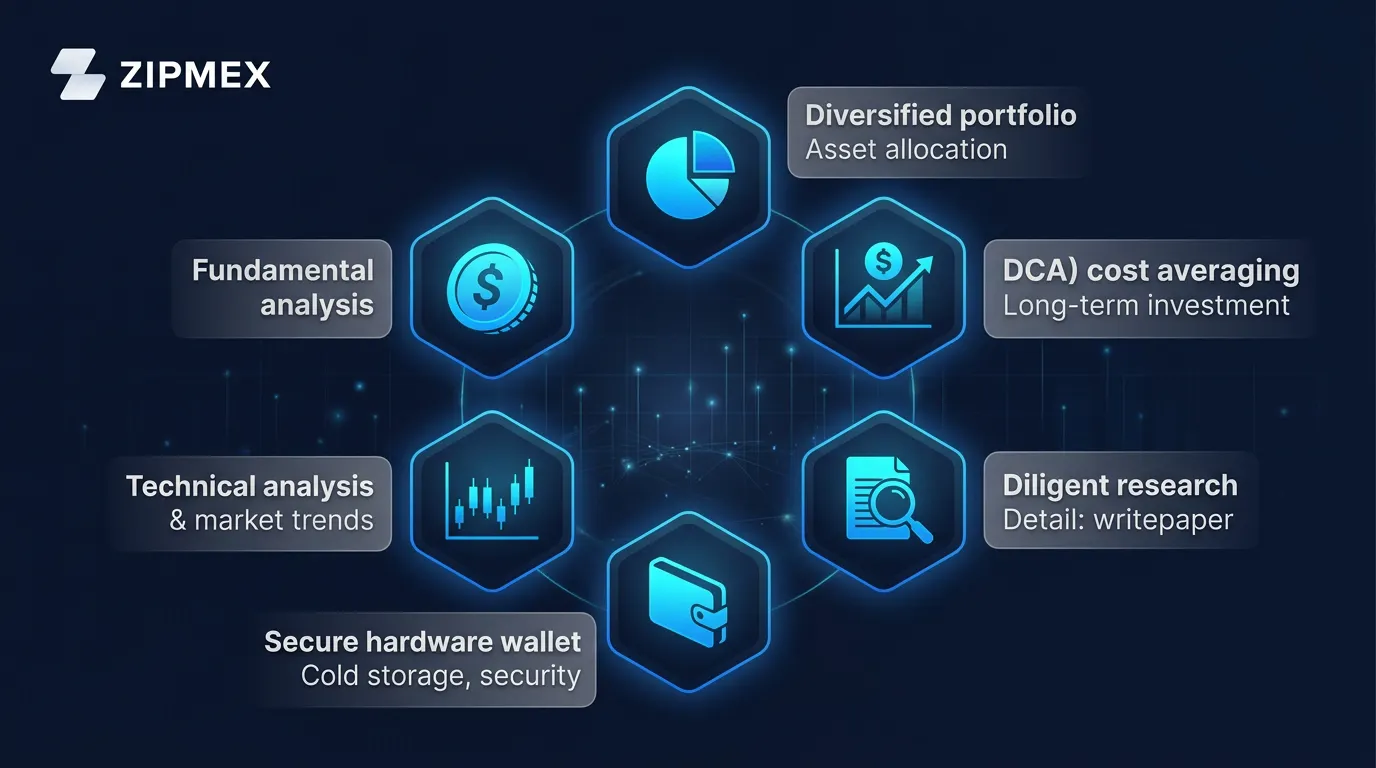
The six essential cryptocurrency tips for 2026: (1) only invest what you can afford to lose, (2) diversify across multiple assets using a 60/30/10 framework, (3) use dollar-cost averaging instead of timing the market, (4) always do your own research before buying, (5) secure your assets in a crypto wallet, and (6) track market trends and rebalance regularly. Together, these form the foundation of a resilient, long-term crypto strategy.
Crypto has transformed millions of portfolios - but it has also wiped out people who ignored the basics. As 22% of US households now own digital assets, the space has matured significantly. Yet the core cryptocurrency investing tips that protect your capital remain the same. Let's break down each one with 2026 data, real examples, and actionable strategies.
💸 Tip 1: Only Invest What You Can Afford to Lose
This is the first and most important of all cryptocurrency tips. Crypto markets are volatile by nature - Bitcoin alone dropped 48% from its October 2025 ATH of $126,198 to around $65,800 in early 2026. A single correction of that scale can erase half your investment if you over-commit.
How Much Should You Allocate to Crypto?
According to Morgan Stanley's Global Investment Committee, even a 6% crypto allocation can nearly double overall portfolio volatility. Most experts recommend the following starting allocations:
Before you invest a single dollar, list your near-term expenses: mortgage, rent, groceries, insurance premiums. Then identify short-term goals like a car purchase or vacation, and long-term goals like retirement. Your crypto budget is what remains after all of those are funded. This budgeting step alone will protect you from the most common mistake: investing rent money in a volatile asset.
⚠ Warning: Crypto markets operate 24/7 with no circuit breakers. A 30-50% correction can happen overnight. Never invest emergency funds, money earmarked for near-term expenses, or capital you cannot psychologically afford to lose.
🪙 Tip 2: Diversify Your Crypto Portfolio
Putting all your money in a single coin is one of the most dangerous mistakes a new investor can make. A single tweet or regulatory decision can send any individual token down 50-80% overnight. Diversifying your crypto portfolio across different asset types reduces this concentration risk dramatically.
The 60/30/10 Portfolio Framework
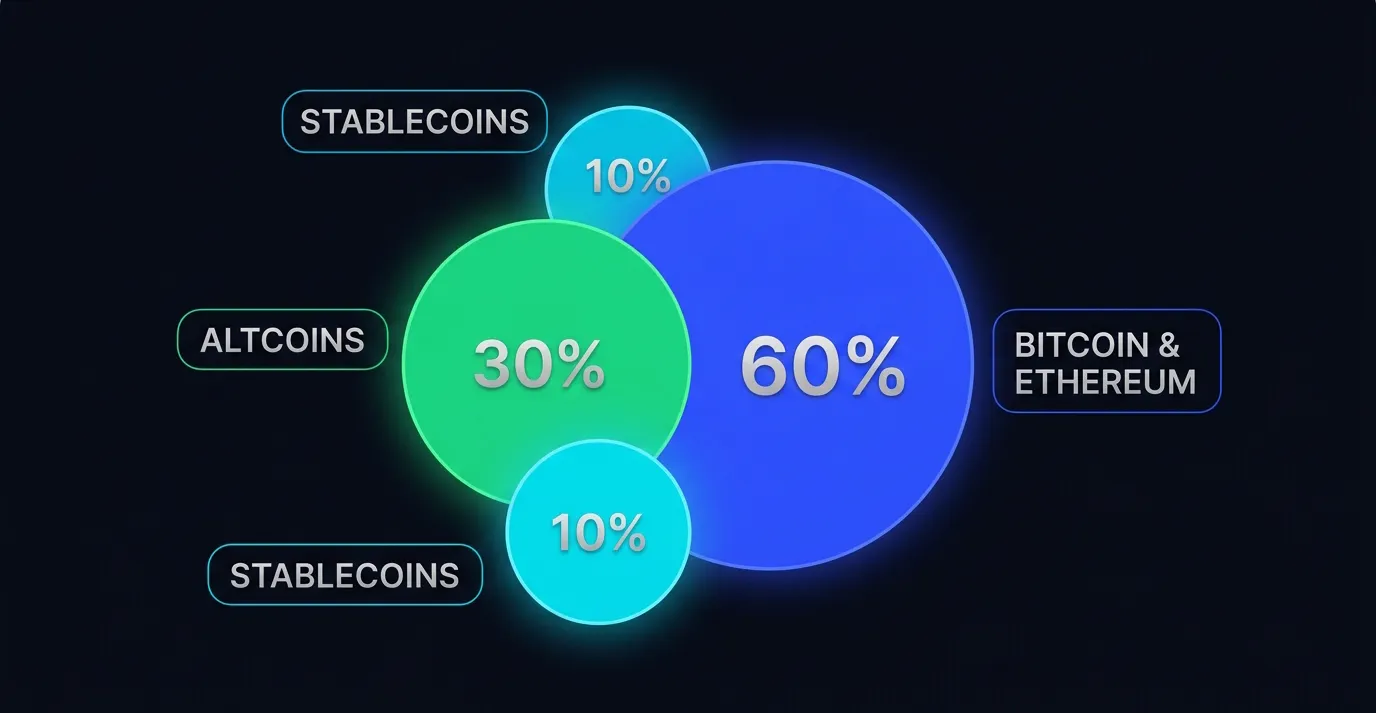
The institutional standard emerging in 2025-2026 is a structured allocation model that balances stability with growth potential:
📐 The 60/30/10 Crypto Diversification Framework
🔵 60% - Core Holdings (BTC + ETH)
Bitcoin (40%) as digital gold and market anchor. Ethereum (20%) for smart contract ecosystem exposure. Maximum liquidity, institutional adoption, proven resilience through multiple market cycles.
🟢 30% - Quality Altcoins
Layer-1 protocols (SOL, ADA), DeFi tokens, infrastructure plays with clear utility and adoption signals. Higher risk, higher potential upside.
💙 10% - Stablecoins / Dry Powder
USDC or USDT held in reserve. When significant dips occur, you have capital ready to deploy. Stablecoins on lending platforms can also generate 3-8% APY.
This framework mirrors how institutional investors and successful retail traders approach crypto in 2026. The goal is not to pick the single winning coin - it's to ensure that your portfolio survives any individual asset's collapse while still capturing the sector's upside. If Dogecoin crashes after a celebrity tweet (as it has multiple times), a diversified portfolio absorbs the blow. The rest of your holdings continue working for you.
💡 Pro Tip: Rebalance your portfolio quarterly. Markets drift - your carefully planned 60/30/10 allocation will shift as different assets move at different speeds. Rebalancing locks in profits from outperformers and keeps your risk profile consistent.
📈 Tip 3: Use Dollar-Cost Averaging (DCA) Instead of Timing the Market
Trying to time the crypto market is one of the most costly mistakes investors make. Studies consistently show that systematic regular purchases outperform attempts to find the "perfect" entry point. This is the core principle behind dollar-cost averaging - and it's one of the most powerful crypto investing strategies for beginners.
How DCA Works in Practice
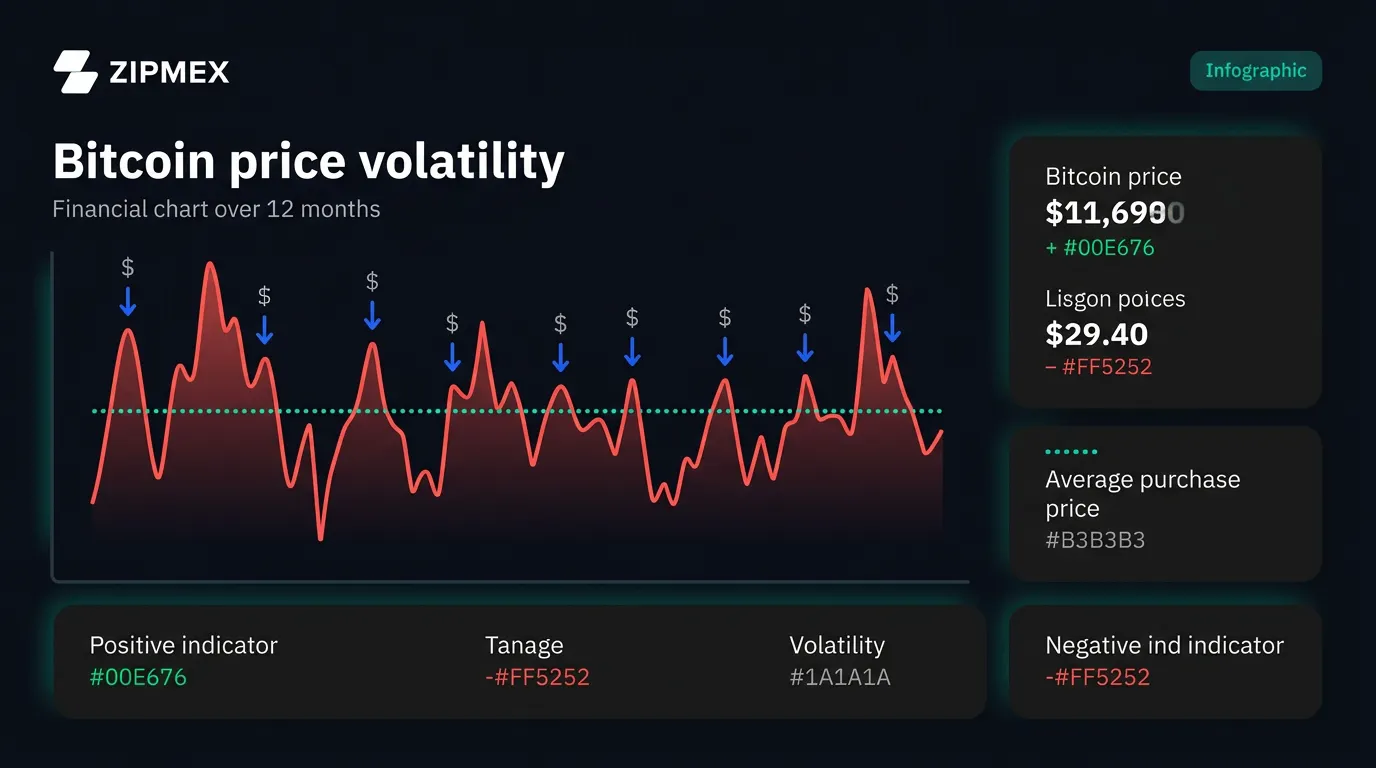
Instead of investing $12,000 at once, you invest $1,000 every month for 12 months. When prices are high, your $1,000 buys fewer coins. When prices drop, it buys more. Over time, this averages out your entry price and eliminates the psychological pressure of timing a volatile market.
📅 DCA vs. Lump Sum - A 2025-2026 Example
❌ Lump Sum at ATH
Invest $12,000 in October 2025 at BTC's ATH of $126,198. By April 2026, position is down ~48% to roughly $6,240.
✅ DCA Monthly
Invest $1,000/month Oct 2025-Apr 2026. Buying through highs and lows results in a significantly lower average cost basis and reduced drawdown exposure.
Macro investor Raoul Pal captures the mindset perfectly: DCA removes emotion from the equation, ensures you are always accumulating, and turns volatility into an advantage rather than a source of anxiety. Most major exchanges in 2026 - including Zipmex - support automated recurring purchases, making DCA entirely hands-off once set up.
🔍 Tip 4: Do Your Own Research (DYOR) Before Every Investment
No list of cryptocurrency tips is complete without DYOR - Do Your Own Research. The crypto space is filled with hype, influencer promotions, and outright scams. The only protection is rigorous due diligence before committing capital to any project.
The DYOR Checklist for 2026
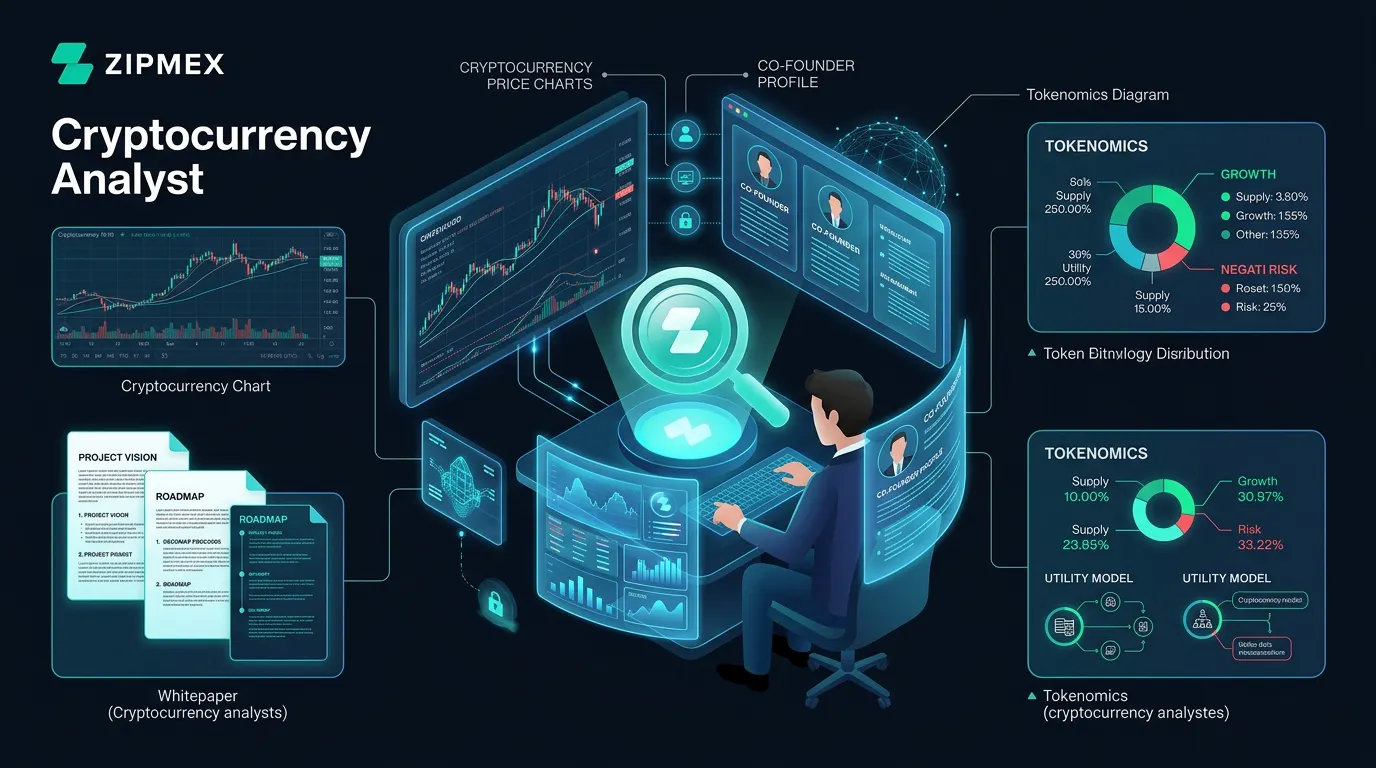
Understand What the Project Does
Read the whitepaper. Can you explain in one sentence what problem this coin solves? If not, don't invest. Bitcoin's value comes from its fixed 21 million supply and role as digital gold. Ethereum powers smart contracts and DeFi. What does your target coin do that others can't?
Verify the Team and Roadmap
Anonymous teams with no accountability are a major red flag. Check LinkedIn, GitHub activity, and whether past roadmap milestones were delivered on time.
Check Tokenomics and Supply
Is the supply capped or inflationary? What percentage do early investors hold? A token where insiders hold 80% of supply is a recipe for a rug pull when they unlock and sell.
Avoid These Red Flags
Guaranteed returns or unrealistic APYs, heavy celebrity promotion without substance, no security audits, no clear utility beyond speculation. If it looks too good to be true in crypto, it almost certainly is.
Investment strategies that work for one person may not suit another - different risk appetites require different approaches. What matters is that your decisions are based on your own research and your own risk tolerance, not on a stranger's tweet or a friend's tip. For deeper guidance, see our guide to how to be successful in crypto without relying on luck.
🔐 Tip 5: Secure Your Assets in a Crypto Wallet
One of the most overlooked cryptocurrency tips is security. Leaving your assets on an exchange indefinitely exposes you to platform risk. The 2025 Bybit hack cost users $1.5 billion - and it wasn't an isolated incident. Exchanges get hacked, go bankrupt, or freeze withdrawals without warning.
Hot Wallets vs. Cold Wallets
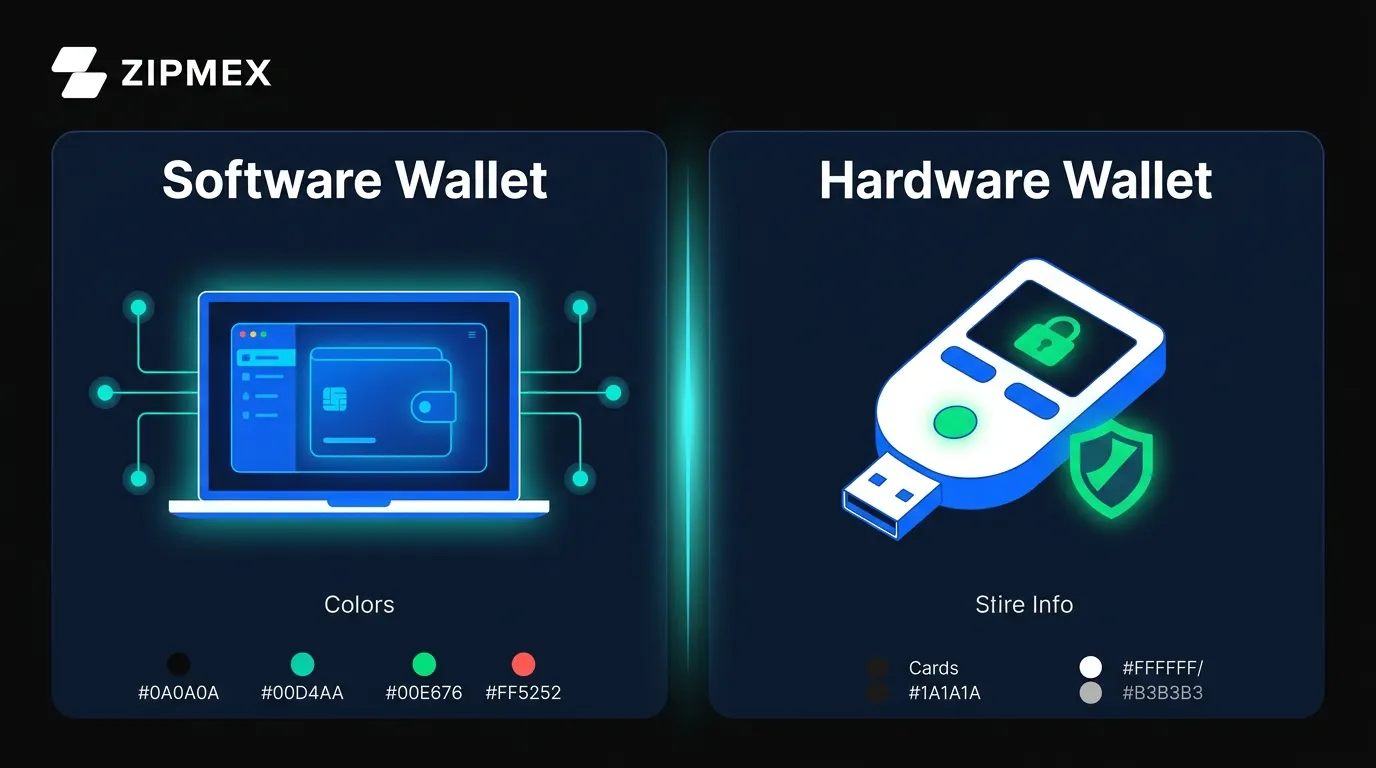
A cryptocurrency wallet stores the private keys that give you access to your assets on the blockchain. Your assets are stored on-chain - the wallet simply controls access to them.
The rule of thumb for 2026: keep only active trading funds on exchanges. Transfer any holdings you plan to hold for six months or longer to a hardware wallet. Enable two-factor authentication (2FA) on all exchange accounts. Never share your seed phrase or private keys with anyone - not even customer support. If something sounds like a support agent asking for your seed phrase, it's a scam.
📊 Tip 6: Track the Market and Rebalance Regularly
Buying crypto is only the beginning. The final - and often forgotten - cryptocurrency tip is active monitoring and portfolio rebalancing. The market doesn't stop moving when you do.
crypto market monitoring strategies for 2026
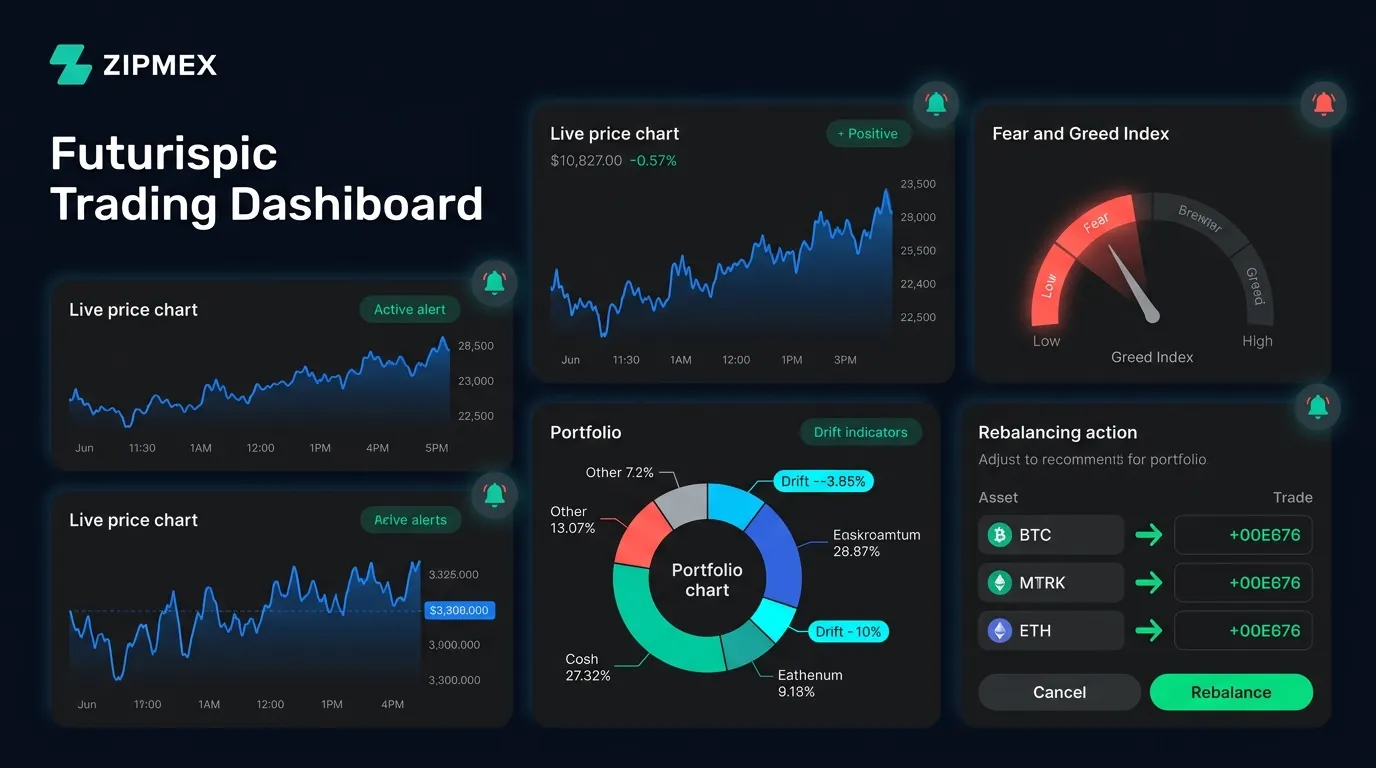
Volatility demands attention. You don't need to watch charts every hour, but a weekly review and quarterly rebalance is the minimum standard for serious investors. Here's what to track:
📋 Weekly Monitoring Checklist
☐ Check portfolio allocation drift (is your 60/30/10 still on target?)
☐ Review any major news for coins you hold (regulatory updates, partnerships, hacks)
☐ Set price alerts for ±10% moves on core holdings
☐ Check Fear & Greed Index - extreme fear often signals a buying opportunity
☐ Review stablecoin yield rates if you hold USDC/USDT on lending platforms
Understanding how to manage risk in crypto trading also means knowing when to rebalance. If Bitcoin surges 80% and now represents 75% of your portfolio instead of 60%, you are over-exposed to a single asset. Selling a portion of your BTC gains to top up underperforming positions brings your risk profile back in line.
For beginners learning to read market signals, basic technical analysis skills pay long-term dividends. Patterns like support/resistance levels, moving averages, and volume trends help identify when to buy the dip versus when a coin is genuinely broken. It's a skill worth investing time in - and the crypto market gives you endless live practice.
🏁 Conclusion: Putting Your Cryptocurrency Tips Into Practice
These six cryptocurrency tips form a complete framework for investing in 2026's market. They work as a system, not in isolation:
Start by sizing your position correctly - only invest spare capital you can genuinely afford to lose. Build a diversified portfolio using the 60/30/10 framework anchored by Bitcoin and Ethereum. Use DCA to enter systematically and remove emotional decision-making. DYOR rigorously before touching any altcoin. Secure your long-term holdings in a hardware wallet. And monitor, track, and rebalance at least quarterly.
The investors who follow these principles through a complete market cycle - bull run, bear market, and recovery - are the ones who build lasting wealth. Discipline, not luck, is what separates successful crypto investors from those who blow up their accounts.
Frequently Asked Questions
What is the most important cryptocurrency tip for beginners?
The single most important tip is to only invest what you can afford to lose completely. Crypto is one of the most volatile asset classes in the world, with Bitcoin dropping over 48% from its October 2025 ATH in just a few months. Starting with a small, affordable allocation - 1-5% of your total investment portfolio - protects your financial stability while giving you real exposure to crypto's potential upside.
How much of my portfolio should be in crypto?
Most financial experts recommend allocating no more than 5-10% of your total portfolio to cryptocurrency. Conservative investors should start with 1-3%. Research from Morgan Stanley shows that even a 6% crypto allocation can nearly double overall portfolio volatility, so right-sizing your exposure to match your risk tolerance is essential.
What is dollar-cost averaging in crypto?
Dollar-cost averaging (DCA) means investing a fixed amount at regular intervals regardless of price - for example, $100 in Bitcoin every week. This strategy removes the need to time the market, smooths out your average purchase price over time, and turns volatility into an advantage. Studies consistently show DCA outperforms lump-sum investing for most retail investors in volatile markets.
Is it safe to leave crypto on an exchange?
No - leaving large amounts of crypto on exchanges long-term is risky. The $1.5 billion Bybit hack in 2025 is a stark reminder that even major platforms are vulnerable. Keep only funds you need for active trading on exchanges. Move long-term holdings to a hardware wallet like Ledger or Trezor, where you control the private keys directly.
What does DYOR mean in crypto?
DYOR stands for "Do Your Own Research." Before investing in any cryptocurrency, you should read the project's whitepaper, verify the team's credentials, examine the tokenomics, check for security audits, and compare the project to its competitors. Never invest based solely on social media hype, influencer promotions, or a friend's advice.
How often should I rebalance my crypto portfolio?
A quarterly rebalance is the standard recommendation. At minimum, review your portfolio once a month. If a major price movement has shifted your allocations significantly - for example, Bitcoin surging to 75% of your portfolio from a target of 60% - rebalance sooner to lock in gains and restore your risk profile.
⚠ Disclaimer: The information provided in this article is not intended to provide investment or financial advice. Investment decisions should be based on the individual's financial needs, objectives, and risk profile. We encourage readers to understand the assets and risks before making any investment entirely. Cryptocurrency investments are subject to high market risk. Past performance does not guarantee future results.
ZIPMEX promotes trading on trade.zipmex.com. Promotions are labelled and kept separate from news coverage, which is selected and checked without regard to them. Perpetual futures are leveraged derivatives. Prices can move fast and you can lose all of your margin. Not available in every jurisdiction. Not investment advice.