Artificial intelligence is reshaping every industry on the planet, and the crypto market is no exception. The best AI crypto coins have collectively surged to a sector market cap exceeding $28 billion as of March 2026, with projects spanning decentralized GPU computing, autonomous agent networks, and AI-powered data infrastructure drawing serious capital. But with hundreds of AI tokens competing for attention, separating legitimate infrastructure plays from empty hype is harder than ever.
⚡ Quick Answer
The best AI crypto coins in 2026 are led by Bittensor (TAO) at a $3.4B market cap, followed by NEAR Protocol, Render Network, and the Artificial Superintelligence Alliance (FET). These projects power real AI infrastructure - from decentralized model training to GPU rendering - not just hype tokens with "AI" in the name. Newer entrants like Virtuals Protocol (up 220% in 30 days) and Grass are also gaining traction in AI agent economies and DePIN data scraping.
This guide covers the top 10 AI cryptocurrency tokens ranked by market cap, technology, and real-world adoption - giving you everything you need to decide which ai tokens to invest in for the year ahead. If you are still building your foundational understanding of digital assets, you may want to start with our beginner's crypto guide before diving into this sector.
What Are AI Crypto Coins and Why Do They Matter?
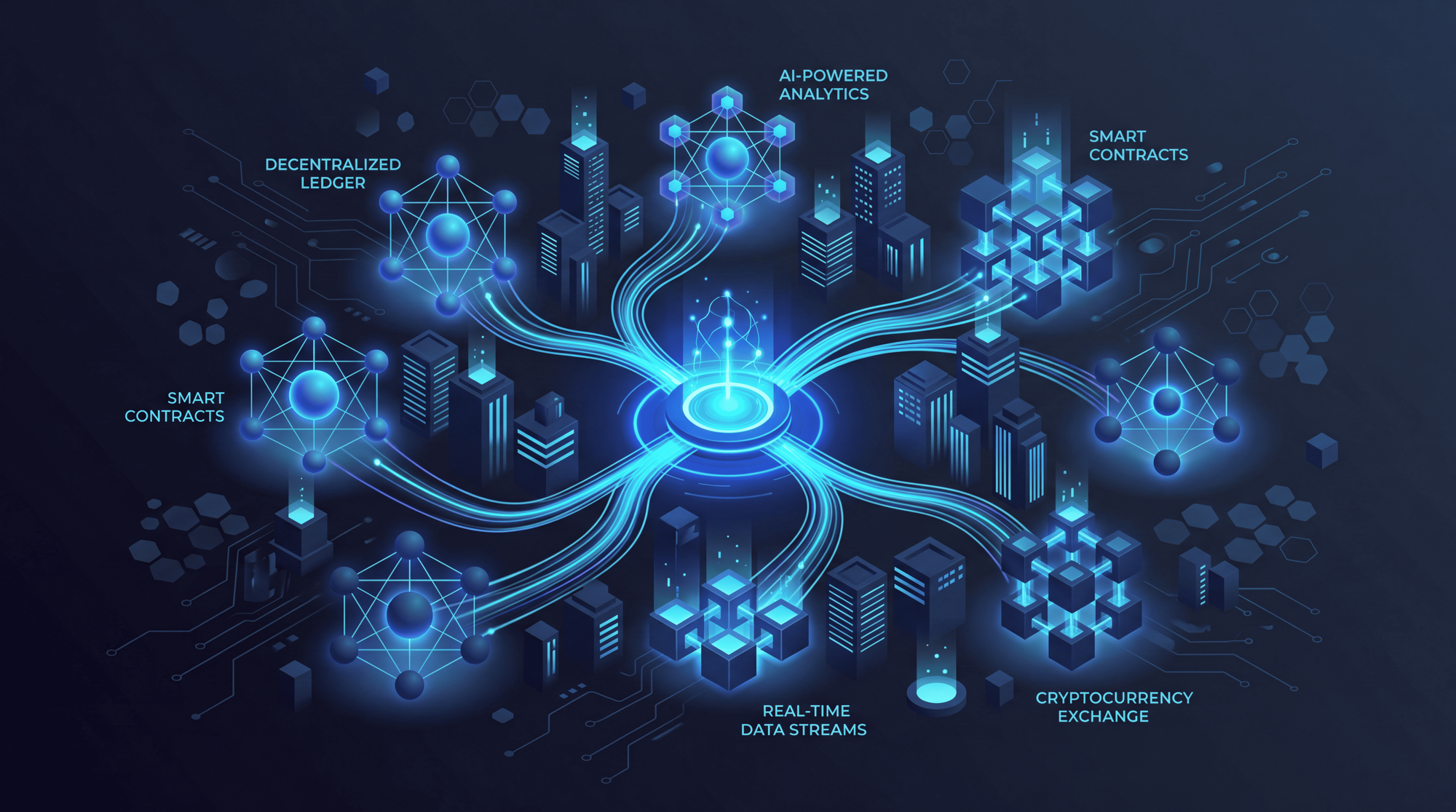
AI crypto coins are tokens that power blockchain-based projects integrating artificial intelligence into their core functionality. Unlike traditional cryptocurrencies that focus primarily on payments or smart contracts, these ai blockchain projects use tokens to incentivize GPU computing, coordinate decentralized data markets, reward AI model training, or enable autonomous agents to transact on-chain.
The marriage of AI and blockchain addresses a critical problem: the growing centralization of AI resources. In late February 2026, OpenAI closed a $110 billion funding round at a $730 billion valuation, with $50 billion from Amazon alone. Meanwhile, Nvidia reported $68.1 billion in quarterly revenue - a 73% year-over-year increase (per the same CoinCub analysis). This massive concentration of compute power in a handful of companies is exactly what decentralized AI networks aim to counterbalance.
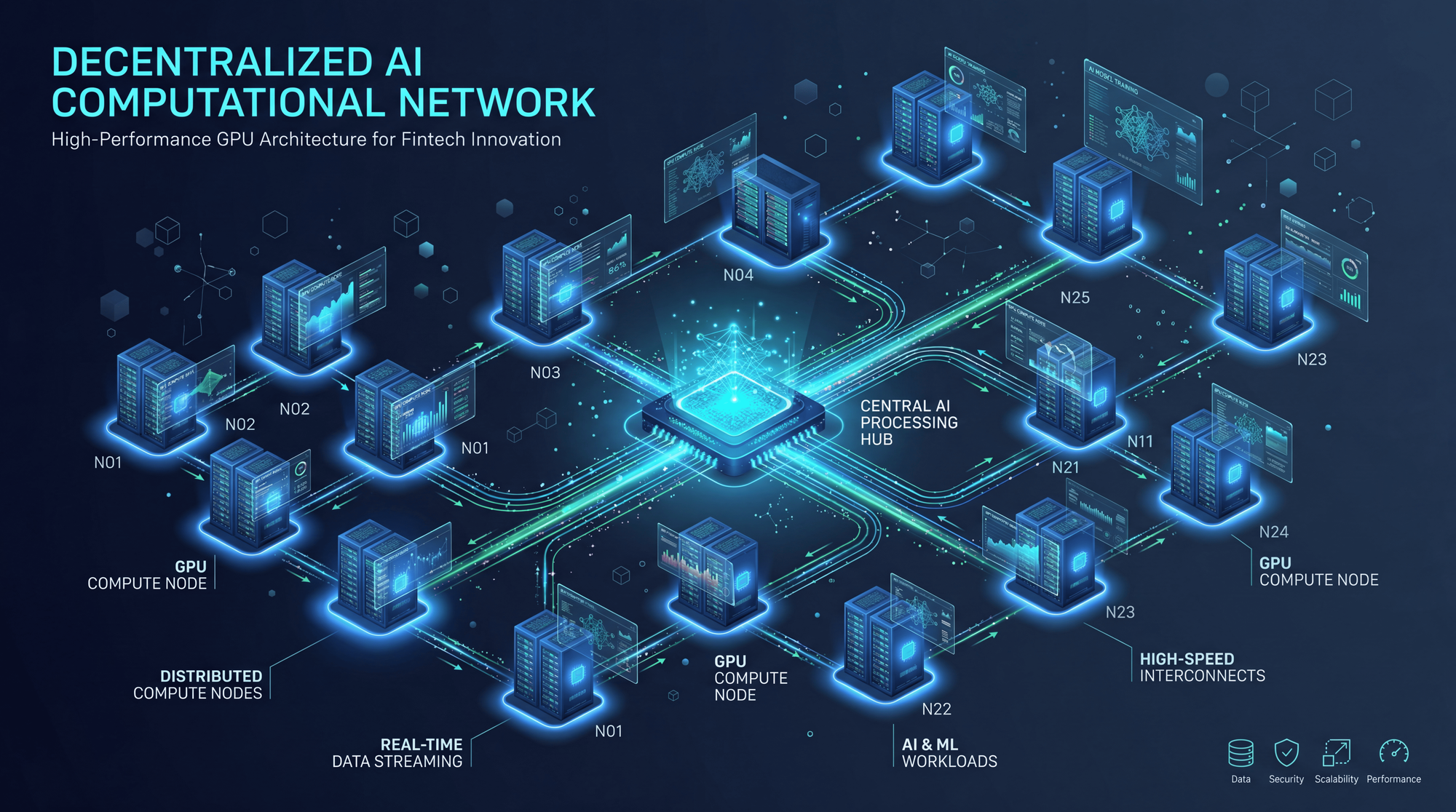
The AI crypto sector falls into several key categories. Decentralized compute networks like Render and Akash allow anyone to rent GPU power for AI workloads. AI model training platforms like Bittensor incentivize open-source machine learning. Data infrastructure projects like The Graph and Grass power the information pipelines that AI models depend on. And agent platforms like Virtuals Protocol create tokenized AI entities that can transact autonomously.
For investors exploring new crypto narratives for 2026, AI remains one of the strongest and most fundamentally backed sectors in the market.
Top AI Cryptocurrency 2026: The Complete List
The following ranking is based on a combination of market capitalization, live network activity, developer commits, and real-world utility as of March 2026. All prices below are sourced from CoinGecko's AI category page linked above.
1. Bittensor (TAO) - Best for Decentralized AI Training
Bittensor sits at the top of the AI crypto hierarchy with a $3.44 billion market cap (CoinGecko). The protocol operates a decentralized network where independent machine learning models compete to provide computational services, rewarded through TAO tokens based on performance quality.
The network's unique subnet architecture now supports up to 128 specialized subnets - each a marketplace for specific AI tasks ranging from decentralized AI detection to serverless compute. A recent deployment, Subnet 64 (Novelty Space), introduced serverless AI compute with Trusted Execution Environment (TEE) capabilities. Bittensor's economic model mirrors Bitcoin's scarcity: it has a maximum supply of 21 million tokens. In December 2025, the network executed a halving event, reducing daily emissions from 7,200 to 3,600 TAO (per CoinCub's analysis).
The project is backed by Polychain Capital with over $200 million invested and was founded by Jacob Steeves (ex-Google engineer) and Ala Shaabana (PhD, ex-University of Toronto). Asset managers including Grayscale and Bitwise have pending spot TAO ETF filings, which could be a massive catalyst.
The primary risk with Bittensor is execution: its long-term value depends on distributed models outperforming or offering cost advantages over massively funded centralized AI like OpenAI.
2. NEAR Protocol (NEAR) - Best for AI-Integrated Smart Contracts
NEAR Protocol has aggressively pivoted toward becoming the infrastructure layer for what its co-founder Illia Polosukhin calls "agentic commerce" - autonomous AI agents transacting on behalf of users. As of March 2026, NEAR trades at $2.66 with a $3.24 billion market cap (CoinGecko).
The protocol's dynamic sharding system delivers transaction finality in under 600 milliseconds, and the team has benchmarked 1 million transactions per second in testing (per CoinCub's report). On February 23, 2026, NEAR launched its near.com super app, combining AI capabilities with confidential transactions. The co-founder recently told CoinDesk that "AI agents will be the primary users of blockchain."
Polosukhin is an AI/ML expert who previously worked at Google on TensorFlow, giving NEAR genuine AI credibility. The project has secured $1.1 billion in total funding (per CryptoPotato) from investors including ParaFi Capital and Hashed. The near protocol ai integration makes it a compelling pick for investors who want exposure to both Layer-1 growth and the AI narrative. That said, the gap between tested TPS benchmarks and actual daily organic usage remains a legitimate concern.
3. Render Network (RENDER) - Best for GPU Computing
Render Network is a decentralized marketplace connecting users who need 3D rendering and AI computations with operators who have idle GPU capacity. The render token trades at $4.37 with a $2.26 billion market cap (CoinGecko).
The protocol successfully migrated to Solana to increase throughput and reduce costs for heavy compute workloads. Its utility in commercial media production is verified through integration into 2026 Octane toolsets. The platform uses a tiered pricing system where top-rated node operators (Tier 1) offer more reliable and scalable services, while lower tiers provide budget-friendly options for indie creators.
Founded by Jules Urbach (also CEO of OTOY, Inc.), Render raised $30 million in its seed round from Multicoin Capital, Solana Foundation, and others (per CryptoPotato). Network demand surged 31% in 2023-2024, and analysts at some firms project potential prices of $20 if decentralized rendering demand accelerates through 2026. However, it faces direct competition from centralized GPU providers like AWS and decentralized alternatives like Akash Network.
4. Artificial Superintelligence Alliance (FET) - Best for Autonomous Agents
The Artificial Superintelligence Alliance (ASI Alliance) was formed in April 2024 through the merger of Fetch.ai, SingularityNET (AGIX), and Ocean Protocol, later joined by CUDOS. The unified FET token trades at $0.71 with a $1.85 billion market cap (CoinGecko).
The alliance's mission is to democratize artificial intelligence by building open-source, blockchain-based infrastructure. Central to its offering is the ASI-1 Mini - described as the world's first Web3-based large language model (LLM) designed for autonomous and agentic workflows. Additional tools include ASI Compute, ASI Data, and Agentverse, providing modular infrastructure for enterprises and developers (per CryptoPotato).
For investors tracking the fetch.ai price prediction landscape, forecasts vary widely. CoinCodex projects FET reaching $0.39 by the end of 2026, while Changelly's analysis suggests a maximum of $0.40. Longer-term predictions are more bullish, with some analysts suggesting a potential path to $5 if AI agent adoption accelerates.
5. Internet Computer (ICP) - Best for On-Chain Hosting
The Internet Computer Protocol aims to host entire web applications, enterprise systems, and AI models directly on-chain - bypassing traditional cloud providers entirely. ICP trades at $5.02 with a $2.68 billion market cap (CoinGecko).
Developer activity is a standout metric for ICP: according to a January 2026 snapshot published by Santiment (as reported by CoinCub), the Internet Computer averaged 200.67 daily meaningful code commits - third behind only Filecoin (349.9) and Chainlink (211.27). The protocol uses advanced smart contracts called Canisters and has secured memorandums of understanding for government-supported cloud initiatives.
The most significant upcoming catalyst is the "Mission 70" tokenomics upgrade. On February 26, 2026, the DFINITY Foundation published a proposal to burn 20% of network revenue, creating a deflationary mechanism tied to cloud usage (CoinCub analysis). However, this is still a proposal, not a shipped feature, and ICP has historically struggled to recover from its steep decline since its 2021 launch price.
6. Virtuals Protocol (VIRTUAL) - Best for AI Agent Tokenization
Virtuals Protocol is the breakout star of the ai agent tokens sector in early 2026. The token has surged 220% in the past 30 days to $1.82, reaching a $1.19 billion market cap (CoinGecko). Built on the Ethereum Layer-2 Base, the platform serves as a launchpad and marketplace for tokenized AI agents.
On February 12, 2026, Virtuals launched the Revenue Network, enabling autonomous agent-to-agent commerce at scale. The platform now powers over 18,000 AI agents and has generated $75 million+ in revenue (per the same press release). In late February, the protocol also announced Eastworld Labs, an AI accelerator to bring humanoid robots into the ecosystem.
All AI agents within Virtuals can communicate via text, speech, and 3D animations, and are equipped with their own on-chain wallets for blockchain transactions. A tiered launch system - Pegasus, Unicorn, and Titan classes - requires between 1,000 VIRTUAL (creation fee) and 500,000 USDC worth of VIRTUAL (Titan class) to launch new agents. The risk here is clear: if the marketplace floods with low-utility bots that fail to generate revenue, the token's utility degrades rapidly.
7. The Graph (GRT) - Best for Blockchain Data Indexing
The Graph functions as a decentralized indexing protocol that collects, processes, and stores blockchain data - essentially serving as the "Google of Web3." GRT trades at $0.105 with a $1 billion market cap (CoinGecko).
Its key feature, Subgraphs, allows developers to create custom data indices across multiple blockchain networks including EVM-compatible chains and IPFS. The Graph supports at least 14 programming languages and recently launched Agentc, an open-source AI tool that functions similarly to ChatGPT for blockchain data querying. This positions The Graph as essential plumbing for any AI application that needs to access on-chain data.
The project was founded in 2018 by Yaniv Tal and Brandon Ramirez (both previously at MuleSoft, acquired by Salesforce) and has raised over $220 million including a $205 million ecosystem fund (per CryptoPotato). GRT has one of the largest supplies in the AI sector with approximately 9.5 billion tokens in circulation out of a 10.8 billion max supply, which limits upside potential compared to lower-supply tokens.
8. Grass (GRASS) - Best New AI DePIN Project
Grass is one of the most compelling new ai crypto entries of the cycle. This DePIN (Decentralized Physical Infrastructure Network) protocol aggregates unused residential internet bandwidth to scrape data for AI model training. The token trades at $1.86 with a $514 million market cap (CoinGecko), and recently surged 38.5% in a single day on rising network activity.
The network is supported by over 2.5 million user devices globally and operates nearly one million active nodes (CoinCub data). It functions as a "Sovereign Data Rollup" built on Solana, using zero-knowledge proofs to certify the geographic origin of scraped data. Grass raised $10 million from Polychain Capital and Tribe Capital and has ranked among the top three DePIN projects by revenue at $33 million.
The key risk is token supply dynamics. On February 28, 2026, the protocol executed a scheduled vesting event that unlocked 55 million GRASS tokens (approximately $9.33 million), introducing short-term sell pressure (CoinCub report). Investors should monitor vesting schedules carefully.

9. Story Protocol (IP) - Best for AI + IP Ownership
Story Protocol tackles one of the most pressing problems in the AI era: intellectual property ownership and fair compensation for creators whose work trains AI models. The IP token trades at $4.73 with a $1.33 billion market cap (CoinGecko).
The platform tokenizes intellectual property into programmable digital assets, enabling instant licensing and remixing without legal friction. Its Proof-of-Creativity Protocol and Programmable IP Licenses allow creators to control exactly how their work is used in AI training, with automated revenue distribution. Story raised $140 million from A16z Crypto, Polychain Capital, and Samsung NEXT (per CryptoPotato).
While compelling in concept, Story's IP token has declined 21.3% over the past 30 days, and the market cap/FDV ratio of just 0.28 signals heavy token dilution ahead. The gap between the $1.33B circulating cap and the $4.77B fully diluted valuation is a red flag for near-term price performance.
10. Worldcoin (WLD) - Best for AI + Identity
Worldcoin, co-founded by OpenAI CEO Sam Altman, focuses on the intersection of AI and human identity verification through its iris-scanning Orb technology. WLD trades at approximately $0.42 with a $1.2 billion market cap (CoinGecko).
The project's thesis is that as AI becomes indistinguishable from humans online, a global proof-of-personhood system becomes essential. The World ID protocol aims to provide this verification layer. With nearly 2.9 billion tokens in circulation out of a 10 billion max supply, worldcoin has significant dilution pressure from future token unlocks.
The project faces ongoing regulatory scrutiny in multiple countries over biometric data collection. CoinCodex forecasts WLD at $0.89 by end of 2026, representing a potential 116% upside, but this depends heavily on regulatory outcomes and Sam Altman's continued involvement.
⚠ Risk Warning
All tokens on this list carry significant investment risk. The AI crypto sector lost an estimated $35 billion in 2025 alone. Token prices can drop 50-90% from peaks, and many "AI" projects are little more than marketing wrappers around basic functionality. Always do your own research and never invest more than you can afford to lose. For strategies on managing downturns, read our guide on [the best crypto to buy during a crash](https://zipmex.com/blog/best-crypto-to-buy-during-crash/).
AI Tokens to Invest In: How to Choose the Right One
Selecting which ai tokens to invest in requires looking beyond market cap and hype cycles. Here is a framework based on five evaluation criteria used by institutional analysts.
The first criterion is live product versus roadmap. Check whether the protocol has a functioning network generating real revenue, or if the "AI" label is just a future promise. Bittensor's 128 active subnets, Render's commercial media integrations, and Grass's 2.5 million active devices all demonstrate live utility. Projects with only whitepapers and testnet activity carry substantially higher risk.
Second, evaluate developer activity. According to Santiment's January 2026 data (referenced earlier), meaningful daily code commits vary dramatically: Filecoin leads with 349.9, followed by Chainlink at 211.27, ICP at 200.67, and NEAR at 73.13. A sharp drop-off after the top tier suggests that serious engineering talent is highly concentrated.
Third, analyze tokenomics and dilution risk. Compare circulating market cap against fully diluted valuation (FDV). Tokens where market cap is less than 30% of FDV - like Story Protocol (0.28) and Grass (0.28) - face significant sell pressure from upcoming unlocks.
Fourth, examine the team's AI credentials. NEAR's co-founder worked on TensorFlow at Google. Bittensor's founders come from Google and academia. Render's Jules Urbach leads OTOY, a legitimate rendering company. Projects whose "AI team" consists of marketers rebranding a DeFi fork should raise immediate concerns.
Fifth, consider the competitive moat. How easy is it for a centralized tech giant or another crypto project to replicate what this protocol does? Decentralized GPU networks compete directly with AWS and Google Cloud, which have vastly larger resources. Data indexing (The Graph) and bandwidth aggregation (Grass) have stronger defensibility through network effects.
🎯 Key Takeaways: Choosing AI Tokens
- Conservative investors should focus on large-cap infrastructure: TAO, NEAR, ICP, and RENDER - all with $2B+ market caps and proven technology.
- Growth-oriented investors may find mid-caps like FET ($1.85B) and GRT ($1B) appealing, with established products and room for expansion.
- Higher-risk speculators could explore Virtuals Protocol (surging AI agent economy) and Grass (DePIN + AI data) - but should size positions carefully given high volatility and upcoming unlocks.
- Understanding how to properly [diversify your crypto portfolio](https://zipmex.com/blog/how-to-diversify-your-crypto-portfolio/) across these risk tiers is essential before allocating capital.
New AI Crypto Projects to Watch in 2026
Beyond the established names, several new ai crypto projects are gaining traction and may enter the top ranks by year-end.
Akash Network (AKT) provides a peer-to-peer cloud computing marketplace at $1.47 with a $363 million market cap (CoinGecko). Backed by Andreessen Horowitz with a $20 million Series A (per CryptoPotato), Akash offers decentralized storage and computing at lower costs than centralized alternatives, with partnerships spanning healthcare (Solve.Care) and Web3.
AIOZ Network (AIOZ) operates on Cosmos at $0.43 with a $498 million market cap (CoinGecko), surging 57.9% over the past 30 days. As the first DePIN project listed on Nvidia's Accelerated Applications Catalog (per CryptoPotato), AIOZ has expanded to 160,000 network nodes with enhanced GPU/CPU access.
Arweave (AR) provides permanent data storage at $7.04 with a $461 million market cap (CoinGecko). Its one-time payment model for permanent storage makes it uniquely positioned as an immutable data layer for AI training datasets. Partnerships include Microsoft and IBM. If you are interested in exploring even newer projects at earlier stages, our guide on AI-focused airdrop opportunities like Gradient covers the emerging DePIN/AI intersection.
Bullish and Bearish Factors for AI Crypto in 2026
📈 Bullish Factors
- Explosive AI Infrastructure Spend: OpenAI's $110B round and Nvidia's $68.1B quarterly revenue (see CoinCub report above) confirm massive demand for compute resources that decentralized networks can partially address.
- Institutional Interest: Spot ETF filings for TAO by Grayscale and Bitwise (see Yahoo Finance link above) would open the door to traditional capital inflows, similar to what Bitcoin ETFs achieved in 2024.
- AI Agent Economy Growth: Capgemini reports [82% of organizations plan to integrate AI agents by 2026](https://www.bitget.com/news/detail/12560605129268). Virtuals Protocol's 18,000+ agents and Revenue Network demonstrate real traction.
- Sector Resilience: The AI crypto sector [added $500 million in market cap](https://www.ainvest.com/news/ai-crypto-sector-surges-bitcoin-decline-500m-market-cap-gain-52-58-trading-volume-increase-2603/) during the week ending March 2, 2026, while Bitcoin was declining - showing it can decouple from broader market weakness.
- TAO Halving Effect: Bittensor's December 2025 halving reduced daily emissions by 50%, creating supply squeeze dynamics similar to Bitcoin's post-halving rallies.
📉 Bearish Factors
- Centralized AI Dominance: Big tech companies have virtually unlimited budgets. Decentralized networks are not head-on competing at the same scale and may struggle to attract enterprise clients.
- Massive Token Unlocks: Many mid-cap tokens face significant vesting events in 2026. Story Protocol's 0.28 market cap/FDV ratio, Grass's recent 55M token unlock, and Worldcoin's ongoing dilution could suppress prices.
- Regulatory Uncertainty: AI regulation is accelerating globally. Worldcoin faces biometric data scrutiny, and new rules could impact how decentralized AI networks operate.
- Historical Precedent: The AI crypto sector lost an estimated $35 billion in 2025 (per our [portfolio diversification guide](https://zipmex.com/blog/how-to-diversify-your-crypto-portfolio/)), proving that even strong narratives collapse when speculative excess builds up.
- AI-Enabled Fraud: An estimated [$17 billion was lost to crypto scams in 2025](https://www.chainalysis.com/blog/crypto-scam-revenue-2025/). New threats like data poisoning and AI deepfake fraud make this sector especially vulnerable.

Frequently Asked Questions
What are the best AI crypto coins to buy in 2026?
The best AI crypto coins in 2026 are Bittensor (TAO), NEAR Protocol (NEAR), Render Network (RENDER), and the Artificial Superintelligence Alliance (FET). These four lead by market cap, developer activity, and live network utility. For newer plays, Virtuals Protocol (VIRTUAL) and Grass (GRASS) are gaining significant momentum in the AI agent and DePIN categories respectively.
Are AI crypto coins a good investment?
AI crypto coins offer significant upside potential due to the accelerating convergence of AI and blockchain technology. However, they carry substantial risks including extreme volatility, competition from centralized big tech, token dilution from vesting schedules, and regulatory uncertainty. The sector lost $35 billion in 2025 alone. If you choose to invest, focus on projects with live products, strong teams, and sustainable tokenomics rather than hype-driven narratives.
How high can AI crypto tokens go?
Price potential varies dramatically by project. Bittensor analysts at Benzinga project TAO between $739 and $1,043 by 2030. CoinCodex forecasts RENDER at $3.94 and FET at $0.38 by 2030 (see links in the respective token sections above). These projections assume continued AI adoption growth and sustained crypto market momentum - neither of which is guaranteed. All price predictions should be treated as speculative estimates, not financial advice.
What is the difference between AI tokens and regular crypto?
Regular cryptocurrencies like Bitcoin focus on payments or store of value, while AI crypto tokens specifically power infrastructure for artificial intelligence workloads. This includes incentivizing GPU computing (Render, Akash), coordinating decentralized AI model training (Bittensor), enabling autonomous AI agents (Virtuals Protocol, FET), and providing data pipelines for machine learning (The Graph, Grass). The token's value is theoretically tied to actual AI compute demand rather than pure speculation.
Which AI crypto has the most real-world usage?
Render Network and The Graph currently demonstrate the most verifiable real-world usage. Render processes commercial 3D rendering jobs through its GPU marketplace, while The Graph indexes blockchain data for thousands of decentralized applications. Grass also shows strong traction with 2.5 million active devices and $33 million in revenue, providing actual AI training data to enterprises.
How do I buy AI crypto tokens?
Most major AI tokens (TAO, NEAR, RENDER, FET, ICP, GRT, WLD) are available on centralized exchanges like Binance, Coinbase, and Kraken. Smaller tokens like VIRTUAL and GRASS may require decentralized exchanges on Ethereum or Solana. Always use reputable platforms with strong security records. For understanding the basics of altcoin investing, check our guide to altcoins.
What risks should I watch for with AI crypto?
Key risks include token vesting unlocks (check FDV vs market cap ratios), centralized competition from big tech, the gap between tested benchmarks and real-world usage, regulatory crackdowns on AI and biometric data collection, and the ever-present risk of AI-enabled scams. Understanding how to spot crypto scams is essential for anyone entering this space.
Conclusion
The best AI crypto coins represent one of the most fundamentally compelling sectors in the digital asset market for 2026. Unlike the purely narrative-driven cycles of the past, the top projects in this space - Bittensor, NEAR Protocol, Render Network, and the ASI Alliance - are backed by real infrastructure, proven teams, and growing enterprise demand for decentralized AI compute.
That said, the sector is far from a guaranteed win. Massive token unlocks, direct competition from the world's most well-funded tech companies, and a track record that includes $35 billion in losses during 2025 all demand caution. The smartest approach is to focus on projects where live utility - not marketing narratives - drives token value.
Whether you are a conservative investor allocating to large-cap AI infrastructure or a risk-tolerant speculator exploring the ai agent tokens frontier, understanding how high can ai crypto tokens go starts with understanding what each project actually does today, not what it promises for tomorrow.
Ready to Explore AI Crypto?
Start building your AI-focused crypto portfolio on a trusted platform.
Start Trading Now →⚠ Disclaimer: The information provided in this article is not intended to provide investment or financial advice. Investment decisions should be based on the individual's financial needs, objectives, and risk profile. We encourage readers to understand the assets and risks before making any investment entirely. Cryptocurrency investments are subject to high market risk. Past performance does not guarantee future results.