Star Atlas isn't just another blockchain game - it's one of the most ambitious attempts to build a self-sustaining digital civilization ever launched on-chain. Set in a sprawling space universe running on the Solana blockchain, this play-to-earn MMO combines real NFT ownership, a dual-token economy, and player-governed politics into a single ecosystem. In this guide, you'll learn exactly what the star atlas game is, how it works mechanically and economically, how to get started safely, and what separates genuine opportunity from overhyped speculation.
⚡ Key Takeaways
- Star Atlas is a space-themed MMO built on the Solana blockchain with play-to-earn mechanics
- The game uses a dual-token system: ATLAS (utility/currency) and POLIS (governance)
- Every in-game asset - ships, land, crew, equipment - exists as a true on-chain NFT
- SAGE Labs is the currently accessible browser game mode; Fleet Command (full 3D) is in active development
- Getting started requires a Solana-compatible wallet (Phantom), SOL for fees, and ATLAS tokens
What Is Star Atlas? (Definition & Core Concept)
Star Atlas is a grand strategy space MMO set in the year 2620. Three factions have fractured control of the known universe, competing relentlessly for resources, territory, and political dominance in a persistent digital world that never sleeps. The project's core ambition is striking: to create a virtual civilization parallel to the physical one - complete with self-sustaining economics, real player governance, and a digital society with its own laws and taxes.
The game runs on Solana, chosen specifically for its throughput capacity and near-zero transaction fees. Visual fidelity comes from Unreal Engine 5's Nanite technology, which enables the cinematic, hyper-realistic environments the team has been building toward. At its helm is CEO Michael Wagner, a chartered financial analyst who pivoted to blockchain projects before co-founding Star Atlas - a background that directly informs the sophisticated tokenomics design underpinning the game's economy.
Key investors include Sino Global Capital, Republic Crypto, and Animoca Brands - firms with deep roots in both crypto and gaming. That backing matters less for hype than for what it signals about development runway and ecosystem partnerships.
Many players draw comparisons to Star Citizen - another astronomically ambitious space game with a long development runway. The parallel isn't unfair. Both emphasize persistent universes and deep player agency. The difference is that Star Atlas bakes real economic value directly into every interaction.
The Three Factions - MUD, ONI, and USTUR
Faction choice in Star Atlas isn't cosmetic. It shapes your starting alliances, territorial base, and the political dynamics you'll navigate for the long haul. Three civilizations divide the galaxy:
New players begin in the Faction Security Zone - a protected starting area where you can learn combat basics and game mechanics without the full consequences of open-universe PvP.
Professions and Career Paths
Star Atlas treats professions as economic roles in a player-driven labour market, not just cosmetic class choices. The five core paths are:
- Pilot - Space combat, fleet command, territory defense
- Miner - Asteroid extraction, raw material supply chains, ATLAS income
- Trader - Marketplace arbitrage, NFT flipping, logistics contracts
- Shipbuilder - Crafting and upgrading ships, component manufacturing
- Scientist - Research unlocks, discovery missions, ancient artifact recovery
Specializing early pays dividends. A skilled miner operating in high-yield asteroid belts generates steady ATLAS income regardless of market volatility. A trader who understands supply shortages can move rare ship components at significant margins. Whichever role you choose, one element is universal: every action in the game runs through Solana's blockchain infrastructure.
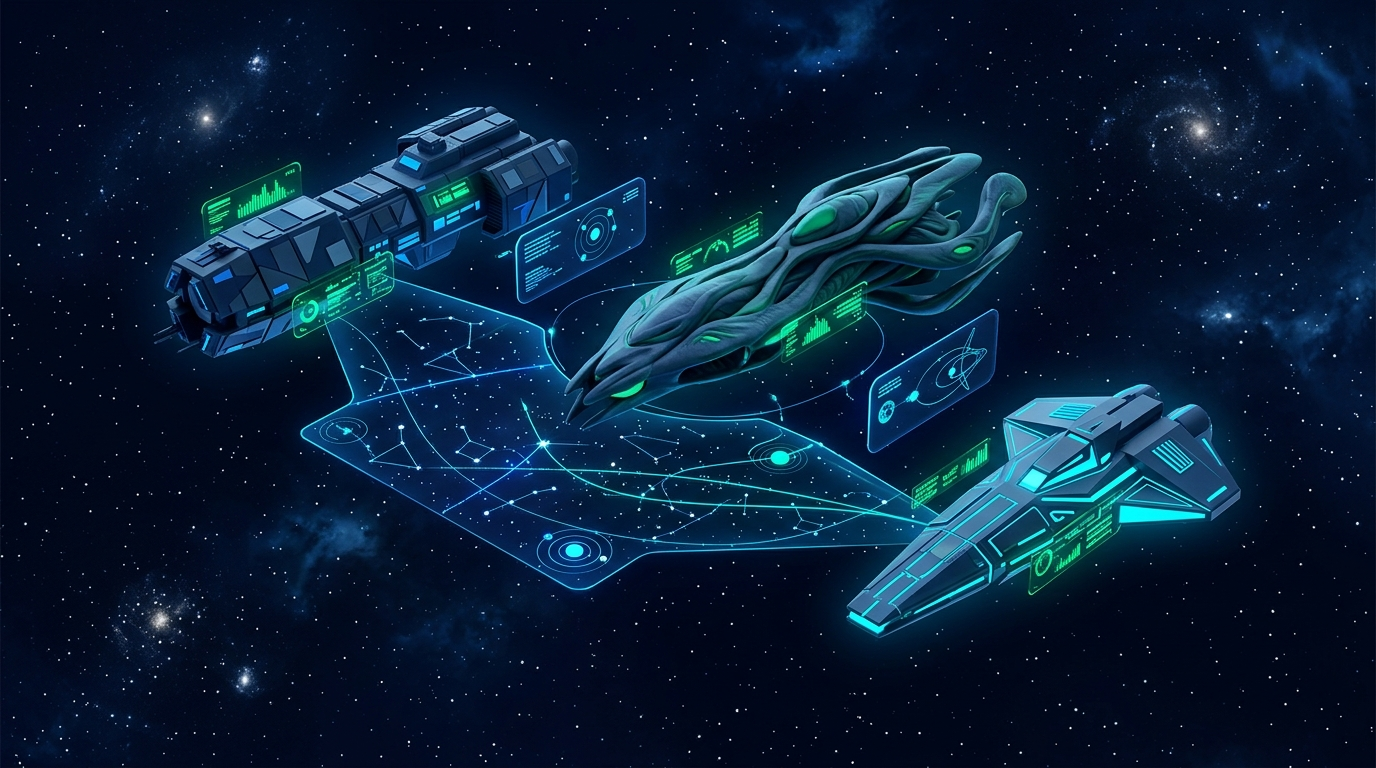
How Does Star Atlas Work? (Core Gameplay & Blockchain Integration)
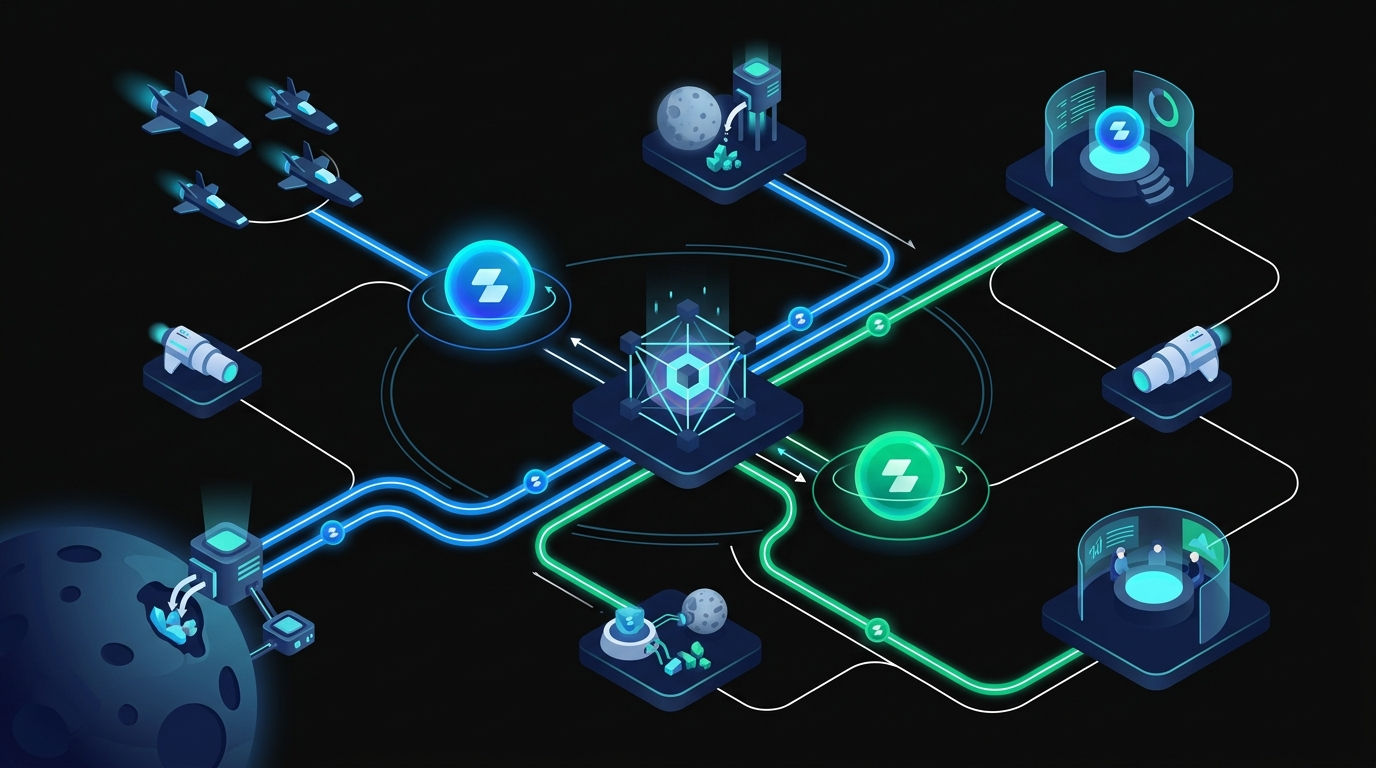
The star atlas game operates on a perpetual loop that's elegant in design: explore star systems → mine resources → build and upgrade your fleet → engage in commerce or combat → earn ATLAS rewards → reinvest. Every step generates verifiable on-chain activity, and every asset you accumulate has real market value outside the game. For a broader look at how play-to-earn blockchain games work across the ecosystem, the mechanics are similar in concept but Star Atlas is considerably more ambitious in scope.
Solana is central to why this loop works at scale. The network handles upwards of 50,000 transactions per second with fees typically fractions of a cent. That means buying a ship component, submitting a mining claim, or trading an NFT crew member costs almost nothing - which is critical when players are executing dozens of transactions per session. All assets are on-chain SPL NFTs, giving players verifiable ownership they can trade on the Star Atlas marketplace or peer-to-peer via the Serum decentralized exchange.
Serum deserves attention as an underappreciated piece of the architecture. Built on Solana, it allows players to buy and sell in-game assets directly between each other - no intermediary takes custody of funds, no company controls the order book. The exchange is fully non-custodial, which aligns with the trustless principles that make blockchain gaming genuinely different from traditional games.
SAGE Labs and Fleet Command - Game Modes Explained
SAGE Labs is where most active players operate right now. It's the Phase 2 minimum viable product - a browser-accessible strategy layer that lets you manage fleets, dispatch mining operations, and interact with the game economy without needing a high-end gaming rig. Fleet Command is the full vision - real-time 3D space combat, planetary exploration, crew management. As of 2026, it remains in development. Anyone entering Star Atlas today should calibrate expectations accordingly: you're buying into a working economic layer with an ambitious visual experience still being built on top.
Star Atlas Tokenomics - ATLAS and POLIS Explained
The dual-token system is the economic spine of everything in Star Atlas. Get this right and the rest of the game's mechanics fall into place.
⚡ ATLAS TOKEN - UTILITY
- Role: Medium of exchange
- Earned via: Mining, missions, combat, trading
- Used for: Ships, crew, equipment, repairs, marketplace
- Deflation: Ships destroyed in battle are permanently burned
🗳 POLIS TOKEN - GOVERNANCE
- Role: Political power & governance
- Earned via: Staking ATLAS, achievements, GAO
- Powers: Vote on policy, set taxes, influence roadmap
- Access: Primarily via staking ATLAS
ATLAS functions as the in-game economy's blood. Every transaction runs through it - buying a new frigate, paying a crew's wages, covering ship repair after a combat loss. The deflationary burn mechanic built into PvP combat is worth understanding: when a ship is destroyed in battle, the NFT is permanently burned and removed from the market. This creates a natural supply sink that counters inflationary pressure from ongoing token emissions.
POLIS is less about daily gameplay and more about long-term power. Think of POLIS holders as both city mayors and company board members simultaneously. In-game, they control land jurisdiction, set tax rates on territory they govern, and charge tolls. Holders will eventually vote on game economics, asset release schedules, and the overall direction of the project - full decentralization is a roadmap milestone expected after an initial 2-3 year period of centralized development.
ATLAS Token Distribution and Supply
ATLAS distribution followed a structured allocation model across team, investors, community rewards, and ecosystem development. The initial Galactic Asset Offering (GAO) served as the first major distribution event - NFT space ships went on sale in limited batches, with ATLAS flowing into early adopters' hands alongside them. The oversubscription rate during the initial token sale was reported at 5,000% by market observers at launch, signalling strong early demand - though token price performance since has been volatile, as with most gaming tokens across market cycles.
Current ATLAS circulating supply, market cap, and full token distribution breakdown are tracked in real time on CoinGecko's ATLAS page - always verify before publishing figures.
POLIS Governance - How Players Shape the Universe
In-game governance is already operational in meaningful ways. POLIS holders with jurisdiction over valuable territory extract real value - every player who mines or transits through your region generates revenue. Real-world governance - influencing the actual development company's decisions - is coming after the centralized period ends. Until then, POLIS is primarily an in-game political instrument with strong future optionality.
Star Atlas NFTs - Ships, Land, Crew, and Assets
Every meaningful object in Star Atlas exists on-chain as an SPL NFT. Ships, crew members, land parcels, equipment modules, resource containers - all verifiable, all tradeable, all genuinely owned by whoever holds the private key. That "true ownership" narrative gets thrown around loosely in blockchain gaming, but Star Atlas actually executes it: your assets exist in your wallet, not in a company database that can be wiped or suspended. For a broader view of where the Solana NFT marketplace ecosystem stands, Solana-based platforms have grown dramatically since 2021.
Two mechanics worth understanding before buying any Star Atlas NFTs:
NFT Burning (Deflationary): Ships destroyed in PvP combat are permanently removed from the blockchain. This isn't a bug - it's intentional economic design. The burn mechanism creates real consequences for risk-taking and prevents the market from flooding with an ever-growing supply of assets.
Land Value Tax (LVT): Star Atlas implements an LVT to prevent pure land speculation. Players who hold land without developing or using it pay ongoing costs, while active landowners who extract value from their territory are rewarded. It's an anti-flip mechanism borrowed from economic theory, applied to a blockchain game - and it's one of the more sophisticated game design choices in the broader NFT space.
How to Get Started with Star Atlas - Step-by-Step for Beginners
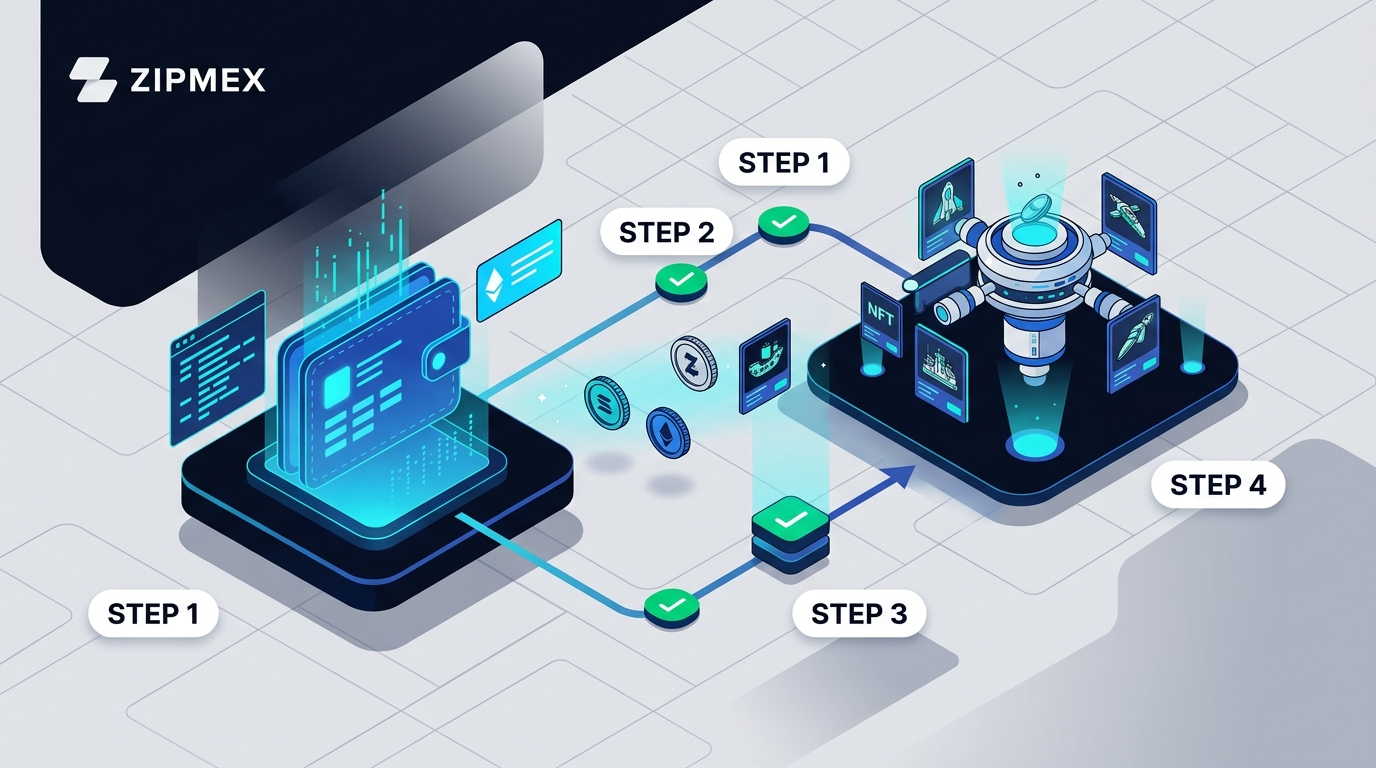
Here's the practical onboarding path that most guides skim over. Follow these steps in order.
Step 1: Set Up a Solana-Compatible Wallet
Download Phantom wallet - it's the most widely used Solana wallet and the standard for Star Atlas. Set it up, write down your seed phrase offline (never digitally), and verify you control the wallet before proceeding.
Step 2: Fund Your Wallet with SOL
You need SOL in your wallet to pay Solana network fees. Even with near-zero fees per transaction, keep at least 0.1-0.5 SOL to cover ongoing activity. Buy SOL on any major exchange and transfer it to your Phantom wallet address.
Step 3: Acquire ATLAS Tokens
ATLAS is available on major exchanges and decentralized platforms. Purchase the amount you plan to use and transfer to your Phantom wallet. Start small - don't commit more than you're prepared to lose while learning the game mechanics.
Step 4: Connect to Star Atlas
Visit staratlas.com (always verify the exact domain). Connect your Phantom wallet using the "Connect Wallet" button. Never enter your seed phrase anywhere on any site.
Step 5: Choose Your Faction
Select MUD, ONI, or USTUR. Your choice affects starting alliances and political dynamics - it's not trivially reversible, so review the faction table earlier in this guide before deciding.
Step 6: Begin with SAGE Labs
SAGE Labs is your entry point. Start by deploying small mining fleets to low-risk sectors. Learn the resource flow, marketplace dynamics, and repair cost structures before scaling up.
📋 Beginner Quick-Start Checklist
- Phantom wallet installed and seed phrase secured offline
- SOL funded (minimum 0.1 SOL for gas fees)
- ATLAS purchased and in Phantom wallet
- Official staratlas.com domain verified before connecting
- Wallet connected to Star Atlas platform
- Faction selected (MUD / ONI / USTUR)
- SAGE Labs accessed - first mining fleet deployed
- Official Discord joined for community support and updates
One practical tip: bookmark the official site and Discord from verified sources immediately. Phishing sites mimicking Star Atlas are common. Access the game only through links personally verified from official channels.
How to Evaluate Star Atlas - Is It Worth Playing in 2026?
The honest answer is: it depends entirely on what you're looking for. Star Atlas is a genuinely impressive technical and economic project that's still building its most ambitious features. That's not a red flag - it's context worth pricing into your decision.
For someone approaching Star Atlas as a gamer: SAGE Labs offers a real, working economic simulation right now. The full 3D experience is coming, and getting established in the economy early has historically rewarded patient players in similar projects.
For someone approaching it as a crypto investor: ATLAS and POLIS are high-risk, high-volatility assets like most gaming tokens. The tokenomics design is strong, but price performance depends heavily on active player growth and broader market conditions.
For comparison, Axie Infinity demonstrated both the ceiling and the floor of play-to-earn gaming - explosive early adoption followed by economic contraction when player-base growth stalled. Star Atlas has studied that playbook, and its economic design reflects it. But no blockchain game is immune to the player acquisition challenge.
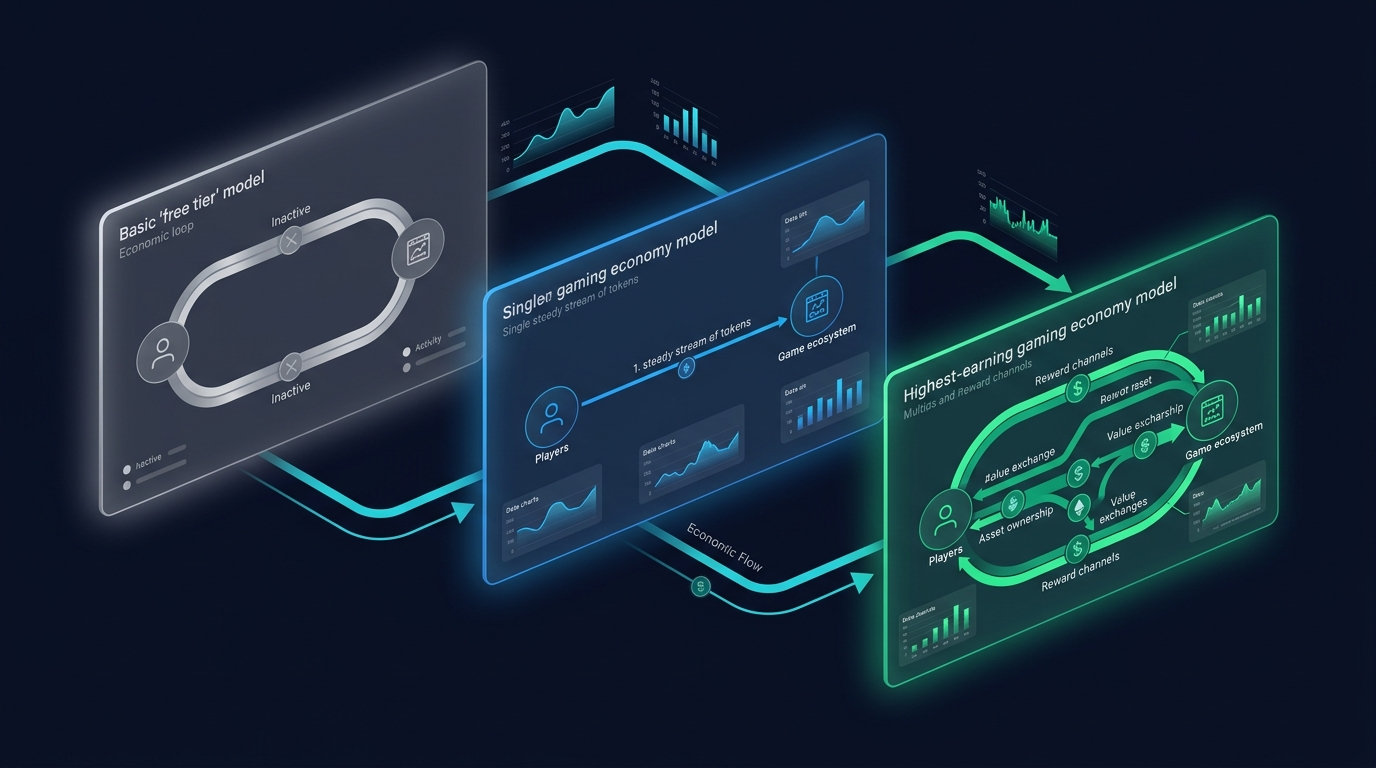
Free-to-Play vs. Pay-to-Win vs. Play-to-Earn - Business Model Comparison
Star Atlas sits firmly in the play-to-earn camp, but with pay-to-progress elements that are honest to acknowledge. Competitive mining and combat require meaningful NFT investment - a better ship yields more resources and survives more combat than a starter vessel.
Red Flags and Risks - What to Watch Out For in Star Atlas
No guide on the star atlas game would be complete without a direct conversation about risks. These aren't reasons to avoid the project - they're realities to factor into your decision.
⚠ 5 Risks Every Star Atlas Player Should Know
- Development Timeline Risk → The game has been in development since 2021. Full features remain pending. Treat projected release dates as directional, not binding.
- Token Price Volatility → ATLAS and POLIS can experience extreme price swings. In-game earnings may be worth significantly more or less depending on when you convert.
- Phishing and Scam Sites → Fake Star Atlas websites, Discord bots, and fraudulent marketplace links are common. Always access through verified official channels.
- NFT Illiquidity → Rare or niche assets may have thin buyer markets. Don't tie up capital in NFTs you can't afford to hold long-term if liquidity dries up.
- Smart Contract Risk → All on-chain activity carries inherent smart contract risk. No blockchain platform is immune to exploits or protocol changes.
Crypto trading and on-chain gaming involve substantial risk of loss. Never commit capital you can't afford to lose. Nothing in this guide constitutes financial advice.
How to Spot Star Atlas Scams and Stay Safe
🔒 Star Atlas Safety Checklist
- Always access via staratlas.com - verify the exact URL before connecting your wallet
- Never enter your seed phrase anywhere, ever - no legitimate platform asks for it
- Verify Discord links from the official Star Atlas Twitter account only
- Ignore unsolicited DMs offering "free ATLAS" or "exclusive ship drops"
- Check that any marketplace URL exactly matches the official domain
- Review all wallet "approval" transactions carefully before signing
- Never approve unlimited token spend requests from unverified contracts
The phishing risk is real and specific: fraudsters create near-identical copies of staratlas.com with slight URL variations. Bookmark the official site from a verified source the first time you visit, and never use a link from an unsolicited message.
Maximizing Your Star Atlas Experience - Strategies and Tips
Three player archetypes dominate the active Star Atlas community, and understanding which one you are determines your optimal strategy.
Popular Strategies in Star Atlas - Mining, Trading, and Governance
Mining Strategy - The Grinder's Path
Deploy a fleet of mining ships to asteroid-rich sectors, extract raw materials, and sell on the marketplace for ATLAS. The key variable is ship quality - better-armoured vessels survive longer and require less frequent repair. A starting fleet of 3-5 small mining ships targeting low-competition sectors can generate steady returns while you learn the economic terrain. Risk: ship damage costs eat into margins, and destroyed ships are burned permanently.
Trading Strategy - The Arbitrageur's Edge
Monitor supply and demand imbalances on the Star Atlas marketplace. Ship components with high utility but limited supply create arbitrage windows - buy undervalued assets, hold through demand spikes, and sell at margin. The skill ceiling here is high: you need to understand which ship classes are currently meta, which factions are expanding, and what the development roadmap is signalling about upcoming content. The risk is NFT illiquidity - positions can take time to unwind.
Governance Strategy - The Long Game
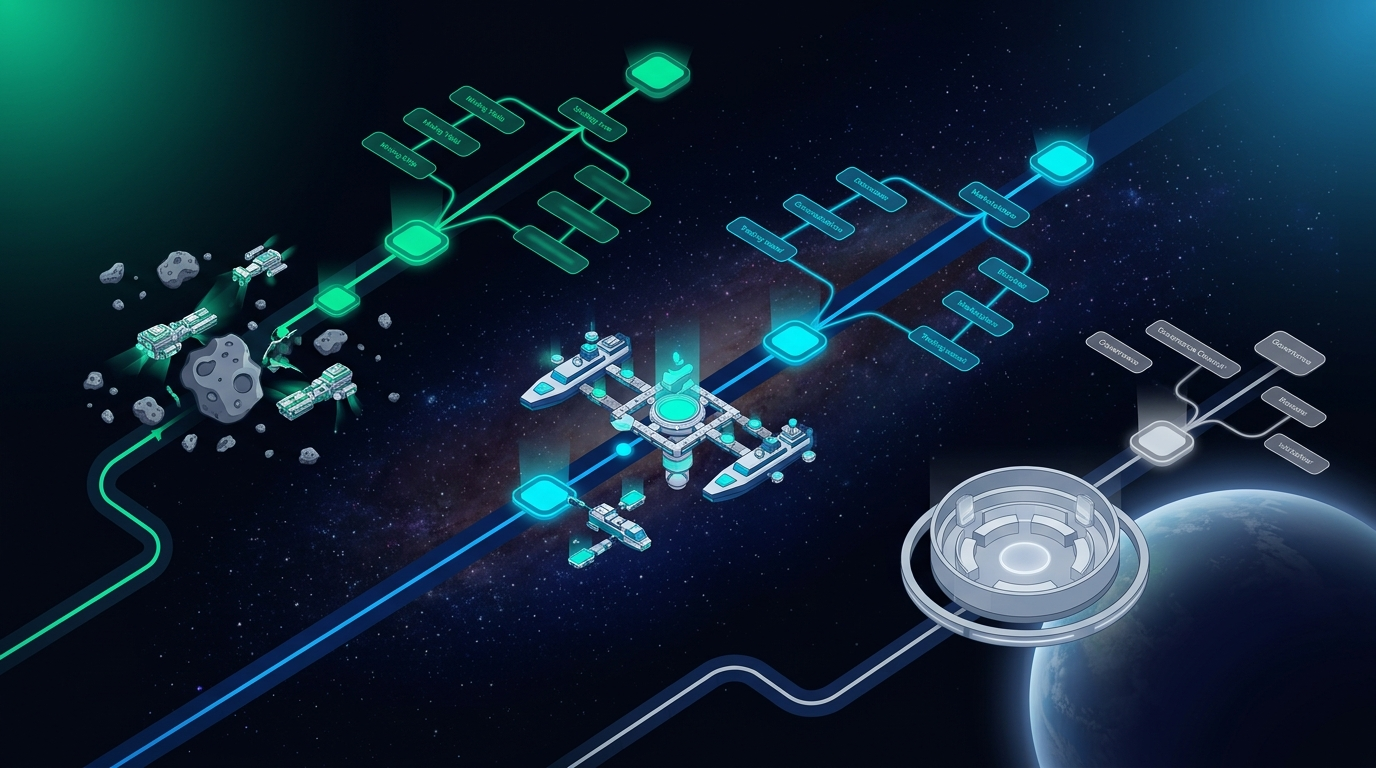
Accumulate POLIS through ATLAS staking, then position for in-game jurisdiction control over valuable territory. The return here is political and economic power rather than immediate income - governing a high-traffic sector generates steady toll and tax income passively. This is explicitly a long-horizon play. DAO participation also matters beyond personal economics: POLIS holders who engage with governance proposals actively shape the game's development trajectory. You're not just playing the game - you're co-authoring it.
Star Atlas Alternatives - Other Blockchain Games Worth Considering
Before committing significant capital to Star Atlas, it's worth knowing the competitive landscape. Several projects are targeting similar audiences with different approaches. For a deep dive into one of the most established alternatives, the Axie Infinity guide covers its economy and current state in detail. If you're interested in the broader category, top NFT games offers a wider survey of options.
Star Atlas has one of the highest ambitions in blockchain gaming - the scope of what it's building is genuinely unprecedented. As on-chain gaming infrastructure matures, with platforms increasingly offering provably fair, self-custodial environments where outcomes are verifiable on-chain, the entire sector is evolving toward greater transparency and player control. Star Atlas, with its DAO governance and NFT ownership model, sits at the sophisticated end of that trajectory. That same direction - on-chain verifiability and self-custody as non-negotiables - defines where forward-looking DeFi infrastructure like Zipmex is headed too.
Conclusion - Is Star Atlas the Future of Blockchain Gaming?
After working through Star Atlas in depth, here's the honest synthesis: this is one of the most thoughtfully designed blockchain game economies ever built, running on infrastructure (Solana) that can genuinely support it, with an ambitious visual experience still catching up to the economic layer that's already live.
The play-to-earn star atlas game has survived market cycles, development delays, and the broader P2E winter that shook the sector after 2022. The economic layer works. The governance architecture is sophisticated. The long-term vision remains compelling.
Your next steps: visit the official Star Atlas site, explore SAGE Labs with a small initial position, and join the Discord to gauge community activity. For ATLAS token access, check current listings on CoinGecko for supported exchanges and liquidity depth.
Last updated: April 2026.
Crypto trading and on-chain gaming involve substantial risk of loss. Leveraged products and token investments can result in losses exceeding your initial investment. This content is for informational purposes only and does not constitute financial advice. Always conduct your own research before making any investment decisions.
Frequently Asked Questions
What is Star Atlas?
Star Atlas is a space-themed massively multiplayer online (MMO) game built on the Solana blockchain, set in the year 2620. Three factions - MUD, ONI, and USTUR - compete for territorial and political dominance across a persistent digital universe. Players mine resources, trade NFT assets, engage in space combat, and participate in a player-governed economy. Every in-game asset is a real on-chain NFT that players genuinely own, and the in-game ATLAS token carries real cryptocurrency value tradeable on external exchanges.
What is the difference between ATLAS and POLIS tokens?
ATLAS is the game's utility token and primary medium of exchange - think of it as the game's dollar. It's used for all in-game transactions and earned through mining, missions, and combat. POLIS is the governance token - it grants holders political power both in-game (controlling land, setting tax rates, charging tolls) and over real development decisions. Players earn ATLAS through gameplay and convert it to POLIS by staking. The two tokens are designed to work in concert: ATLAS drives daily economic activity, POLIS determines who shapes the rules of that economy.
How do I start playing Star Atlas?
Install Phantom wallet and secure your seed phrase offline. Purchase SOL on any major exchange and transfer it to Phantom for gas fees. Buy ATLAS tokens and move them to your Phantom wallet. Visit staratlas.com (verify the exact URL), connect your wallet, and select your faction. Then access SAGE Labs - the currently live browser game mode - and deploy your first mining fleet. Start with a small position while learning the economic mechanics before scaling your ship and territory investment.
Is Star Atlas free to play?
Star Atlas isn't meaningfully free to play in economic terms. While you can explore the basic interface without spending, participating in the play-to-earn economy requires at minimum ATLAS tokens and a basic ship NFT. Entry-level NFTs vary in price; check the Star Atlas marketplace for current listings. Players approaching it purely as a free game will find limited engagement - the platform is designed for participants in the on-chain economy, not passive observers. Budget for initial token and NFT investment before entering.
What are the biggest risks of playing Star Atlas?
The primary risks are: token price volatility (ATLAS and POLIS can drop severely unrelated to gameplay quality); development timeline extension (full 3D features remain in progress with no guaranteed delivery date); smart contract risk inherent to all on-chain platforms; NFT illiquidity for niche assets; and phishing/scam sites targeting players. Ships destroyed in PvP combat are permanently burned - losing expensive NFT assets is irreversible. Size positions accordingly and only engage with capital you can afford to lose entirely. This is not financial advice.
How does Star Atlas compare to Axie Infinity?
Both are play-to-earn blockchain games, but they differ significantly in scope and maturity. Axie Infinity is a mature, live game on the Ronin sidechain with an established economy that has experienced both explosive growth and significant contraction - offering hard lessons about P2E model sustainability. Star Atlas is more ambitious (MMO scale, 3D universe, complex governance) and runs on Solana (faster and cheaper than Ronin). Axie's barrier to entry is lower and the game is more immediately playable. Star Atlas has a higher ceiling but a longer development runway. Neither is a direct substitute for the other.
Can I sell my Star Atlas NFTs?
Yes. Star Atlas NFTs are standard Solana SPL tokens tradeable on the official Star Atlas marketplace, through Serum DEX peer-to-peer, or on third-party Solana NFT platforms. Liquidity varies significantly - popular ship classes with active player demand trade frequently, while rare or niche assets may have thin buyer markets. Destroyed ships are burned permanently and cannot be resold. Always check current marketplace activity and bid/ask spreads before assuming an NFT can be liquidated quickly at a fair price.