
On 25 October 2026, CoinGecko's metaverse category had a combined market cap of about $2.15 billion. By market cap, its largest tokens were Render (RENDER), FLOKI, Axie Infinity (AXS), OriginTrail (TRAC), Decentraland (MANA), The Sandbox (SAND) and Enjin Coin (ENJ). Those are the names people usually mean by "top metaverse coins". A token's size doesn't make it a good buy, though. Some of these tokens had serious events in 2026: The Sandbox's bridge was exploited in August, Ronin, which hosts Axie Infinity, moved to Ethereum in May, and Decentraland launched on new platforms in spring. This guide explains what each token is used for, what changed in 2026, and what to check before you hold any of them.
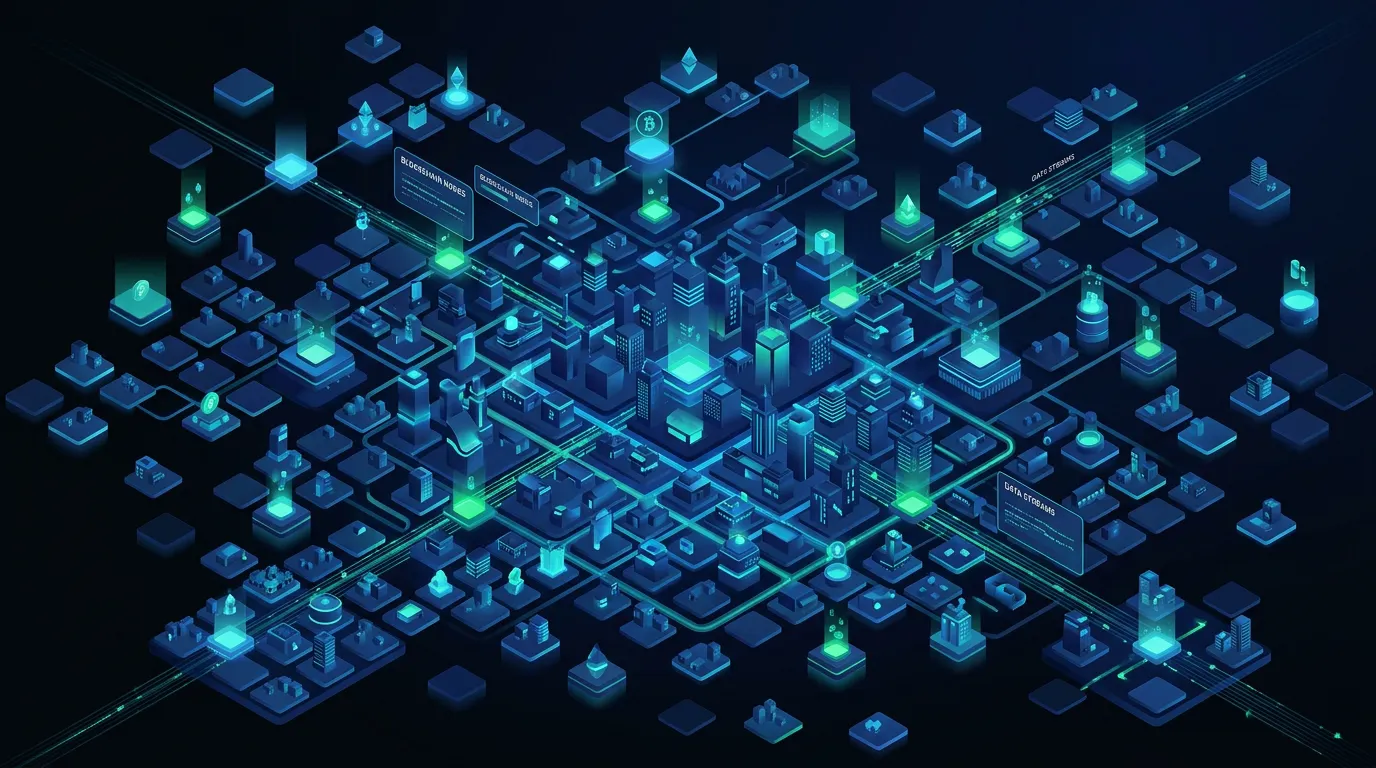
The largest metaverse tokens by market cap
These figures come from CoinGecko's metaverse category page, read on 25 October 2026. Market caps change daily, so check the live figures before you rely on them.
| Rank | Token | Market cap (approx.) | What the token is used for |
|---|---|---|---|
| 1 | Render (RENDER) | $877M | Paying for GPU rendering and compute on the Render Network |
| 2 | FLOKI | $222M | Listed in the category; no utility checked for this article |
| 3 | Axie Infinity (AXS) | $164M | Governance and staking for Axie Infinity |
| 4 | OriginTrail (TRAC) | $164M | Listed in the category; not covered here |
| 5 | Decentraland (MANA) | $153M | Buying LAND, names and wearables; DAO voting |
| 6 | The Sandbox (SAND) | $141M | In-game purchases, governance and staking |
| 8 | Enjin Coin (ENJ) | $49M | Backing ("infusing") NFTs with ENJ |
The whole category is small. On that date, CoinGecko listed 24-hour trading volume of about $176 million for all of it. CoinGecko also counts Render as a metaverse token, but Render is a GPU-compute network rather than a virtual world, and it makes up roughly 40% of the category on its own.
Decentraland (MANA)
What it is. Decentraland is a 3D virtual world, and MANA is its currency. Decentraland's marketplace documentation describes two forms of MANA. "Ethereum MANA" buys LAND, NAMEs and some special wearables. "Polygon MANA" buys most wearables and emotes. If you buy the wrong version, you may have to bridge it before you can use it.
Governance. According to Decentraland's documentation, the DAO holds MANA and other tokens and controls the LAND and Estate smart contracts. MANA, NAME and LAND holders vote through Snapshot, and a committee using a multisig wallet carries out approved proposals on Ethereum. The DAO cannot change the MANA contract itself.
Supply. Market-data sites report a total supply of about 2.19 billion MANA. They also report that MANA spent in the original LAND auctions was burned. Neither point was confirmed against Decentraland's own documentation for this article.
What changed in 2026. On 17 February 2026, Decentraland published a mobile roadmap. It said mobile users were 15% of weekly active users, version 1 of the app was due in March, and a feature-complete version 2 was planned for Q2. A press release dated 31 March 2026 announced Decentraland's launch on the Epic Games Store and the release of its Android app, with iOS "coming soon".
The Sandbox (SAND)
What it is. SAND is the utility and governance token of The Sandbox, a user-generated game world. The Sandbox's own FAQ gives a supply of 3,000,000,000 SAND. SAND exists on Ethereum and Polygon, and The Sandbox runs its own bridge to move it between them. Holders can vote on matters such as Foundation grants and roadmap priorities, either directly or by delegating their votes.
Correction to earlier versions of this article. SAND has no burn mechanism. The Sandbox FAQ says: "We are not planning to burn any SAND in the future." Consumed SAND goes back into the ecosystem through the Foundation.
What changed in 2026. Around 22 August 2026, The Sandbox said it had found and contained a vulnerability in the SAND cross-chain bridge on Base and BNB Smart Chain. Unbacked SAND had been minted on those two networks. The team disabled bridging to and from both chains and told holders not to trade SAND there. It said SAND on Ethereum and Polygon was not affected. Security firm PeckShield counted about 14.9 billion unbacked SAND minted across two addresses, nearly five times the legitimate 3 billion supply. The Sandbox described the impact as less than 0.01% of total SAND supply but did not explain how it measured that. As of this writing, no official post-mortem has been found.
What this means in practice. Before you hold SAND, check which network it is on. Ethereum and Polygon are the networks the project says were unaffected.
Axie Infinity (AXS)
What it is. AXS is the governance and staking token of Axie Infinity, a game built around NFT creatures called Axies. Players earn a separate in-game token, Smooth Love Potion (SLP), through battles. The Axie Infinity whitepaper says total AXS supply "will never exceed" 270,000,000, and it allocates 78.3 million AXS (29%) to staking rewards.
The chain it runs on. Axie Infinity runs on Ronin. In March 2022, an attacker drained 173,600 ETH and 25.5 million USDC from the Ronin bridge. According to Ronin, Sky Mavis reimbursed users so that wETH and USDC on Ronin were again fully backed. About 56,000 wETH belonging to the Axie DAO treasury was left uncollateralised while recovery efforts continued.
What changed in 2026. Ronin announced on 22 April 2026 that it would become part of Ethereum as a layer 2 on 12 May 2026. The announcement included a planned downtime of about 10 hours and a cut in RON inflation from above 20% to below 1%. Staked RON still locked on that date would be unstaked automatically.
Which check matters for the token you hold?
Pick the metaverse token you hold or are looking at, and answer a question or two to see the network or bridge check that applies to it.
Which token are you looking at?
- The Sandbox (SAND) → next question
- Decentraland (MANA) → next question
- Render (RENDER or RNDR) → next question
- Axie Infinity (AXS) → Your exposure includes the Ronin chain
- Enjin Coin (ENJ) → Check how much ENJ backs your NFT
- Another metaverse token → Run the general checklist
Which network is your SAND on?
- Ethereum or Polygon → SAND on a network the project says was unaffected
- Base or BNB Smart Chain → SAND on Base or BNB Smart Chain
- I don't know → Find out which network your SAND is on
What do you want to use MANA for?
- Buying LAND, NAMEs or some special wearables → You need Ethereum MANA
- Buying most wearables and emotes → You need Polygon MANA
- Voting in the DAO → Check what the DAO can decide
Which version of the token do you hold?
- RENDER on Solana → Check the mint address
- RNDR on Ethereum → RNDR upgrades to RENDER
- RNDR on Polygon → Polygon RNDR is no longer maintained
The Sandbox said SAND on Ethereum and Polygon was not affected by the August 2026 bridge exploit. Moving SAND between chains still depends on The Sandbox's own bridge, so you take on that bridge's risk whenever you use it.
Unbacked SAND was minted on these two networks in August 2026. The Sandbox disabled bridging to and from both chains and told holders not to trade SAND there. No official post-mortem had been found as of this writing.
SAND exists on more than one chain, and the August 2026 exploit hit only Base and BNB Smart Chain. Check the network in your wallet and compare the contract address with the one in The Sandbox's own documentation.
Decentraland's marketplace documentation says Ethereum MANA buys LAND, NAMEs and some special wearables. If you hold the other version, you may have to bridge it first.
Decentraland's marketplace documentation says Polygon MANA buys most wearables and emotes. If you hold Ethereum MANA, you may have to bridge it first.
MANA, NAME and LAND holders vote through Snapshot, and a committee carries out approved proposals. The DAO controls the LAND and Estate contracts but cannot change the MANA contract itself.
RENDER now lives on Solana. Compare your token with the official mint address published in Render Network's knowledge base, not one from a search result.
Render Network's knowledge base says the old Ethereum RNDR token upgrades to RENDER on Solana at a 1:1 ratio. Use the project's own upgrade portal documentation to do it.
Render Network says the Polygon version of RNDR is no longer maintained and cannot be used on the network.
Axie Infinity runs on Ronin, whose bridge was drained in March 2022. Ronin became part of Ethereum as a layer 2 on 12 May 2026, and staked RON still locked on that date was unstaked automatically.
Melting an Enjin NFT releases its infused ENJ to the holder. Assets replicated during the migration received a fixed backing of 0.01 ENJ, and the originals had to be melted to recover the full amount.
Get the contract address from the project's own documentation, find out which bridges your tokens depend on, check what governance holders can actually decide, and read the tokenomics page before trusting burn or supply claims.
This only points to network, bridge and governance checks drawn from the article: it does not judge whether any token is worth buying, check live prices or market caps, or verify your own wallet or contract address.
Enjin Coin (ENJ)
ENJ is used differently from MANA, SAND and AXS. It isn't the currency of a single world. Enjin lets developers "infuse" NFTs with ENJ. According to Enjin's documentation, melting an NFT releases its infused ENJ to the holder. During Enjin's migration to its own blockchain, assets replicated from Ethereum or JumpNet received a fixed backing of 0.01 ENJ, whatever their original backing was. Holders had to melt the originals to recover the full amount.
Render (RENDER)
Render is the largest token in CoinGecko's metaverse category, but it is really compute infrastructure. Render Network's knowledge base says RNDR, the old Ethereum token, upgrades to RENDER on Solana at a 1:1 ratio. Jobs are paid by burning RENDER in exchange for Render Credits, under a "burn and mint equilibrium" model. The official RENDER mint address is rndrizKT3MK1iimdxRdWabcF7Zg7AR5T4nud4EkHBof. The Polygon version of RNDR is no longer maintained and cannot be used on the network.
ApeCoin (APE) and Otherside
APE was once one of the most-watched metaverse tokens because of Yuga Labs' Otherside, but it is no longer in the category's top ten. On 5 June 2025, Yuga Labs proposed dissolving the ApeCoin DAO and moving its treasury, IP and operations to a new entity, ApeCo. Under that proposal, token holders would lose their governance rights. Crypto news outlets reported that the vote closed on 26 June 2025 with 99.66% in favour. That result was not checked against the Snapshot page itself.
What to check before holding any metaverse token
- Network and contract address. MANA, SAND and RENDER each exist in more than one version or on more than one chain. Get the contract address from the project's own documentation, not from a search result.
- Bridge exposure. The two biggest losses in this sector both came through bridges: Ronin in 2022 and SAND on Base and BNB Smart Chain in 2026. If your tokens depend on a bridge, you carry that bridge's risk.
- Who controls governance. Decentraland's DAO cannot change the MANA contract. The ApeCoin DAO voted to dissolve itself. A governance label tells you little until you check what holders can actually decide.
- Supply claims. Burn and "deflation" claims often turn out to be wrong. SAND, for example, has no burn. Read the tokenomics page before trusting a summary.
- Usage that the project itself reports. Look for figures the project publishes, such as Decentraland's mobile share of weekly active users. Treat round numbers repeated on aggregator sites with caution.
Frequently asked questions
What are metaverse coins?
They are tokens used inside blockchain-based virtual worlds and the infrastructure around them. People use them to buy land and items, vote on governance, or pay for services such as rendering.
What is the difference between MANA and SAND?
MANA buys LAND, names and wearables in Decentraland, and holders vote through a DAO that controls the LAND contracts. SAND is used in The Sandbox's creator-built games, has a 3 billion supply and has no burn. Both are on Ethereum and Polygon.
Can staking offset a price fall?
No. Staking rewards are paid in the same token, so they don't protect you if the token's price falls.
This article uses project documentation and market data available on 25 October 2026. Some 2026 events, such as the SAND bridge exploit and the ApeCoin vote, are drawn from news coverage or a single official statement. Market caps change daily. Nothing here is investment advice.
