Alpaca Finance was, for several years, the most ambitious leveraged yield farming protocol ever deployed on BNB Chain - a project that began as a direct answer to Ethereum's crushing gas fees during DeFi Summer and grew into a multi-product DeFi suite with over $1.8 billion in total value locked at its peak. What is Alpaca Finance, exactly? It's a lending protocol that connects lenders and borrowers through undercollateralized loans, enabling leveraged yield farming positions that multiply both returns and risk. The platform ran a fair-launch model - no pre-sale, no VC allocation, no pre-mined tokens - which made it one of the most community-trusted protocols in the BNB Chain ecosystem.
That trust was hard-earned and well-documented. By end of 2026, however, Alpaca Finance had completed a full wind-down of operations. Understanding what it built, how it worked, and why it shut down is essential context for any DeFi participant evaluating similar protocols today.
⚡ Key Takeaways
- Alpaca Finance was the largest leveraged yield farming protocol on BNB Chain, peaking at $1.8B TVL in August 2021
- Fair-launch structure: no pre-sale, no VC investors, no pre-mined token allocation
- Core products: Lending, Leveraged Yield Farming, Automated Vaults, Perpetual Futures Exchange
- Native token ALPACA used a deflationary buyback-and-burn model for governance and fee sharing
- Binance delisted ALPACA in April 2026, triggering a 550% short squeeze; wind-down completed December 31, 2026
What Is Alpaca Finance? DeFi Lending & Leveraged Yield Farming Explained
Alpaca Finance was a DeFi lending protocol built to solve a specific problem: capital inefficiency in yield farming. Most DeFi lending platforms require over-collateralization - you lock up $150 to borrow $100, which leaves a significant chunk of your capital sitting idle. Alpaca flipped that model by offering undercollateralized loans, meaning borrowers could access more capital than their deposited collateral would normally permit, specifically to fund leveraged yield farming positions.
The protocol launched in Q1 2021 on BNB Chain (then Binance Smart Chain). The timing wasn't accidental. Ethereum's gas fees had spiked to levels that made yield farming inaccessible to anyone without a five-figure portfolio - a single transaction could cost hundreds of dollars. BNB Chain offered transaction fees measured in cents, but lacked a native leverage protocol. Alpaca filled that gap.
At its peak, the protocol held over $1.8 billion in total value locked, making it one of the top three DeFi protocols on BNB Chain by TVL. Its fair-launch structure - zero pre-sale tokens, zero VC involvement, zero pre-mine - made it a rare thing in crypto: a protocol genuinely built by the community, for the community.
How Leveraged Yield Farming Works on Alpaca Finance
The mechanics are elegant once you understand the components. A user deposits collateral - say, 10 BNB - into Alpaca's protocol. They then select a leverage multiplier, anywhere from 1x up to 6x. At 3x leverage, the protocol borrows an additional 20 BNB worth of assets from the lending pool on the user's behalf. The total position (deposited + borrowed) gets converted into a 50/50 LP token pair by the protocol and deployed into an integrated DEX - PancakeSwap on BNB Chain, SpookySwap on Fantom - to earn farming rewards.
The farmer earns yield on the full 30 BNB position while only personally contributing 10 BNB. That's the upside. The downside is liquidation risk, and understanding it isn't optional if you're going to farm with leverage.
Two numbers matter: Debt Ratio (the proportion of your position value that is borrowed) and Liquidation Threshold (the debt ratio at which the protocol forcibly closes your position to protect lenders).
The practical implication: at 3x leverage, a 31% adverse price move against your borrowed asset triggers liquidation. At 2x, you have far more runway - a 61% crash before the protocol intervenes. Choosing your leverage level isn't a performance decision. It's a risk management decision first.
Alpaca Finance vs. Traditional DeFi Lending (Venus, Compound)
Alpaca's model sat in a different risk/reward bracket than the major over-collateralized lending protocols. Venus, the dominant lending platform on BNB Chain, requires borrowers to post more collateral than they borrow - a safer model that limits leverage but also limits capital efficiency. At peak, Venus had a combined TVL plus borrowed volume of roughly $2.3 billion, nearly three times Alpaca's size, which reflects how different their target users were. Venus attracted conservative lenders and borrowers; Alpaca attracted yield maximalists.
Compound Finance on Ethereum operates on a similar over-collateralized model and serves a broader, more conservative DeFi audience. Neither Venus nor Compound offered leveraged yield farming - that was uniquely Alpaca's domain on BNB Chain.
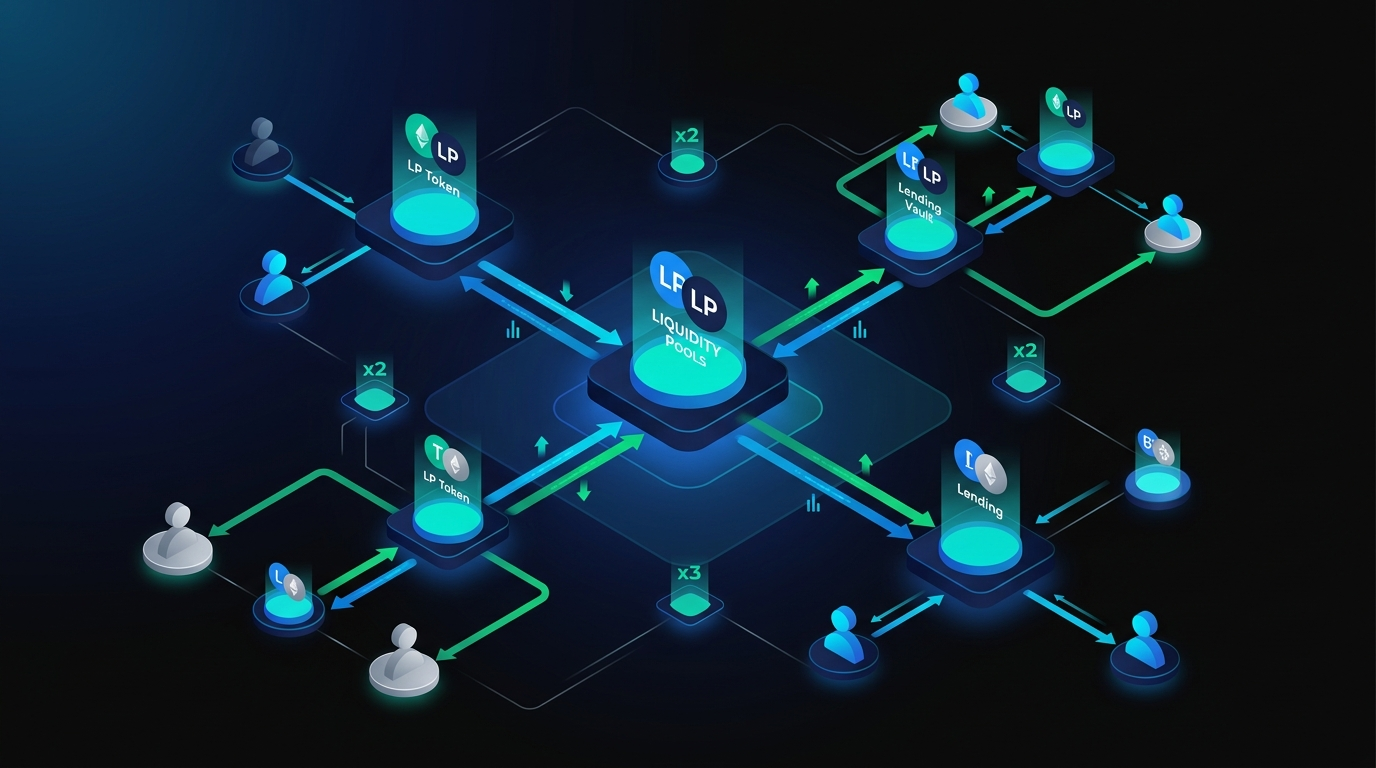
Alpaca Finance Products: Full Platform Overview
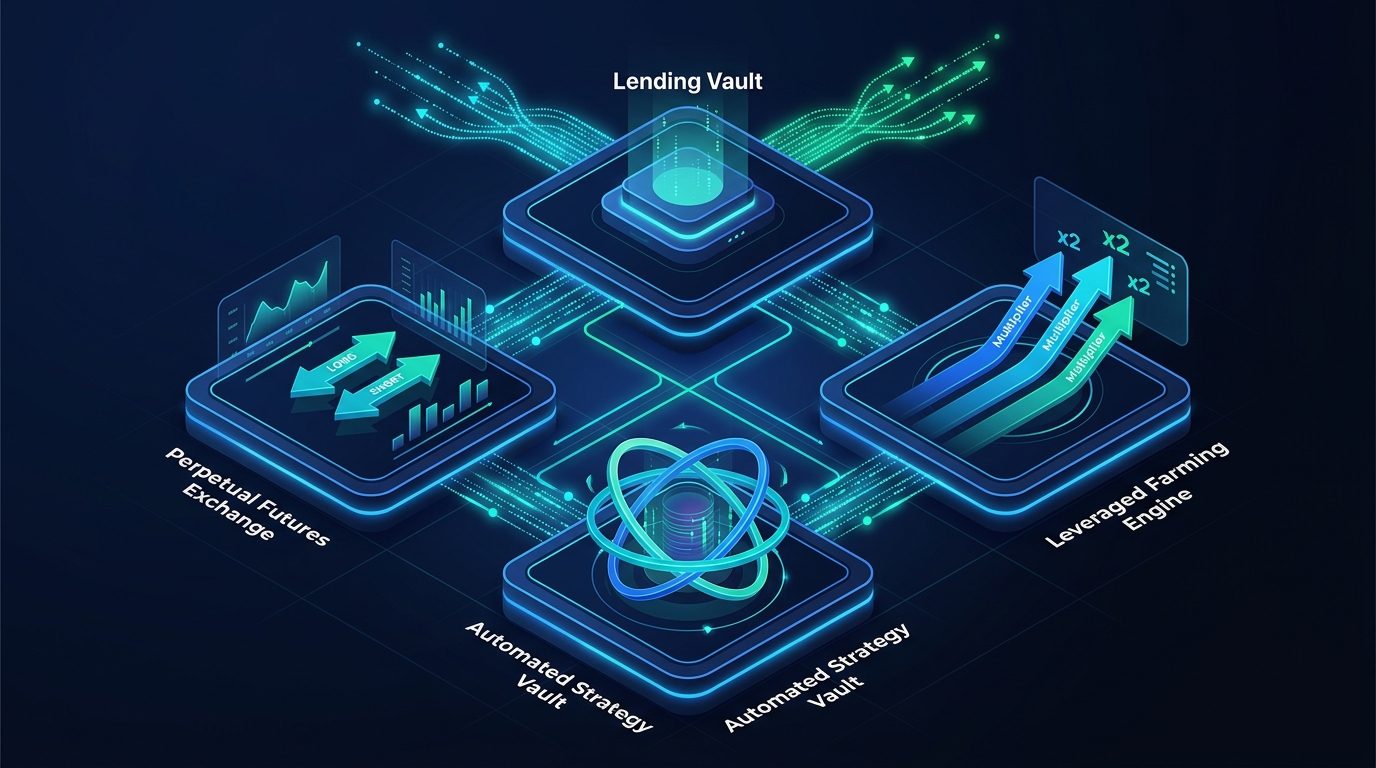
What started as a focused leveraged yield farming protocol evolved, over four years, into a multi-product DeFi suite. By the time Alpaca Finance wound down, the platform offered four distinct products, each designed with a different risk profile and user type in mind. The underlying logic was deliberate: the products were complementary. A lender's deposited capital funded a farmer's leverage position; a farmer's hedging activity flowed into the perpetual futures exchange; profits from all three could be deployed into automated vaults. Capital could circulate through the ecosystem rather than sitting idle.
Lending & Lend-and-Stake
The lending side of Alpaca Finance was intentionally built for beginners. Deposit BNB, ETH, BTC, USDT, or other supported assets into a lending pool - the protocol does the rest. Interest accrues continuously from borrowers using your deposited capital as leverage.
What set Alpaca's lending apart from most DeFi platforms was the utilization rate dynamic. Because leveraged farmers constantly borrowed from the lending pools, utilization rates stayed consistently high - and higher utilization means higher lending APYs for depositors. No deposit fees. No withdrawal fees. No lockup periods. The conservative liquidation settings built into the protocol meant lenders were protected even when leveraged positions went against borrowers.
Lender Benefits at a Glance:
- Single-asset deposits - no need to pair tokens or manage LP positions
- Continuous yield accrual, no lockup
- Zero deposit and withdrawal fees
- Protected by conservative liquidation mechanics
- High pool utilization driven by leveraged farming demand
Automated Vaults (AV) - Market-Neutral & Savings Strategies
Automated Vaults were Alpaca's answer to a real problem in yield farming: the strategy is profitable in theory, but managing a leveraged position actively is exhausting. AVs operated complex strategies on behalf of users - the on-chain equivalent of handing your capital to a disciplined, rule-based fund manager.
The third iteration, AVv3, integrated with Concentrated Liquidity DEX mechanics (functioning similarly to Uniswap V3's CL model), which allowed the vaults to deploy capital far more efficiently within tighter price ranges - capturing more fees per dollar of capital deployed.
"Delta-neutral" in plain language means: the vault takes offsetting long and short positions such that price movements in the underlying asset don't significantly affect your total position value. You're farming trading fees and yield, not making a directional price bet.
Perpetual Futures Exchange
The Perpetual Futures Exchange was Alpaca's most sophisticated product. Unlike traditional futures contracts, perpetuals have no expiration date - positions stay open indefinitely, with ongoing funding fees exchanged between longs and shorts to keep the contract price anchored to spot.
What made Alpaca's implementation distinctive:
- Zero slippage on open and close - critical for large positions where slippage can erase edge
- Aggregated single-market liquidity - all liquidity pooled into one market, enabling deeper books
- Carry trading via funding fees - sophisticated traders could farm funding fees by taking positions on the correct side of the funding rate
- No expiration - positions could be held indefinitely without rolling costs
The ability to hedge spot holdings on-chain, within the same protocol ecosystem where you're farming yield, created capital efficiency that most DeFi setups couldn't match.
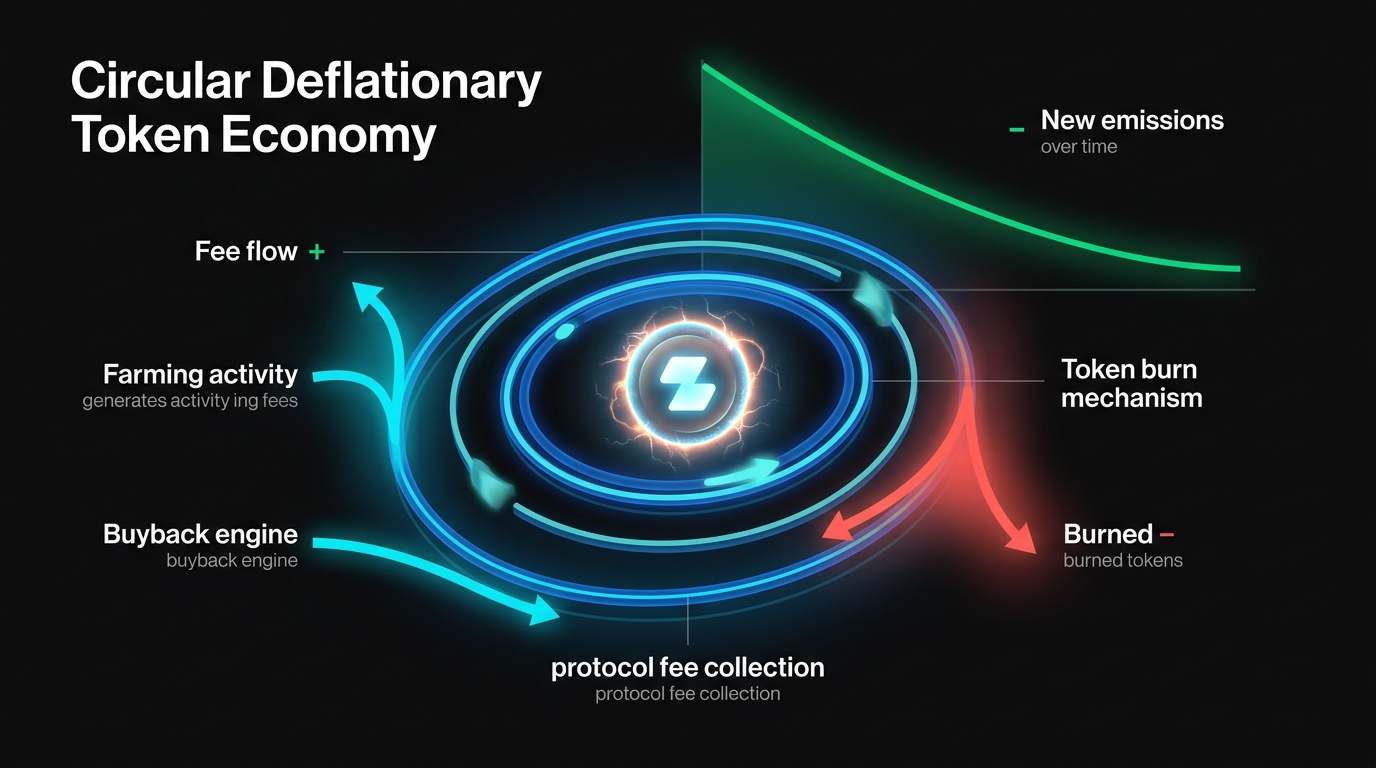
The ALPACA Token - Tokenomics, Governance & Deflationary Mechanics
ALPACA was a utility and governance token built around one core principle: the protocol's economic success flows directly back to token holders. Its fair-launch structure - no pre-sale, no VC investors, no pre-mine - meant that from day one, ALPACA was distributed purely through protocol participation. No insider cliffs, no venture dump risk.
The token served three functions: capturing economic value from the protocol, enabling decentralized governance, and gating access to exclusive partner rewards.
Economic Benefits & Deflationary Buyback-and-Burn
ALPACA's deflationary model worked through a direct revenue loop. Performance fees collected from leveraged farming and vault operations were used to buy ALPACA on the open market, then permanently burn those tokens - removing them from circulating supply. Simultaneously, new token emissions decreased on a scheduled curve. The result: over time, fewer tokens chasing the same (or growing) demand.
ALPACA TOKEN - KEY MILESTONES
Q1 2021
Fair launch on BNB Chain - zero pre-sale, zero VC, zero pre-mine. ALPACA distributed purely through protocol participation.
Early 2021 - All-Time High
ALPACA reaches approximately $8.00 per token. TVL surging toward peak.
August 23, 2021 - TVL Peak
Total value locked reaches $1.8 billion - top three protocols on BNB Chain by TVL.
2023-2024
TVL declines steadily as DeFi competition intensifies. Protocol begins operating at a loss.
April 2026 - Binance Delisting
Binance delists ALPACA. Short squeeze drives a 550% price spike; $55M in forced short liquidations in a single day.
May 2026 - Shutdown Announced
Team confirms two years of operating losses. Wind-down of all products announced. ALPACA trading near $0.08.
December 31, 2026 - Wind-Down Complete
Front-end access closes. All products offline. Protocol permanently shut down.
Governance & xALPACA Staking
Locking ALPACA in the Governance Vault issued xALPACA - the protocol's non-transferable staking receipt token. xALPACA holders received three things: a proportional share of protocol revenue, voting rights on platform parameters and proposals, and access to the Grazing Range program, which distributed partner project tokens as bonus rewards to locked holders.
The governance model reflected the fair-launch philosophy. No VC bloc with outsized voting power. No team wallet with a veto. Decisions were made by the community that had the most skin in the game - xALPACA stakers who had committed capital with no lockup exit.
Alpaca Finance Security & Audit Record
One of the most underappreciated aspects of Alpaca Finance's legacy is that it operated for four years, with billions of dollars flowing through its smart contracts, and never suffered a major exploit. That's not luck - it's the result of systematic security infrastructure that went well beyond what most DeFi protocols deployed.
The flash loan ban deserves specific attention. Flash loans - uncollateralized loans that must be borrowed and repaid within a single transaction - have been used to manipulate oracle prices, drain liquidity pools, and execute governance attacks across dozens of DeFi protocols. By prohibiting flash loans at the protocol level, Alpaca Finance removed that entire attack surface. The result: a clean security record across four years of operation handling billions in user capital.
How to Evaluate DeFi Leveraged Yield Farming Protocols Like Alpaca Finance
The story of Alpaca Finance - four years of technically sound operation followed by an unsustainable revenue decline - offers one of the most instructive case studies in DeFi for evaluating leverage protocols. Not every platform that advertises high APYs and leverage is built on foundations that will survive a competitive market contraction. Here's the evaluation framework that applies to any protocol in this category.
Alpaca Finance scored well on audits, tokenomics design, and transparent mechanics. Where it struggled - and ultimately failed - was the revenue model column. With no VC backing, the protocol needed organic TVL-driven fees to sustain operations. When competing protocols with deeper capitalization attracted user migration, Alpaca's revenue base eroded below the break-even threshold.
Assessing Liquidation Risk and Leverage Mechanics
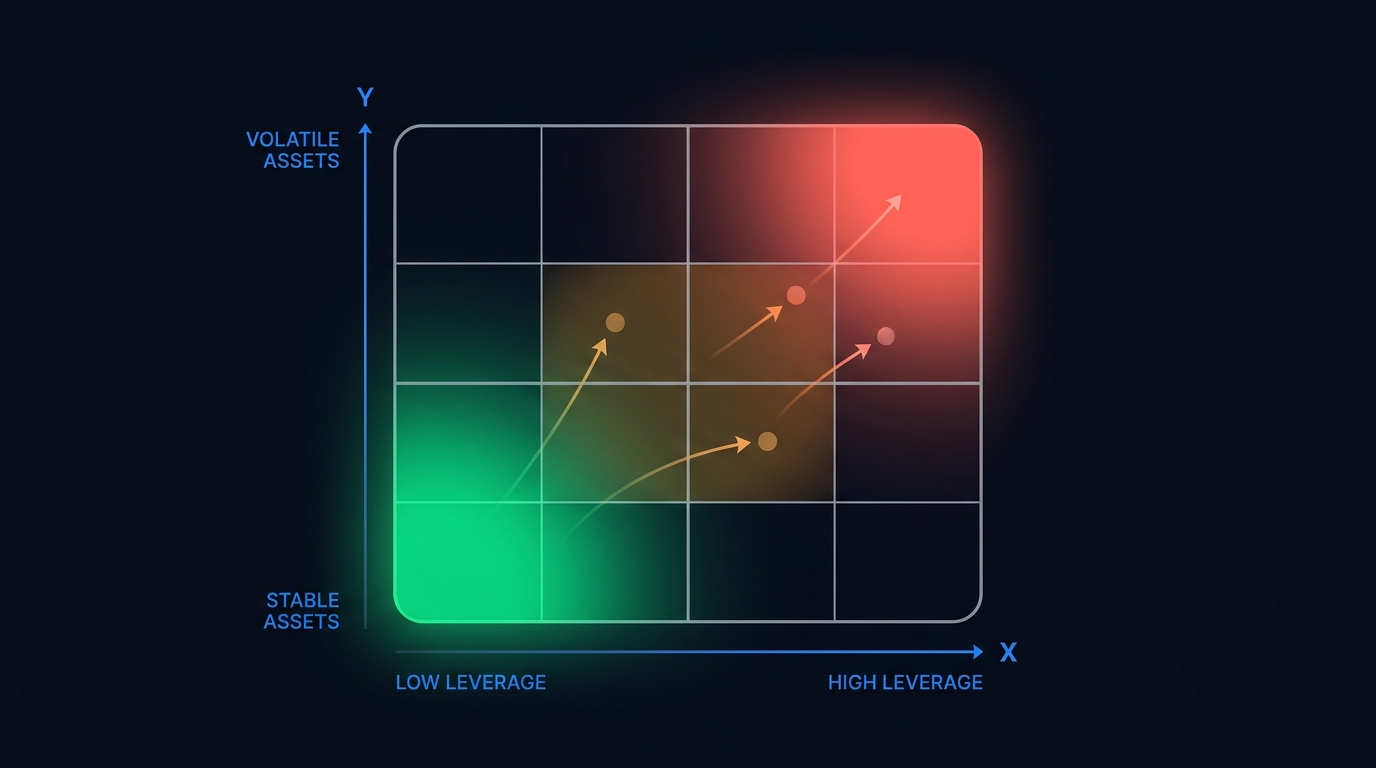
Two risks dominate in leveraged yield farming: liquidation and impermanent loss. Both get amplified by leverage in ways that aren't always obvious.
Impermanent loss at leverage works like this: at 1x (no leverage), if your LP pair diverges 20% in relative price, you experience a moderate impermanent loss. At 3x leverage, the same 20% price divergence impacts a position three times the size of your actual capital - amplifying the dollar value of that loss significantly. The debt remains fixed while your position value shrinks.
Liquidation triggers when the Debt Ratio crosses the Liquidation Threshold. Managing this requires monitoring your health factor - the dashboard metric that tells you how close your position is to the liquidation line. RSI (Relative Strength Index) can serve as a supplementary tool for timing entries: entering a 3x position when RSI signals a locally oversold borrowed asset reduces the probability of an immediate adverse move.
✓ LOW RISK - STABLECOIN PAIR + LOW LEVERAGE
USDT-BUSD pair at 1x-2x leverage. Minimal price divergence risk. Debt ratio stays well below liquidation threshold even in volatile market conditions. Recommended entry point for new leveraged farmers.
✕ HIGH RISK - VOLATILE PAIR + HIGH LEVERAGE
BNB-ETH pair at 5x-6x leverage. A 15-20% adverse price move can push debt ratio toward the 80% liquidation threshold rapidly. Impermanent loss amplification compounds exposure. Position requires constant monitoring.
Free vs. Paid vs. AI-Based DeFi Yield Platforms - Business Model Comparison
Not all DeFi yield protocols are built the same. The business model underneath determines how sustainable the platform is, who controls the levers, and what happens when market conditions change.
Why Alpaca Finance Shut Down - Lessons from DeFi's Leveraged Farming Giant
The shutdown of Alpaca Finance wasn't a scandal or a hack. It was a business model failure - and understanding the distinction matters for anyone evaluating DeFi protocols.
The core problem was structural. Alpaca's revenue came directly from protocol usage - leveraged farming fees and vault performance fees. As DeFi protocols with venture backing entered the market with aggressive incentive programs, users migrated to higher-yield alternatives. Alpaca's TVL declined. Lower TVL meant lower borrowing demand, which meant lower lending yields, which drove further user attrition. A downward spiral the team couldn't reverse without VC capital they never had.
ALPACA FINANCE - WIND-DOWN TIMELINE
Q1 2021
Protocol launches with fair-launch model. Rapid TVL growth as DeFi Summer demand peaks on BNB Chain.
August 2021 - TVL Peak
TVL reaches $1.8 billion on DefiLlama. Alpaca ranks top-3 on BNB Chain.
2023-2024
TVL declines as VC-backed competitors attract users. Team later discloses protocol had been operating at a loss for over two years.
April 2026 - Binance Delisting
Binance removes ALPACA from listings. Forced short liquidations drive a 550% price spike - $55M in positions closed in a single day. Token liquidity severely restricted.
May 2026 - Shutdown Announced
Team announces wind-down of all products. Users given advance notice and clear withdrawal timeline. No funds lost.
December 31, 2026 - Wind-Down Complete
Front-end access closes permanently. Protocol offline. All user assets had been available for withdrawal throughout the process.
The Binance delisting in April 2026 was the final catalyst. While it triggered a paradoxical short squeeze - with $55 million in forced liquidations creating a violent 550% price spike in a single trading day - it also severely restricted ALPACA's trading liquidity and user accessibility. The team's subsequent announcement was unambiguous: the protocol had been running at a loss for over two years and could no longer justify continued operation.
The protocol handled the wind-down with integrity. Users were given clear advance notice, front-end access remained open through December 31, 2026 to allow orderly withdrawals, and no funds were lost. For a fair-launch protocol that operated for four years without a single major exploit, that exit reflects the same values the project was built on.
⚠ Key Lessons from the Alpaca Finance Shutdown
- Fair launch ≠ sustainable business - without diversified revenue or capital reserves, any protocol is vulnerable to TVL-driven fee compression
- Security audits build trust - 20+ audits, flash loan ban, and zero exploits in 4 years demonstrate what rigorous security architecture looks like
- Leverage amplifies both returns and risks - the same mechanics that multiply yield also multiply loss when positions move against you
- TVL is a lagging indicator - a declining TVL trend long predates a business model crisis; watch revenue-to-TVL ratios, not just TVL alone
Alpaca Finance Alternatives - Active DeFi Leveraged Yield Farming Protocols in 2026
With Alpaca Finance offline, users who valued its approach to leveraged yield farming and undercollateralized lending need active alternatives. The protocols below occupy similar or adjacent territory - verify current status and TVL on DefiLlama before committing capital, as the DeFi landscape shifts quickly.
For traders who want on-chain derivatives without the yield farming component, platforms built on self-custody principles with transparent, verifiable on-chain mechanics represent where the DeFi derivatives space has moved since Alpaca's peak.
Conclusion - Alpaca Finance's Legacy and What It Means for DeFi Investors
Alpaca Finance built something genuinely important. Before it launched in 2021, leveraged yield farming on BNB Chain didn't exist. After it launched, the protocol demonstrated that undercollateralized lending at scale was technically achievable, that a fair-launch DeFi protocol could earn deep community trust, and that comprehensive security infrastructure - 20+ audits, a flash loan ban, conservative liquidation mechanics - was compatible with competitive yields.
For the researcher: Alpaca Finance's architecture - undercollateralized lending, leveraged LP position mechanics, AVv3's concentrated liquidity integration - remains one of DeFi's most instructive case studies. The official documentation archive is still accessible at docs.alpacafinance.org for anyone building in this space.
For the active DeFi participant: ALPACA token no longer has protocol utility - the platform is offline and the token serves no functional purpose within an active system.
For the protocol evaluator: Alpaca's story surfaces a checklist item that consistently gets underweighted: revenue model sustainability under stress. Great technology, strong security, and community trust matter - but they're not sufficient if the underlying business model can't survive a prolonged TVL decline. Whatever platform you engage with next, the framework Alpaca Finance built remains one of DeFi's most instructive blueprints.
Last updated: April 2026.
Crypto trading and DeFi participation involves substantial risk of loss. Leveraged positions can result in losses exceeding your initial deposit. This article is for informational purposes only and does not constitute financial or investment advice. Always conduct your own research before making any financial decisions.
Frequently Asked Questions
What is Alpaca Finance (ALPACA)?
Alpaca Finance was a DeFi lending protocol on BNB Chain that pioneered leveraged yield farming through undercollateralized loans. The platform connected lenders - who deposited single assets to earn yield - with borrowers who used that liquidity to fund leveraged yield farming positions at up to 6-7x. At its peak in August 2021, Alpaca Finance held over $1.8 billion in total value locked, making it one of the three largest DeFi protocols on BNB Chain. The protocol operated on a fair-launch model with no pre-sale, no VC involvement, and no pre-mined tokens. It completed a full wind-down of operations on December 31, 2026.
Is Alpaca Finance still active in 2026?
No. Alpaca Finance completed its wind-down on December 31, 2026. The team announced the closure citing an unsustainable business model after operating at a loss for over two years amid intensifying DeFi competition. Front-end access was maintained through the end of 2026 to give users time to withdraw assets. The protocol's smart contracts are no longer active, and the ALPACA token no longer has functional utility within an operating platform. Historical documentation remains accessible at docs.alpacafinance.org for research purposes, but no new deposits, farming positions, or trades are possible.
Why did Alpaca Finance shut down?
The shutdown stemmed from a structural revenue problem, not a technical failure or exploit. Alpaca Finance had no venture capital backing - its revenue came entirely from fees generated by protocol usage. As competing DeFi protocols with institutional capital entered the market and offered aggressive incentives, Alpaca's TVL declined. Lower TVL meant lower borrowing demand, which compressed lending APYs and drove further user attrition. The team confirmed they had been operating at a loss for over two years before announcing the wind-down. The April 2026 Binance delisting of ALPACA, which triggered severe liquidity restrictions, served as the final catalyst for the shutdown announcement.
What is leveraged yield farming and how did it work on Alpaca Finance?
Leveraged yield farming lets users amplify their yield farming returns by borrowing additional capital beyond their deposited collateral. On Alpaca Finance, a user deposited collateral - say, 10 BNB - selected a leverage multiplier up to 6-7x, and the protocol borrowed the additional capital from lending pools on the user's behalf. The combined position was deployed as LP tokens into integrated DEXes like PancakeSwap on BNB Chain. Farmers earned yield on the full leveraged position while only personally contributing their initial deposit. This multiplied both potential returns and liquidation risk - at 3x leverage, a 31% adverse price move could trigger automatic position closure.
What was the ALPACA token and how did its tokenomics work?
ALPACA was the native utility and governance token of Alpaca Finance, distributed exclusively through protocol participation with no pre-sale or VC allocation. The token captured protocol value through a deflationary buyback-and-burn mechanism: performance fees from leveraged farming and vault operations were used to purchase ALPACA on the open market and permanently destroy those tokens. Simultaneously, new emissions followed a declining schedule. Holders who locked ALPACA in the Governance Vault received xALPACA, which entitled them to protocol revenue sharing, voting rights on platform decisions, and access to the Grazing Range partner rewards program. The token reached an all-time high near $8 in early 2021 before declining significantly over subsequent years.
What are the main risks of leveraged yield farming in DeFi?
Two primary risks dominate leveraged yield farming: liquidation and amplified impermanent loss. Liquidation occurs when a position's Debt Ratio - borrowed value divided by total position value - exceeds the protocol's Liquidation Threshold (typically around 80%). At 3x leverage this can be triggered by roughly a 31% adverse price move. Impermanent loss, which affects all liquidity pool positions when paired assets diverge in price, gets amplified proportionally by leverage - a 20% price divergence hits a 3x position with three times the dollar impact compared to an unleveraged position. Both risks compound with higher leverage multipliers, making position sizing and monitoring essential disciplines. Crypto trading involves substantial risk of loss and leveraged strategies are not suitable for all investors.
What are the best active alternatives to Alpaca Finance in 2026?
Several protocols serve users who valued Alpaca Finance's approach. Venus Protocol on BNB Chain remains active with over-collateralized lending mechanics - more conservative than Alpaca but well-capitalized and audited. Gearbox Protocol on Ethereum is the closest structural equivalent, offering undercollateralized credit accounts for leveraged DeFi strategies at up to 10x. Pendle Finance, available across multiple chains, serves yield optimization through yield tokenization and fixed-rate trading. Always verify current TVL, audit status, and contract activity on DefiLlama before depositing capital. This information is for educational purposes only and is not a financial recommendation.