⚡ Quick Answer
The best DeFi coins to invest in 2026 include Aave (AAVE), Uniswap (UNI), Chainlink (LINK), Lido (LDO), MakerDAO/Sky (MKR/SKY), Curve (CRV), and Compound (COMP). These protocols lead by total value locked (TVL), revenue, and development activity. Total DeFi TVL stands at ~$130-140 billion in 2026, reflecting strong adoption. Each token carries significant risk - always do your own research.
Picking the best DeFi coins to invest in can feel overwhelming. Thousands of tokens exist, but only a handful run protocols that generate real revenue, hold billions in user deposits, and survive market downturns. This guide cuts through the noise and covers seven proven DeFi tokens worth watching in 2026 - with current data, honest risk assessments, and a clear verdict on who each coin is for.
DeFi - short for decentralised finance - uses smart contracts to replace traditional financial intermediaries. Instead of a bank managing your loans, a smart contract does it transparently and without permission. Instead of a stock exchange matching your trades, an automated market maker does it around the clock.
What Are DeFi Coins and Why Do They Matter?
A DeFi coin is the native token of a decentralised finance protocol. It typically serves three roles: governance (voting on protocol upgrades), fee payment (paying transaction costs), and incentivization (rewarding liquidity providers and stakers). When you hold a DeFi token, you essentially own a stake in an open-source financial protocol - including its revenue stream and governance rights.
The numbers behind DeFi in 2026 justify serious attention. According to CoinLaw market research, total value locked across all DeFi protocols reached the $130-140 billion range in early 2026, with a projected 43.3% compound annual growth rate through 2030. This is not a niche experiment anymore - it is a parallel financial system with real users, real capital, and real yield opportunities.
What changed between 2021 and 2026: the easy money is gone. The 20%+ APY days are history for mainstream protocols. Genuine DeFi investing now means understanding which protocols produce sustainable revenue, which tokens capture that revenue, and which have the governance structures to stay relevant over five-plus years.
While many governance tokens represent broad decentralized ecosystems, certain protocols are designed exclusively to optimize market efficiency for specific financial activities like automated stablecoin trading. Understanding how these specialized liquidity models reduce transaction slippage can help investors assess protocol longevity. For a complete breakdown of this asset-class innovation, see our detailed guide on how Curve Finance works and its role in ecosystem liquidity.
Best DeFi Coins to Invest in 2026: Top 7 Picks
Before diving into each coin, here is what every token on this list has in common: it belongs to a protocol with a verifiable TVL above $1 billion, an active development team, and a token that captures protocol value in some form. These are not speculative moonshots - they are the backbone of decentralised finance.
1. Aave (AAVE) - Best DeFi Lending Protocol
🔵 Aave (AAVE) at a Glance
Protocol TVL (Apr 2026)
$26.18B
Market Cap
~$2.3-2.5B
Category
Lending / Borrowing
Latest Version
Aave V4 (2026)
Aave is the largest non-custodial lending protocol in DeFi. Users deposit crypto assets to earn interest; borrowers post overcollateralised positions and draw loans - all governed by smart contracts. As of April 17, 2026, Aave V3 held the highest protocol TVL across all of DeFi at $26.18 billion, cementing its position as the sector leader.
The major 2026 development is Aave V4. The upgrade includes the GHO stablecoin expansion, improved cross-chain functionality, and enhanced risk parameters that directly responded to the April 2026 KelpDAO bridge exploit - in which Aave's contracts were used as a borrowing venue but were not compromised. Aave's response was notably sophisticated: the protocol's DAO coordinated a $300M recovery fund alongside other major protocols, demonstrating governance maturity that earlier-generation DeFi lacked.
What AAVE token holders get: governance voting rights, staking rewards from the Safety Module (which acts as insurance backstop), and fee discounts on borrowing. The token is also used as collateral itself within the protocol.
📈 Bullish Factors
- TVL leadership: Consistently the top non-custodial lending protocol in DeFi.
- Aave V4 upgrade: Expanded to MetaMask Stablecoin Earn, growing retail adoption.
- Multi-chain: Deployed on Ethereum, Polygon, Avalanche, and more - broad exposure.
- Crisis response: Coordinated $300M recovery during KelpDAO exploit - governance maturity proven.
📉 Bearish Factors
- Composability risk: KelpDAO exploit showed how third-party integrations can harm Aave users indirectly.
- APY compression: Stablecoin lending yields are now 2-5% vs 10-20% in 2021.
- Competition: Spark Protocol (by MakerDAO) and Morpho are growing rivals.
2. Uniswap (UNI) - Best Decentralised Exchange Token
Uniswap is the world's largest decentralised exchange by cumulative trading volume, having surpassed $2 trillion in lifetime swaps. It pioneered the Automated Market Maker (AMM) model - replacing traditional order books with liquidity pools funded by users.
The pivotal 2026 development: the UNI fee switch, activated in December 2025. For the first time in Uniswap's history, 17% of swap fees now route toward buying back and burning UNI tokens across Ethereum and several other chains. This directly ties UNI's value to protocol usage for the first time - a structural shift bullish investors had waited years to see.
Uniswap's own Layer 2, Unichain, now handles roughly 50% of V4 transaction volume. Despite the sector-wide turbulence from the April 2026 KelpDAO exploit, Uniswap held $8.15 billion in weekly DEX volume with only a 15% drop - a resilience test it passed.
While Uniswap remains a dominant standard for generalized decentralized spot trading, alternative automated market makers have successfully captured substantial volume by focusing on direct revenue-sharing incentives for token holders. Evaluating platforms that convert protocol fees into tangible user rewards can provide a strong diversification angle for active portfolios. You can explore this mechanism further in our analysis of 7 reasons to buy SushiSwap and its real yield potential in 2026.
🔵 Uniswap (UNI) at a Glance
Market Cap
~$3.16B
Weekly DEX Volume
$8.15B
Token Price (approx.)
~$4.99
Category
DEX / AMM
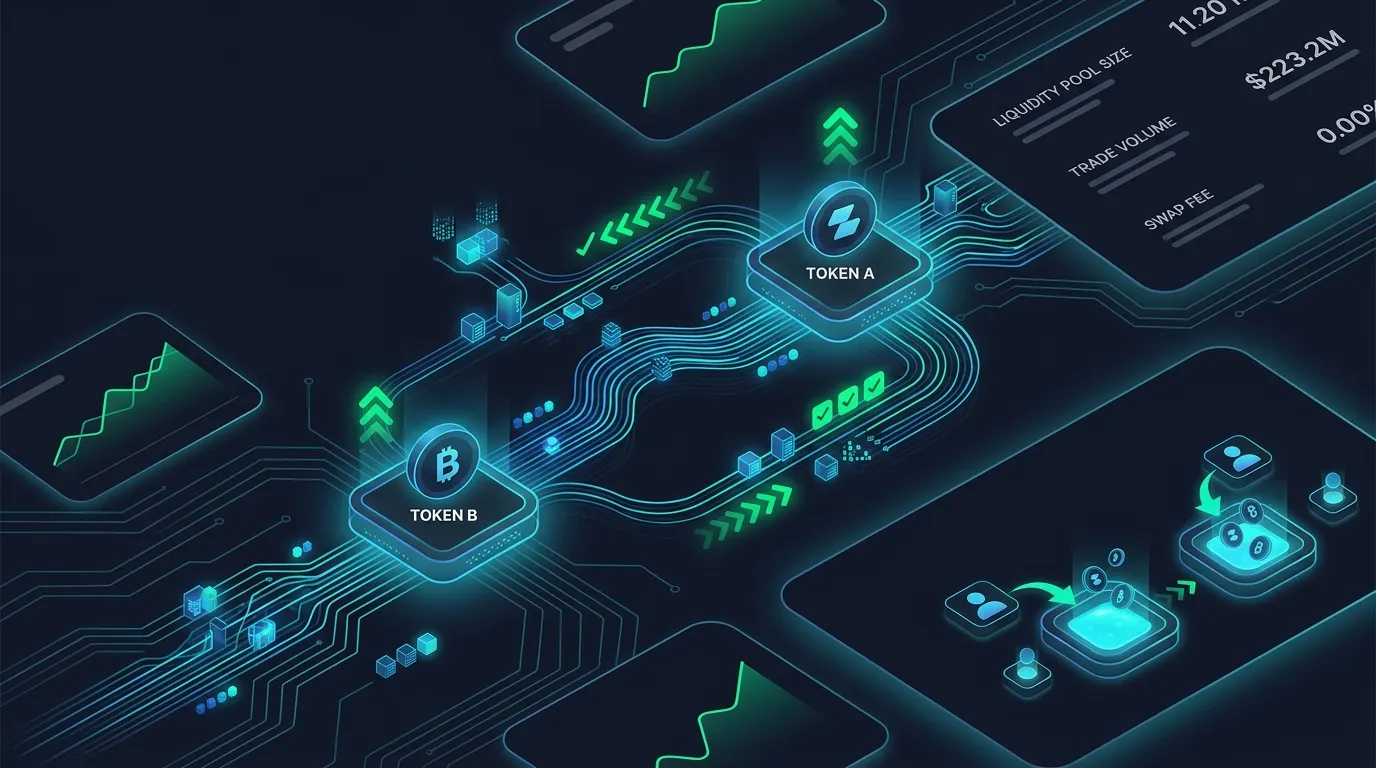
3. Chainlink (LINK) - DeFi Infrastructure Layer
Chainlink is not a financial protocol in the traditional sense - it is the oracle infrastructure that makes the rest of DeFi function. Price feeds, random number generation, cross-chain messaging, and automation all run through Chainlink's decentralised oracle networks. Without Chainlink, Aave cannot price collateral, Uniswap cannot compute accurate rates, and lending protocols cannot trigger liquidations.
The scale of Chainlink's adoption in 2026 is staggering. According to Chainlink's own data, the network has enabled over $16 trillion in transaction value and is used by tens of thousands of developers, including Aave, GMX, Lido, and the majority of leading DeFi protocols. The latest expansion - the Chainlink CCIP (Cross-Chain Interoperability Protocol) - now handles Lido's direct staking rails from Arbitrum, Base, and Optimism, securing billions in cross-chain capital.
LINK staking adds a layer of cryptoeconomic security: node operators and community stakers can lock LINK and face slashing penalties if service levels fail. Staking yields vary, but the model creates a feedback loop where higher DeFi usage → higher staking demand → higher LINK utility.
"As a chain-agnostic platform with thousands of users across the world's largest financial institutions and DeFi protocols, Chainlink accelerates the adoption of blockchain ecosystems."
- Chainlink Labs, Official Documentation
4. Lido (LDO) - Leading Liquid Staking Token
Lido's proposition is simple but enormously valuable: it lets anyone stake Ethereum (or other PoS assets) without the technical complexity or the 32 ETH minimum required to run a validator. In return, users receive liquid staking tokens (stETH) that can be used across DeFi while still earning staking rewards.
The result is a protocol with over $30 billion in liquid staking TVL - among the largest individual protocol TVLs in the entire DeFi ecosystem. The $20 million LDO buyback programme executed in 2026 signals the DAO is actively supporting token value. Lido's integration with Chainlink CCIP now enables one-click staking from Ethereum Layer 2 networks, dramatically reducing the friction for new users.
The risk unique to Lido is stETH depeg. During periods of extreme market stress, stETH can trade below ETH parity - a risk that has materialised before and can affect liquidity providers across multiple protocols simultaneously.
5. MakerDAO / Sky (MKR/SKY) - The DeFi Stablecoin Backbone
MakerDAO is the oldest and most battle-tested DeFi protocol, responsible for creating DAI - the largest decentralised stablecoin by usage. The protocol rebranded to Sky in 2025, with the token migration from MKR to SKY designed to simplify governance and enhance scalability. The core mechanism remains: users deposit accepted collateral into vaults, borrow DAI (now USDS under Sky), and pay a stability fee.
According to CoinGape's 2026 analysis, MKR holds a TVL slightly above $5 billion with a market cap near $1.6 billion, reflecting renewed interest in decentralised stablecoin infrastructure. The protocol's over 8-year track record with no catastrophic failures makes it a conservative anchor for DeFi portfolios.
MKR/SKY is best suited for investors who want exposure to DeFi's stablecoin infrastructure - rather than the higher-growth, higher-volatility DEX or lending tokens.
6. Curve Finance (CRV) - Stablecoin Liquidity Layer
Curve Finance is the dominant decentralised exchange for stablecoin-to-stablecoin swaps. Its AMM design minimises slippage for assets that should trade near parity - making it essential infrastructure for DAI, USDC, USDT, and other pegged assets across DeFi.
According to CoinGape research, Curve holds a TVL of around $2.1 billion in 2026, with CRV used for governance and staking rewards in a vote-escrow system (veCRV). The protocol records approximately 1,700 daily active addresses and has experienced close to 200% value growth over the past year, reflecting confidence in its fundamental role as DeFi's liquidity backbone.
Curve's influence extends beyond its own protocol - many of the largest DeFi platforms depend on Curve pools for deep liquidity. CRV holders who lock tokens for extended periods (up to 4 years) receive boosted rewards and governance weight, creating a powerful incentive for long-term alignment.
7. Compound (COMP) - Pioneer DeFi Lending Protocol
Compound is one of the founding protocols of the DeFi lending category and the project that popularised liquidity mining as a token distribution mechanism. COMP governs the Compound protocol - a series of decentralised interest-rate markets allowing users to supply and borrow Ethereum-based tokens algorithmically.
Compound Treasury, its institutional product, became the first DeFi offering to receive a credit rating from S&P Global Ratings (B-rating), validating its approach to institutional DeFi. While Compound has faced competition from Aave, its market position and governance token remain relevant for DeFi investors seeking exposure to the lending category at a lower market cap entry point.
How to Choose the Best DeFi Coin for Your Portfolio
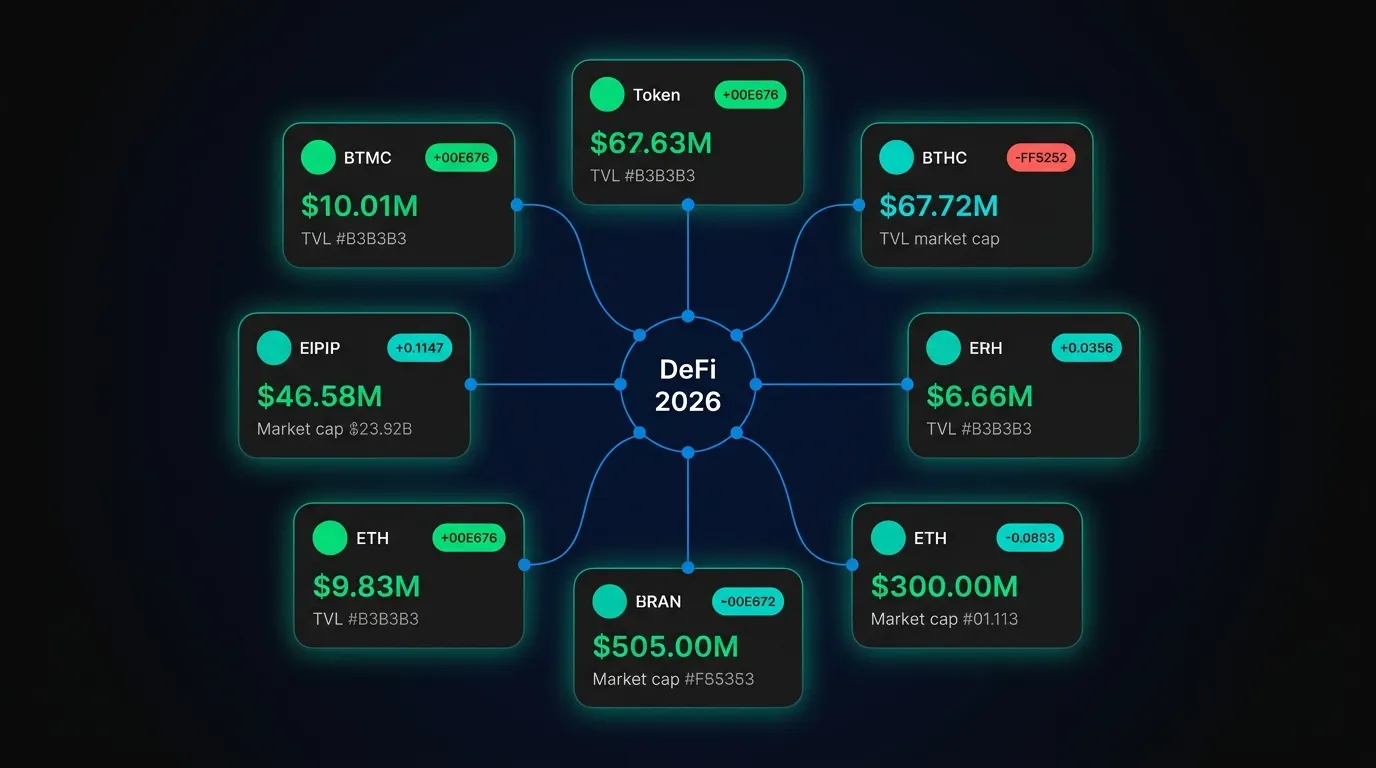
Not every DeFi coin suits every investor. Here is a comparison of the top 7 tokens by key investment metrics in 2026:
What Are the Best DeFi Coins to Buy Right Now? (Decision Framework)
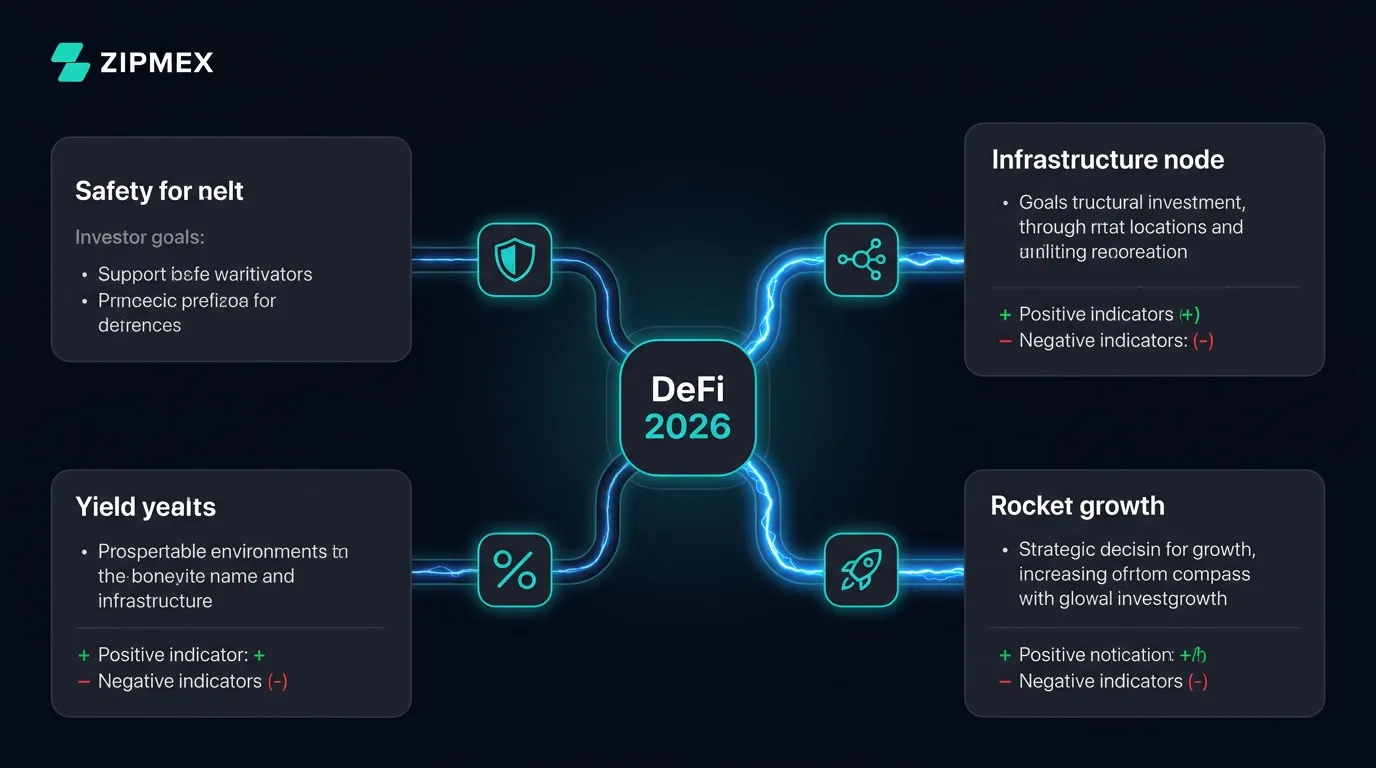
The right choice depends entirely on what you want from your investment. Here is a practical framework:
If you want the safest DeFi bet → AAVE or MKR/SKY
Both protocols have survived multiple bear markets, have the highest TVLs, and have proven governance structures. AAVE is more growth-oriented; MKR/SKY is more conservative.
If you want DeFi infrastructure exposure → LINK
Chainlink is not a single protocol but the underlying data layer for most of DeFi. If DeFi grows, LINK usage grows. It is one of the few DeFi-adjacent tokens with institutional adoption.
If you want passive income on your ETH → LDO (via stETH)
Lido lets you earn ETH staking rewards while keeping your assets liquid. The LDO token governs the protocol. Understand the stETH depeg risk before committing large positions.
If you want a DeFi growth play with a catalyst → UNI
The fee switch is the first time UNI has had direct value accrual from protocol revenue. Unichain reducing L2 transaction costs also expands the addressable market. The fee switch alone is a genuine 2026 catalyst.
DeFi Coin Investment Risks You Must Understand in 2026
Every DeFi coin on this list carries meaningful risk. Understanding the risk landscape is not optional - it is the price of entry.
⚠ Critical Risks for DeFi Investors
- Smart contract risk: Even audited protocols can contain exploitable vulnerabilities. The April 2026 KelpDAO exploit resulted in $190M in losses - not from Aave's code, but from composability with a flawed bridge. Your position in one protocol is indirectly exposed to every protocol it interacts with.
- Market volatility: DeFi tokens are high-volatility assets. All seven tokens on this list have declined 70-99% from their all-time highs. Short-term traders frequently lose capital; long-term holders in quality protocols have generally recovered.
- Governance risk: DeFi tokens are governance tokens. A malicious or poorly designed governance vote can drain protocol treasuries, change fee structures, or deprecate token utility overnight.
- Regulatory uncertainty: The SEC has moved toward labelling some DeFi tokens as unregistered securities. Regulatory action can compress token valuations rapidly regardless of protocol fundamentals.
- APY compression: The 2021 era of 20%+ yields is over for established protocols. Realistic 2026 stablecoin lending rates sit at 2-5% APY. Do not invest expecting the rates shown in older articles.
💡 Pro Tip: Position Sizing for DeFi
Most experienced DeFi investors treat token holdings as speculative positions within a broader crypto portfolio. A common framework: 60% BTC/ETH as base, 20-30% established DeFi tokens (AAVE, UNI, LINK), 5-10% higher-risk DeFi positions (CRV, COMP). Never allocate capital you cannot afford to lose entirely.
Beyond smart contract exploits and algorithmic depegs, sentiment-driven market panic remains one of the largest immediate threats to automated liquidity pools. When a broader market sell-off begins, tracking the collective psychological momentum of retail and institutional participants can serve as a vital warning system. Before adjusting your decentralized asset exposure during highly volatile cycles, make sure to check out the crypto fear and greed index explained to gage market sentiment accurately.
How to Buy DeFi Coins in 2026: Step-by-Step
Buying the best DeFi coins to invest in requires a basic setup: a cryptocurrency exchange account and a crypto wallet for on-chain interaction. Here is the process:
Choose a reputable centralised exchange
AAVE, UNI, LINK, and LDO are all listed on major centralised exchanges. Verify the exchange is regulated in your jurisdiction before depositing funds.
Complete verification and fund your account
Most regulated exchanges require KYC. Fund your account with fiat or transfer existing crypto.
Purchase your chosen DeFi tokens
Use a limit order to control entry price, especially for larger positions. Avoid market orders for illiquid tokens.
Consider on-chain participation for additional yield
Holding tokens on a centralised exchange means missing on-chain DeFi yield opportunities. Transfer to a self-custody wallet to stake AAVE in the Safety Module, provide liquidity on Uniswap, or lock CRV for veCRV governance power. Learn about DeFi yield farming before deploying capital on-chain.
When executing on-chain swaps directly through Web3 protocols, remember that every smart contract interaction requires a computational toll paid directly to network validators. During high-demand events or market liquidations, these costs can spike dramatically, potentially impacting the profitability of smaller trade entries. To better time your trades and avoid overpaying for transaction processing, consult our expert handbook on what gas fees are and how blockchain transaction costs are calculated.
Frequently Asked Questions
What is the best DeFi coin to invest in right now?
Based on TVL, protocol revenue, and development activity in 2026, Aave (AAVE) and Uniswap (UNI) represent the most established DeFi investment positions. Aave leads all DeFi protocols with a $26.18 billion TVL as of April 2026, while Uniswap's activated fee switch provides a new direct value accrual mechanism for UNI holders. Both carry significant risk and are not financial advice.
Are DeFi coins a good investment in 2026?
DeFi coins are high-risk, high-volatility assets. Total DeFi TVL has recovered to the $130-140 billion range in 2026, reflecting genuine adoption. However, tokens are well below 2021 all-time highs, and events like the April 2026 KelpDAO exploit demonstrate that composability risks remain real. DeFi investing requires understanding what each protocol does, how the token captures value, and how much of your portfolio you can afford to lose.
What is the difference between DeFi coins and DeFi tokens?
A DeFi coin typically refers to a native token of a blockchain used for DeFi (like ETH on Ethereum). A DeFi token governs or provides utility within a specific protocol built on that blockchain (like UNI for Uniswap or AAVE for Aave). In everyday usage, the terms are used interchangeably, but the technical distinction matters for understanding where protocol fees go and who captures them.
How much can I realistically earn from DeFi in 2026?
Realistic yields for established DeFi protocols in 2026 range from 2-5% APY on stablecoin lending (Aave, Compound) to 3-8% APY for ETH liquid staking via Lido. Higher yields above 10% typically involve higher risks: less audited protocols, inflationary token rewards, or leveraged strategies. The 20%+ APY era for mainstream protocols ended with the 2022 bear market.
Which DeFi protocol has the highest TVL in 2026?
As of April 17, 2026, Aave V3 holds the highest individual protocol TVL across all of DeFi at $26.18 billion, according to WazirX's analysis. Lido follows with over $30 billion in liquid staking TVL. Total DeFi TVL across all protocols is in the $130-140 billion range.
Conclusion
The best DeFi coins to invest in 2026 are not the speculative moonshots from 2021 - they are established protocols with real revenue, battle-tested smart contracts, and governance structures that have proven themselves under stress. Aave, Uniswap, Chainlink, Lido, MakerDAO/Sky, Curve, and Compound represent the core of what DeFi has become: a parallel financial system with $130-140 billion in capital and growing institutional engagement.
The opportunity is real. So are the risks. Smart contract vulnerabilities, governance attacks, regulatory pressure, and composability failures like the April 2026 KelpDAO exploit are not hypothetical - they are documented events. Every position in DeFi tokens should be sized accordingly.
If you are building a DeFi allocation in 2026, start with the protocols that have the longest track records and highest TVL, diversify across lending, DEX, and infrastructure categories, and never deploy more capital than you can afford to lose entirely.
⚠ Disclaimer: The information provided in this article is not intended to provide investment or financial advice. Investment decisions should be based on the individual's financial needs, objectives, and risk profile. We encourage readers to understand the assets and risks before making any investment entirely. Cryptocurrency investments are subject to high market risk. Past performance does not guarantee future results.
ZIPMEX promotes trading on trade.zipmex.com. Promotions are labelled and kept separate from news coverage, which is selected and checked without regard to them. Perpetual futures are leveraged derivatives. Prices can move fast and you can lose all of your margin. Not available in every jurisdiction. Not investment advice.