The crypto world has invented multiple ways for blockchain projects to raise funds - and if you've ever wondered what separates an ICO from an IEO or an IFO, you're not alone. Each model puts tokens in investors' hands differently, with different levels of risk, oversight, and opportunity.
⚡ Quick Answer
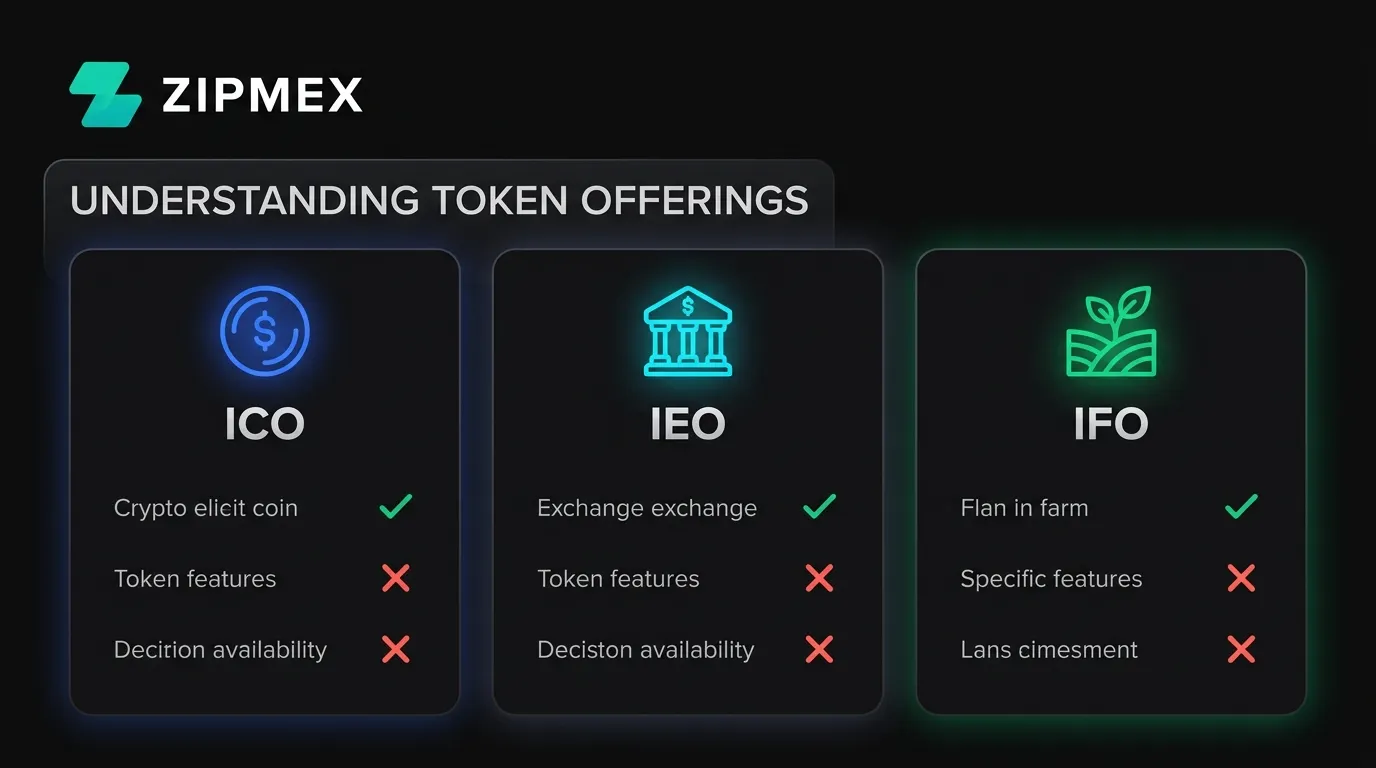
ICO is a self-managed token sale run directly by a project team. IEO is a token sale managed by a centralized exchange that vets the project first. IFO is a DeFi fundraising model where participants must stake LP tokens on a decentralized exchange to receive new tokens. The key difference is who controls the process: the project (ICO), a CEX (IEO), or a DEX using liquidity farming (IFO).
New crypto fundraising models emerged after the ICO boom of 2017, where fraudulent projects ran rampant. Each evolution - IEO, then IFO - added more structure, more oversight, and new mechanisms for investors to participate. Understanding each model helps you identify opportunities and avoid pitfalls.
🪙 What Is an ICO (Initial Coin Offering)?
An Initial Coin Offering (ICO) is the original crypto fundraising model - and arguably the wildest. A blockchain project publishes a whitepaper describing its vision and token economics, then sells newly created tokens directly to the public in exchange for established cryptocurrencies like Bitcoin or Ethereum. No third-party intermediary is involved.
Ethereum itself was funded through an ICO back in 2014 (Binance Academy), proving the model could produce world-changing technology. The 2017 ICO boom saw projects collectively raise an estimated $5.6 billion, drawing in millions of retail investors chasing massive returns.
How an ICO Works
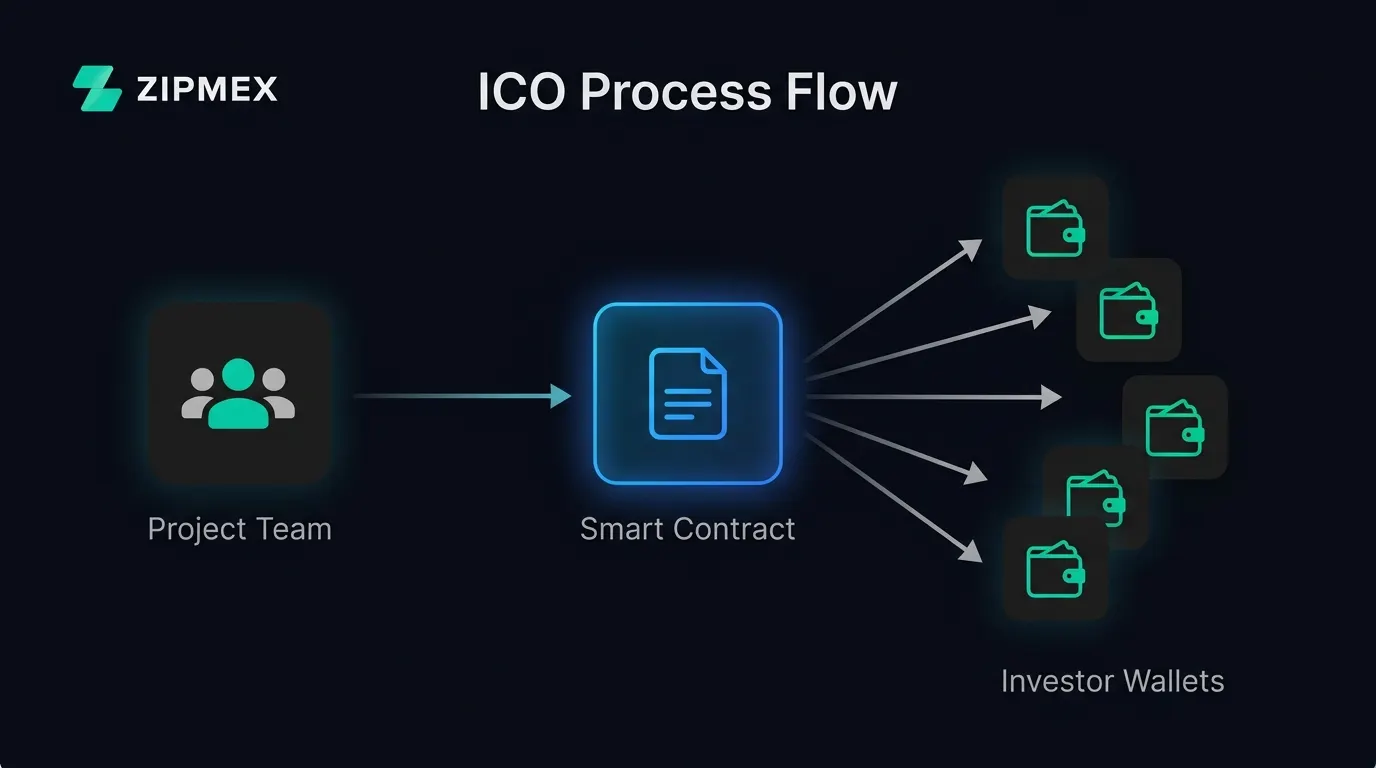
The project team creates and deploys a smart contract. Investors send ETH or BTC to a designated wallet address and receive the project's new tokens in return. The entire process is self-managed by the development team - including marketing, smart contract security, and investor relations.
ICO: Pros and Cons
📈 ICO Advantages
- Open access: Anyone globally can participate without exchange accounts or KYC requirements.
- Early pricing: Tokens are typically sold at the lowest possible price before any exchange listing.
- Low cost for projects: No listing fees or exchange partnerships required to launch.
📉 ICO Risks
- Scam-prone: Research by Satis Group LLC found that [approximately 80% of 2017 ICOs were fraudulent](https://www.solulab.com/how-is-ieo-crypto-different-from-ico/).
- No vetting: Anyone can launch an ICO with minimal accountability.
- Listing not guaranteed: Buying ICO tokens doesn't guarantee they'll ever trade on an exchange.
- Regulatory uncertainty: Several countries have banned or heavily restricted ICOs due to securities law concerns.
🏦 What Is an IEO (Initial Exchange Offering)?
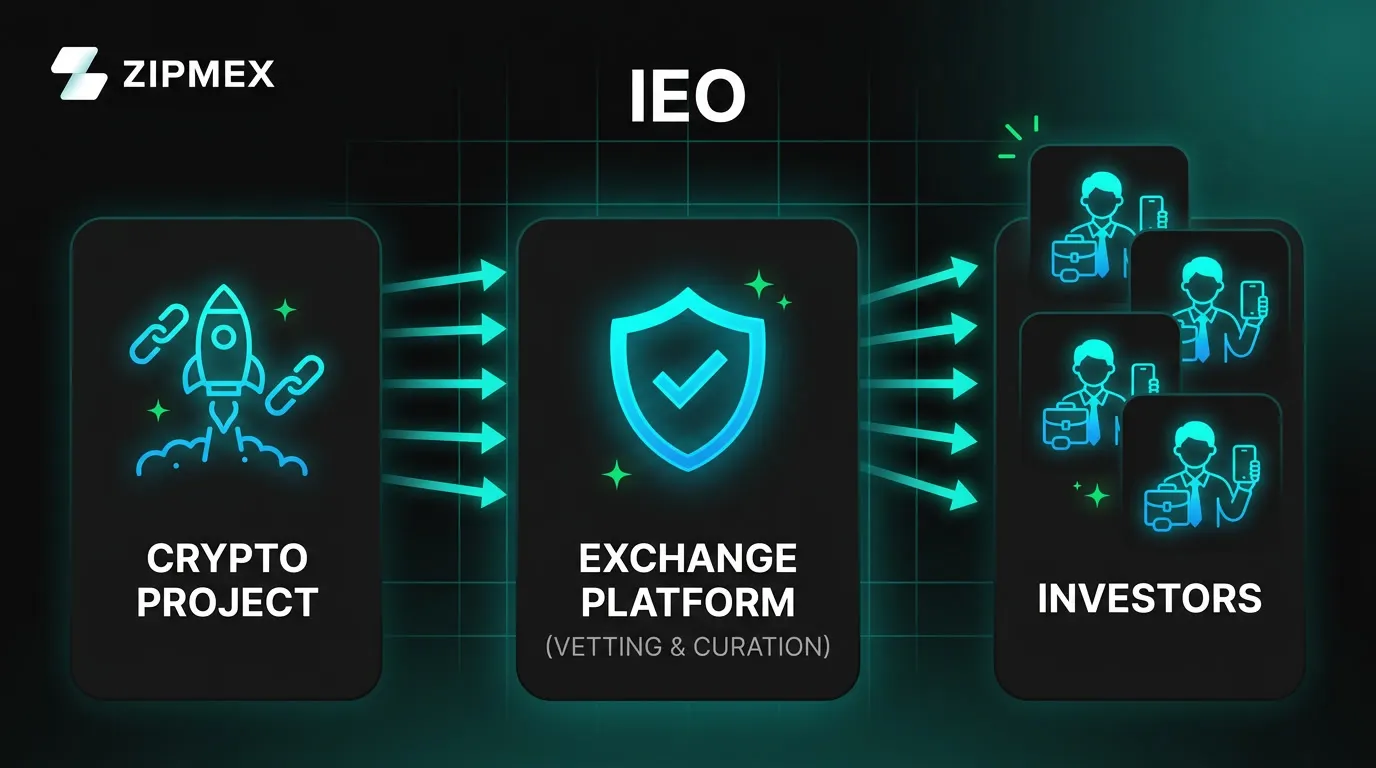
An Initial Exchange Offering (IEO) is essentially ICO 2.0 - the same basic concept of selling new tokens to investors, but with a critical difference: a centralized cryptocurrency exchange manages the entire sale. The exchange vets the project, runs KYC/AML on participants, and guarantees that the token will be listed on its platform after the sale.
IEOs emerged in 2019 as a direct response to the ICO fraud epidemic. Binance Launchpad became the gold standard, and by 2019 alone, IEOs had raised over $1.5 billion across approximately 160 token projects. Notable projects that launched via IEO include Axie Infinity, The Sandbox, and Polygon - all of which went on to become major players in the crypto space (Binance Launchpad data).
How an IEO Works
The project applies to a cryptocurrency exchange's launchpad (e.g., Binance Launchpad, KuCoin Spotlight). The exchange reviews the whitepaper, team credentials, tokenomics, and business model before approving. Once approved, the exchange lists the IEO on its platform, handles all marketing, and lets its existing user base participate directly through their exchange wallets. After the sale, the token is immediately listed for trading.
IEO: Pros and Cons
📈 IEO Advantages
- Vetted projects: The exchange's reputation is on the line - they screen out obvious scams.
- Immediate liquidity: Tokens list on the exchange right after the sale - no months-long wait like ICOs.
- KYC protection: Exchange handles all Know Your Customer checks, reducing fraud risk for investors.
- Built-in audience: Projects gain instant access to millions of exchange users.
📉 IEO Risks
- High listing fees: Exchanges charge substantial fees, increasing project costs significantly.
- Centralized control: The exchange controls the sale - contrary to crypto's decentralization ethos.
- Variable vetting quality: Some exchanges lower standards to collect listing fees, meaning IEO quality varies widely.
- Post-listing volatility: Many IEO tokens surge on listing day and crash shortly after.
🌾 What Is an IFO (Initial Farm Offering)?
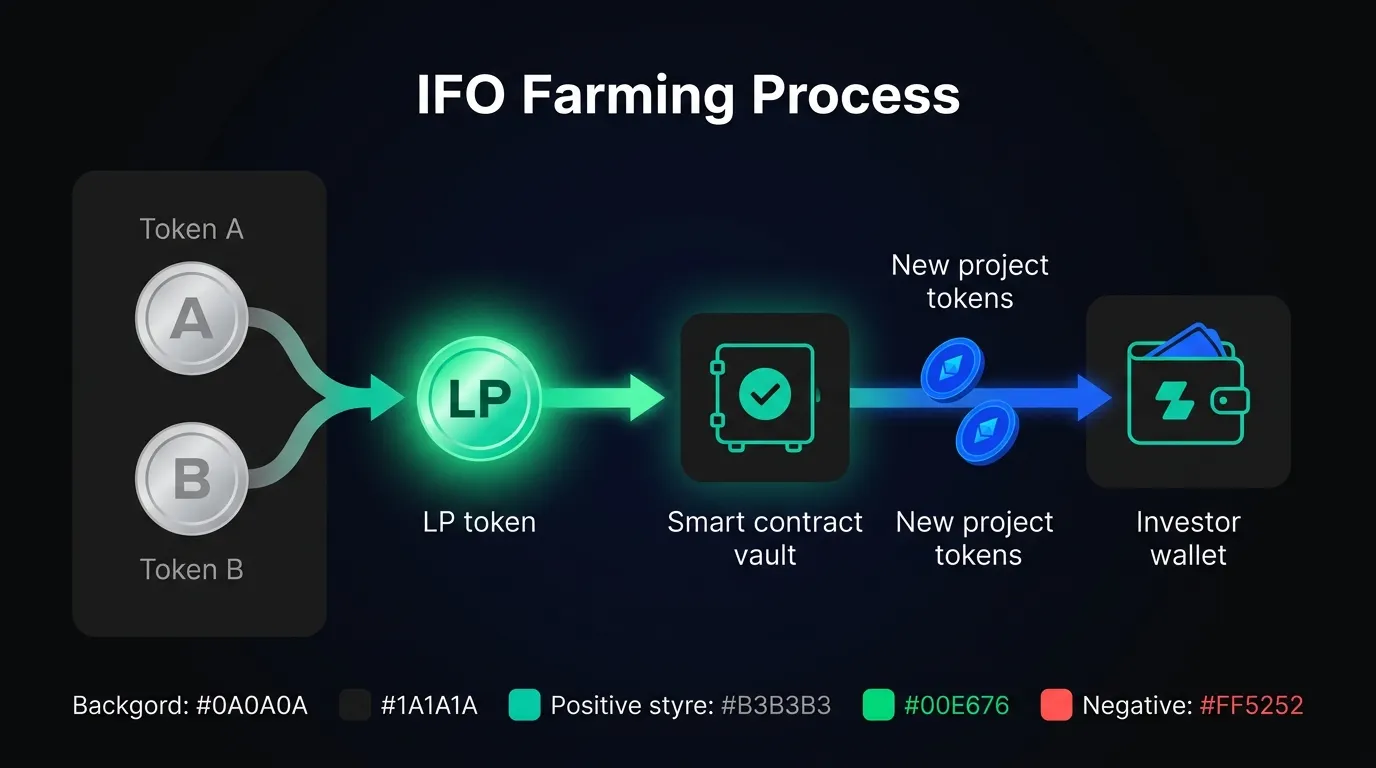
An Initial Farm Offering (IFO) is the newest and most DeFi-native fundraising model of the three. Rather than sending money directly to a project or an exchange, investors must first provide liquidity to a decentralized exchange (DEX) to earn LP (Liquidity Provider) tokens - and then stake those LP tokens to receive the new project's tokens.
IFOs were pioneered by PancakeSwap on the Binance Smart Chain and represent a significant evolution in decentralized fundraising. As Binance Academy explains, an IFO is built on the same core concepts as an IDO - liquidity pools and decentralized exchanges - but adds the farming requirement as a filtering mechanism. This rewards existing DeFi participants and discourages passive speculators.
How an IFO Works
To participate in a PancakeSwap IFO, for example, you would:
Acquire LP Tokens
Stake a token pair (e.g., CAKE-BNB) in the PancakeSwap liquidity pool to receive CAKE-BNB LP tokens.
Commit LP Tokens to the IFO
Lock your LP tokens in the IFO smart contract during the sale window. The number of new tokens you receive is proportional to your share of the total LP tokens committed.
Receive New Tokens + Remaining LP Tokens
After the IFO ends, you receive the new project tokens. Any excess LP tokens staked beyond your allocation are returned to you. The project receives the BNB from the LP, and CAKE is burned.
IFO: Pros and Cons
📈 IFO Advantages
- Truly decentralized: No centralized exchange controls the sale - the DEX and smart contracts run everything.
- Liquidity from day one: The IFO mechanism bootstraps liquidity automatically because participants provide it.
- Fair for DeFi participants: Rewards users already engaged with the ecosystem rather than pure speculators.
- No excess loss: Unallocated LP tokens are returned after the sale, limiting downside exposure.
📉 IFO Risks
- Complex entry: Requires understanding of liquidity pools, LP tokens, and DeFi mechanics - not beginner-friendly.
- Impermanent loss risk: Providing liquidity exposes you to impermanent loss if token prices shift during staking.
- Gas fees: Multiple on-chain transactions can make smaller investments uneconomical.
- Variable allocation: If the IFO is oversubscribed, you may receive fewer tokens than expected.
⚖ ICO vs IEO vs IFO: Full Comparison
Here's how the three models stack up across the factors that matter most to investors in 2026:
🎯 Key Takeaways
- ICOs offer the lowest barrier to entry but carry the highest risk of fraud - no vetting whatsoever.
- IEOs are the most beginner-friendly: you use your existing exchange account, tokens list immediately, and the exchange does basic due diligence.
- IFOs are designed for experienced DeFi users who already have LP positions - they add friction intentionally to reward genuine ecosystem participants.
- None of these models guarantee profits. Past performance of high-profile IEOs like Axie Infinity or Polygon doesn't mean every token sale will succeed.
🚀 How to Invest in ICO, IEO, and IFO in 2026
Knowing the differences is step one. Here's the practical guide for each model.
How to Participate in an ICO
Find ICO listings on dedicated tracking platforms. Read the whitepaper in full - if there isn't one, walk away. Verify the team's identities and check for any third-party audits of the smart contract. Never send funds to an address you found in a Telegram or Discord message.
You'll also want to understand your local regulations. Many jurisdictions have classified certain tokens as securities, meaning participating in unlicensed ICOs could have legal implications. Read more about what an ICO is before diving in.
How to Participate in an IEO
IEOs are the most straightforward path for newcomers. Create and verify your account on an exchange that offers launchpad services (Binance Launchpad, KuCoin Spotlight, etc.). Complete KYC. Fund your account and check the specific token requirements - many exchanges require you to hold their native token (e.g., BNB for Binance Launchpad) to participate. Watch for allocation announcements, as IEOs are often oversubscribed and use lottery or first-come-first-served systems.
It's also worth knowing the difference between ICO and STO to understand the full regulatory landscape of token offerings.
How to Participate in an IFO
IFOs require more preparation. First, you need a compatible DeFi wallet (e.g., MetaMask, Trust Wallet). Acquire the required tokens for the LP pair specified by the DEX hosting the IFO. Add liquidity to earn LP tokens. During the IFO sale window, commit your LP tokens. After the sale closes, claim your new tokens and your returned LP tokens.
For a deeper look at how DEX-based offerings work, see our guide on what is IDO.
❓ Frequently Asked Questions
What is the main difference between ICO, IEO, and IFO?
The main difference is who manages the fundraising and what platform it runs on. ICOs are self-managed by the project team on their own website. IEOs are managed by a centralized exchange that vets the project first. IFOs run on decentralized exchanges and require participants to stake LP tokens rather than paying directly - they are the most DeFi-native of the three models.
Are ICOs legal in 2026?
ICO legality varies significantly by country. Several jurisdictions - including the United States, China, and South Korea - have imposed restrictions or outright bans. Even in crypto-friendly countries, regulators increasingly classify certain token sales as securities offerings. Always consult local legal guidance before participating in or launching an ICO.
Is IEO safer than ICO?
Generally yes - IEOs carry lower fraud risk because a reputable exchange has reviewed the project. However, exchange vetting quality varies, and post-listing price crashes are common even for legitimate IEOs. Binance Launchpad projects like Axie Infinity and Polygon succeeded spectacularly, but many IEO tokens still lost most of their value within months of listing.
How do I get LP tokens for an IFO?
To get LP tokens, you provide liquidity to a DEX by depositing a pair of tokens (e.g., BNB and CAKE on PancakeSwap) into a liquidity pool. In return, you receive LP tokens representing your share of the pool. These LP tokens can then be used to participate in an IFO during the designated sale window.
What is the difference between IFO and IDO?
Both IFOs and IDOs raise funds on decentralized exchanges, but they differ in the participation mechanism. In a typical IDO, investors lock funds directly into a smart contract in exchange for new tokens. In an IFO, investors must first stake an LP token pair to receive participation rights. IFOs are generally associated with PancakeSwap's specific launchpad model on BSC.
🏁 Conclusion
ICO, IEO, and IFO each represent a different philosophy about how crypto projects should raise funds and how investors should participate. ICOs are open and permissionless but come with maximum risk. IEOs add a layer of trust through exchange vetting at the cost of centralization. IFOs go fully decentralized and reward committed DeFi participants through liquidity provision.
For 2026, the fundraising landscape continues to evolve. Regulatory scrutiny of ICOs has intensified globally, IEOs remain a reliable path for projects seeking mainstream visibility, and IFOs continue attracting the DeFi-native crowd. As always in crypto - understanding the mechanics before committing capital is non-negotiable.
⚠ Disclaimer: The information provided in this article is not intended to provide investment or financial advice. Investment decisions should be based on the individual's financial needs, objectives, and risk profile. We encourage readers to understand the assets and risks before making any investment entirely. Cryptocurrency investments are subject to high market risk. Past performance does not guarantee future results.
ZIPMEX promotes trading on trade.zipmex.com. Promotions are labelled and kept separate from news coverage, which is selected and checked without regard to them. Perpetual futures are leveraged derivatives. Prices can move fast and you can lose all of your margin. Not available in every jurisdiction. Not investment advice.