Cryptocurrency. It seems that everyone is talking about it, or “crypto”, specifically. While it’s been in vogue for a couple of years now, it’d be pretty fair to say that crypto is a relatively niche market that people seem to think is composed only of tech bros.
However, crypto doesn’t have to be exclusive. Here’s a guide to what is cryptocurrency, how it works, and the most popular ones.
What is cryptocurrency?
Short answer: A digital currency designed to work as a medium of exchange. However, its transactions are verified – and encrypted – algortihmically on a decentralized blockchain instead of by a central bank.

A cryptocurrency or digital asset is designed to work as a medium of exchange. It uses cryptography to secure and verify transactions as well as to control the creation of new units of a particular cryptocurrency.
Essentially, cryptocurrencies are limited entries in a database that no one can change unless specific conditions are fulfilled. Cryptocurrency can be bought, sold, traded, or stored. Cryptocurrency represents value for a service built on blockchain technology.
What is a blockchain?
Short answer: An open-source public ledger containing records of the transactions that have occurred on the network.
Blockchain, sometimes referred to as Distributed Ledger Technology (DLT), makes the transactions of any digital asset unalterable and transparent through the use of decentralization and cryptographic hashing. Most blockchain-based cryptocurrencies use the public blockchain, however, there is a different type of blockchain which is the private blockchain.
While a cryptographic ledger provides the structural security necessary to run decentralized tokens, the underlying technology acts as a versatile data framework with far-reaching applications outside of digital finance. Exploring how blocks are linearly appended, secured via cryptographic hash functions, and distributed across independent validator nodes is essential for understanding modern network security. To dive deeper into the technical architecture of distributed ledgers, read our specialized handbook on what are blockchains and how do they work.
What are digital assets?
A digital asset, in general, is any content that is stored digitally. This content you are reading, images on Facebook, and all Google content you see are digital assets.
In the financial sector, though, digital assets are usually referred to as tradeable assets such as gold tokens for online gold trading or cryptocurrency.
How does crypto work?
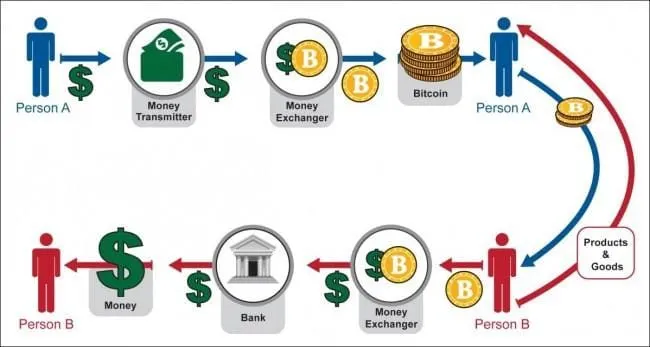
Now that we got some background info and important terminology out of the way, let’s dive into how crypto actually works and the different uses.
1. Trade or invest in crypto
Just like foreign currency (forex) trading, you can invest and trade in cryptocurrencies.
Again, just like in trading traditional stocks, you’d need to open a portfolio at an exchange. In the cryptoverse, your portfolio is usually referred to as a wallet. Your wallet has a unique address so assets can be sent to you, known as the public key, and can only be accessed by you using your private key – akin to a PIN code.
You can start trading right here on Zipmex. Zipmex is a non-custodial exchange on Solana: you connect your own wallet, keep your own keys, and every trade settles on-chain — there is no account to open and no balance to hand over. Perpetual markets cover Bitcoin (BTC), Ethereum (ETH), Tether (USDT) and more than 130 other pairs, with leverage up to 100x.
Mastering the basics of digital ownership begins with understanding that you are your own bank. While blockchain technology ensures that your transactions are immutable, the security of your funds rests entirely on how you manage your private keys. To prevent unauthorized access and ensure your long-term wealth remains protected, you should study our expert walkthrough on how to store and access your crypto assets safely using cold storage and secure digital practices.
2. Financial transactions
Many cryptocurrencies brand themselves as “digital money”. This means that just like how you can pay for something with Thai Baht, you can also buy or sell things with crypto. That is, if it’s legal in the country, of course.
3. Mining
Mining crypto is another popular use for these digital assets.
The mining process involves solving extremely complex equations, known as hashes, to validate transactions on a network. In exchange for solving the hash the fastest, the miner is rewarded in crypto.
Operating specialized consensus hardware demands significant upfront capital investments and access to low-cost electrical grids to maintain a profitable yield. Retail enthusiasts who lack access to commercial data centers often explore cloud setups or remote pool configurations to participate in block validation without managing physical rigs. If you are interested in exploring low-barrier methods to accumulate digital assets, check our compiled checklist of free btc mining websites of 2022 you can't miss to learn about available remote options.
Read more: What is crypto mining?
What is the most popular cryptocurrency?
Bitcoin is the most popular digital asset, as it was the first cryptocurrency in existence. Since the beginning, it was seen as a store of value and technology that can change the way people transact with each other. The bitcoin blockchain technology enables the removal of the middleman to create a secure, trusted peer-to-peer network.
Since the introduction of Bitcoin, the digital currency has proved to be the best performing return of investment compared to every available stock and share. This is undoubtedly one of the main reasons why people continue to invest in Bitcoin. Other than Bitcoin, there are over 5,000 cryptocurrencies, and those are called Altcoins or alternative coins.
Popular cryptocurrencies to watch:
1. Solana (SOL)

With its new marketplace and DApps platform taking off, Solana (SOL) is poised to be one of the top cryptos due to its popularity and interoperability.
2. Ethereum (ETH)

Ethereum (ETH) was said by many to be the “Bitcoin killer”. However, it is worth noting that the network’s platform places a higher emphasis on building apps and smart contracts over decentralized financial transactions.
The core innovation that separated this network from earlier transactional ledgers was its ability to host program state directly within block architecture, turning a simple asset ledger into a global decentralized computer. This scripting flexibility enables developers to deploy complex financial applications that execute automatically without any centralized counterparty or settlement risk. You can study the technical mechanics behind this programmable engine by checking out our guide on how do ethereum smart contracts work.
3. USD Coin (USDC)
USD Coin (USDC) is one of the more well-known stablecoins whose value is said to directly follow that of the United States Dollar.
Stablecoin: A cryptocurrency whose value is meant to correspond to another asset like fiat currency or gold.
Read more: What are stablecoins?
Maintaining a stable on-chain quote currency is vital for active traders who need to hedge against macro market downturns or secure profits without converting their digital capital back into traditional bank wires. While both primary fiat-backed protocols aim to preserve an identical one-to-one peg, they differ slightly in their asset reserve composition and financial auditing transparency models. To make an informed choice for your personal trading vault, read our head-to-head analysis of all you need to know about usdt and usdc in our updated guide.
4. Tether (USDT)
Tether (USDT) is another well-established stablecoin. However, it is unique in that it does not operate on its own blockchain, but instead on other chains like Bitcoin’s.
Beyond established giants like Bitcoin and Ethereum, the market is filled with thousands of specialized assets, including 'meme coins' which are driven largely by community culture and social media trends. While highly speculative, these assets represent a significant portion of retail trading volume. To see which community-driven projects are currently leading the charts, check out our updated list of the best meme coins to watch in 2026 and their respective market performance.
What is a market cap in cryptocurrency?
One of the most important factors in determining a crypto’s popularity and potential stability is its market capitalization.
Market capitalization or market cap is the number of shares multiplied by the current share price. For cryptocurrency, the market cap is the number of the total coin in the market multiplied by the current price of that coin.
So if you check on 13 May 2020, you might see that there are around 18,376,156 BTC in the system, and the price at 11.30 am is $8,910.08, so the market cap at this time is 18,376,156*8,910.08 = $163,732,989,783.
Can I trade cryptocurrency legally?

In many countries, digital currencies have different laws surrounding their use. The trading of digital currencies Crypto/Crypto such as ETH/BTC pairing is legal. However, the jurisdiction for trading Crypto/Fiat pairing defers for different countries. Many governments will generally intersect with banking or remittance services whenever they are exchanged for fiat currencies or visa versa. Therefore it is best to check with your local laws to understand any tax obligations you may have to report.
Can I change cryptocurrency to my normal currency?
Converting crypto back into your local currency happens off-chain, through a provider licensed for fiat where you live — a bank-connected exchange, a licensed broker, or a regulated peer-to-peer desk. Zipmex is non-custodial and handles no fiat and no bank balances: you trade from your own wallet, and any conversion to cash happens at the provider you choose, under that provider's own licence and rules. Check what is permitted in your jurisdiction before you start — the rules for crypto-to-fiat differ sharply from country to country.