Blockchain gaming has produced a lot of hype and very few titles worth your time. The Illuvium game is one of the rare exceptions - a fully 3D, open-world RPG built on Ethereum that combines AAA-quality gameplay with genuine play-to-earn mechanics powered by the ILV token. Whether you're a DeFi native looking for yield, a competitive gamer hunting for on-chain battles, or simply curious about where Web3 gaming is heading, this guide covers everything you need to know.
While early market entrants established the foundational baseline for tokenized monster breeding and combat loops, second-generation title developers focus on shifting away from simplistic card dynamics toward high-fidelity graphical asset integration. This paradigm shift ensures that players enjoy an immersive environmental exploration loop alongside standard competitive ranked seasons. To see how these tactical designs measure up against the historic leader of the play-to-earn space, check out our comparison guide on the Axie Infinity game explained and its token systems.
⚡ Key Takeaways
- Illuvium is an open-world RPG blockchain game built on Ethereum, using Immutable X Layer-2 for zero gas fees
- Players capture and battle creatures called Illuvials - each represented as a unique NFT
- The ILV token has a hard cap of 10 million tokens and is used for governance, staking rewards, and play-to-earn earnings
- Illuvium operates as an interoperable ecosystem with three distinct games: Overworld, Arena, and Illuvium Zero
- All platform mechanics are verifiable on-chain - no hidden odds, no custodial risk
Acquiring functional digital real estate within interconnected secondary land layers allows players to deploy autonomous companion structures that continuously extract raw fuel and base elements to feed the primary battle engine. This strategic building loop introduces a parallel casual tycoon layer that operates independently of real-time open-world encounters. To see how voxel-based environments use digital deeds to foster decentralized user economies, browse our full report on The Sandbox as a Minecraft alternative for Web3.
What Is the Illuvium Game? A Complete Overview
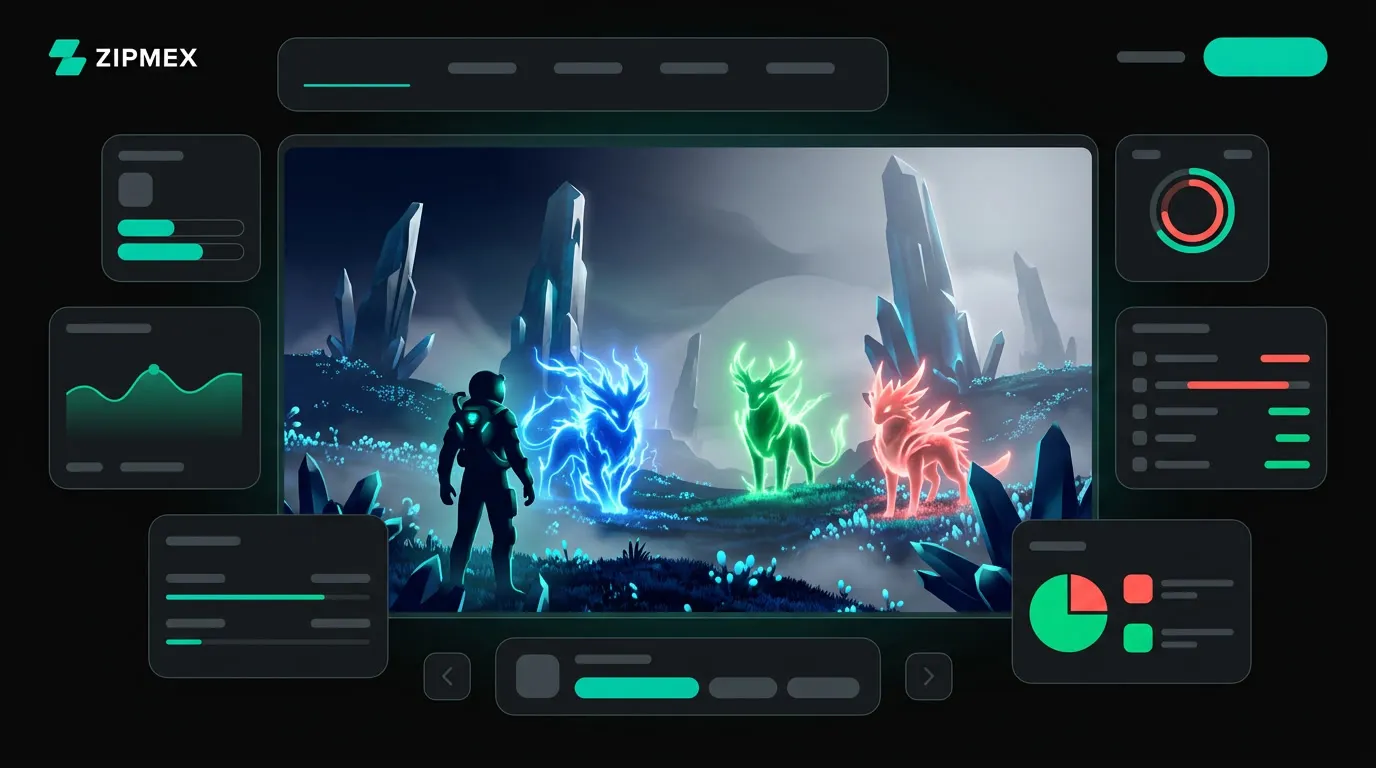
Illuvium is the blockchain gaming industry's most ambitious attempt at a true AAA title. Set on a shattered alien world recovering from a cataclysm, the game places players in the role of Hunters - explorers who travel across the landscape, capturing powerful deity-like creatures known as Illuvials, nursing them back to health, and building teams for combat. Every Illuvial is minted as a unique non-fungible token (NFT) stored in the player's wallet. That ownership is absolute - no platform can revoke, freeze, or modify what you hold.
The game runs on Ethereum for security but routes all in-game transactions through Immutable X, a Layer-2 scaling solution specifically designed for NFT-heavy applications. According to the Immutable X documentation, the protocol supports up to 9,000 TPS using STARK zk-Rollups, delivering instant transaction finality and zero gas fees on every trade, mint, and battle reward.
Positioning Illuvium as a "blockchain game with decent graphics" undersells it. The team of 40+ developers, led by brothers Kieran and Aaron Warwick, built a 3D world with over 100 uniquely designed Illuvials - each rendered with the visual fidelity players expect from a premium retail release, not a crypto side project.
Illuvial Classes and Affinities Explained
Every Illuvial belongs to one of five classes and carries one of five affinities. These two attributes define combat role, elemental strengths, and team synergy potential - understanding them is the foundation of competitive play.
Rarity matters beyond stats. Illuvials come in three visual variants - standard, holographic, and dark holographic - with the latter two being considerably scarcer and commanding higher market value. The fusion mechanic adds another layer: capture three identical Illuvials and combine them to destroy the originals and mint a more powerful ascended form. Ascended Illuvials can carry two affinities simultaneously, unlocking unique combat combinations that single-affinity creatures can't replicate.
Illuvium Game Modes: Overworld, Arena, and Illuvium Zero
Illuvium isn't a single game - it's an interoperable gaming ecosystem where NFT assets earned in one title carry forward into others. Three distinct games currently make up the ecosystem:
The Overworld is the flagship experience - players explore distinct biome regions, battle wild Illuvials to weaken them, then capture them with Shards to add to their collection. Arena takes those same Illuvials into automated PVP battles where team composition, class synergies, and strategic positioning determine outcomes. Illuvium Zero operates as a resource generation layer: players who own NFT land plots extract materials that feed directly into the Overworld's crafting and progression systems.
Assets earned across these three games are interoperable. Land resources from Illuvium Zero flow into Overworld crafting. Illuvials captured in the Overworld compete in Arena. This interconnected design is a genuine structural differentiator - most blockchain games are isolated experiences; Illuvium is building a persistent Web3 gaming universe.
How to Play Illuvium: Getting Started Step by Step
Getting into Illuvium requires a few crypto-native setup steps that are worth doing properly rather than rushing. Here's the exact sequence:
- Create an Illuvium account. Visit illuvium.io and register. The game client is a downloadable desktop application - there's no browser-based version for the core Overworld experience.
- Set up a compatible self-custodial wallet. Illuvium uses Immutable X for transactions. MetaMask works as the primary wallet connector. You control your own keys - the platform has no access to your assets.
- Acquire ILV tokens (if staking/purchasing NFTs). ILV is tradeable on major crypto exchanges. Transfer acquired ILV to your wallet. The base Overworld has free-to-play options - you don't need ILV tokens to start exploring.
- Connect your wallet to the Illuvium platform. Navigate to the staking portal or IlluviDEX via the Illuvium website and connect MetaMask. The Immutable X Layer-2 connection handles all in-game transactions from there.
- Bridge assets to Immutable X (if needed). If you're purchasing Illuvial NFTs on the open market, you'll need to bridge ETH or ILV to the Immutable X Layer-2 network. The Immutable X bridge interface makes this a straightforward one-time setup.
- Start playing. Launch the desktop client, create your Hunter, and enter the Overworld. First-time players can explore freely before investing in premium Illuvials or staking positions.
The free-to-play entry point is worth emphasizing: Illuvium doesn't require an NFT purchase barrier to start. Casual exploration is accessible from day one - a deliberate design choice that separates Illuvium from blockchain games that gate content behind expensive NFT purchases before a single second of gameplay.
From wallet to 100x in 30 seconds
ZIPMEX is the fastest way into leveraged trading. No signup, no KYC, no deposit queue.
Open ZIPMEX →ILV Token Economics: Staking, Governance, and Rewards
The ILV token sits at the center of Illuvium's economic model. With a maximum supply of 10 million tokens, ILV serves three distinct functions: governance participation, staking rewards, and play-to-earn earnings. Understanding how these intersect separates players who extract real value from the ecosystem from those who miss it entirely.
Governance operates through the Illuvinati Council - a body of elected representatives voted in by ILV holders. Council members can submit Illuvium Configuration Change Proposals (ICCPs) for minor parameter adjustments and Illuvium Improvement Proposals (IIPs) for more significant protocol changes.
The Illuvium Vault is the most compelling mechanism in the entire model. According to CoinMarketCap's Illuvium overview, 100% of in-game revenue - from IlluviDEX trading fees, in-game purchases, crafting components, and cosmetics - flows into the Vault and is distributed to ILV stakers via a buyback-and-distribute system. No token inflation. No emissions that dilute your stake. Yield comes entirely from real platform activity.
The complex dual-token model used to distribute rewards across battle arenas requires a carefully calibrated sink architecture to protect native ecosystem assets against long-term inflationary pressures. Developing an understanding of how governance stakes interact with liquid transaction parameters can help participants differentiate volatile speculative plays from sustainable protocol growth. For an extensive technical breakdown of these virtual assets, consult our master index on what gaming tokens are and how GameFi economies operate.
ILV vs. sILV: Which Reward Should You Choose?
When staking rewards vest, you face a choice: claim as ILV with a 12-month lock-up, or convert to sILV for immediate in-game spending power. The right answer depends entirely on your goals.
✓ CHOOSE ILV IF YOU...
- Are building a long-term position in the Illuvium ecosystem
- Want governance participation rights via the Illuvinati Council
- Are comfortable holding through the 12-month lock-up period
⚡ CHOOSE sILV IF YOU...
- Want to reinvest rewards into gameplay immediately
- Are focused on competitive progression (buying superior Illuvials, crafting items)
- Prioritize gameplay advancement over token accumulation
One technical detail worth knowing: sILV is valued at the USD equivalent of ILV at the time of conversion. It cannot be withdrawn, bridged out, or traded on any external market. Once you convert to sILV, those rewards exist only within the game - a deliberate design choice to keep in-game purchasing power tied to actual gameplay participation.
What Makes Illuvium Unique? Key Features Compared to Other Blockchain Games
Most blockchain games share a common ceiling: low-fidelity graphics, shallow gameplay, and tokenomics that rely on new player inflows to sustain rewards. Illuvium breaks from that pattern on multiple fronts.
The Immutable X integration deserves a deeper look because it solves the problem that killed blockchain gaming's early momentum: gas fees. Minting an Illuvial, trading on IlluviDEX, claiming rewards - all zero-fee, all with near-instant finality. Players always maintain custody of their assets while operating on the L2 network. The cryptographic security of Ethereum settlement backs every transaction.
The IlluviDEX itself is a gas-free decentralized exchange purpose-built for Illuvium assets. A 5% fee on each sale channels directly into the rewards pool for ILV stakers - every trade generates real yield for the holder community. That closed-loop mechanism is the on-chain economic logic that separates Illuvium from platforms that rely on external revenue sources or inflationary token programs.
Illuvium vs. Axie Infinity: Head-to-Head Comparison
Axie Infinity is the benchmark blockchain game - it pioneered the play-to-earn model at scale and demonstrated that crypto-native gaming had a real audience. Illuvium is the next evolution, not a direct replacement.
Worth noting: Illuvium actually includes Axie's AXS token as one of its Flash Pool options - you can stake AXS within the Illuvium staking platform to earn ILV. These ecosystems aren't purely competitive; there's deliberate cross-pollination designed to benefit both communities.
Illuvium Red Flags and Risks: What Players Need to Know
No honest guide to a play-to-earn blockchain game skips the risk section. Illuvium has real strengths - but it also carries real risks that any informed participant should understand before committing capital.
⚠ Risk Checklist for Prospective Illuvium Players
- Development timeline risk → Illuvium has experienced delays from its original 2022 launch projections - delays are normal in AAA development but worth factoring into expectations
- Token price volatility → ILV is subject to crypto market cycles; staking rewards are denominated in ILV, not in USD
- Smart contract risk → All DeFi platforms carry smart contract vulnerability risk; no audit eliminates this entirely
- P2E sustainability → Play-to-earn models depend on continued player growth; declining activity directly reduces Vault distributions
- NFT value fluctuation → Illuvial floor prices correlate with ILV price, player demand, and broader NFT market conditions
Development timeline risk is the most concrete. Illuvium's initial public launch was projected for 2022; the full ecosystem is still maturing. The scope of building three interconnected AAA games simultaneously explains the timeline - but players waiting on specific feature rollouts should plan for additional delays.
Token volatility is inherent to any crypto-denominated reward system. The Vault's buyback mechanism adds buy-side pressure during high platform activity periods, but ILV still trades on crypto markets subject to macro sentiment, Bitcoin correlation, and sector-specific events.
Trade perps with just a wallet
ZIPMEX is a no-KYC DEX for leveraged trading. Connect, trade, withdraw — no paperwork.
Open ZIPMEX →The fundamental underpinning is solid: on-chain verifiability, self-custody, real yield from platform activity rather than token emissions. Those are the design principles that indicate long-term structural thinking. But solid design doesn't eliminate market risk - it just means the platform itself isn't the primary source of that risk.
Crypto gaming involves substantial risk of loss. Participation in Illuvium's staking and play-to-earn mechanics is not suitable for all users. Nothing in this article constitutes financial advice.
How to Maximize Your Illuvium Game Experience
Once you understand the mechanics, the question becomes: how do you actually extract value? There are three strategic layers - gameplay, earning, and governance - and players who engage all three consistently outperform those who focus on just one.
There are three core strategies worth building around:
- Team Synergy Optimization (Gameplay): Build your Illuvial roster around class and affinity combos rather than individual creature power. A coordinated team with Fighter + Guardian frontline, Psion crowd control, and Empath support consistently outperforms a collection of individually powerful but synergy-free Illuvials in Arena competitive play.
- Staking Compounding (Earning): Combine active play-to-earn quest rewards with passive ILV staking. Every ILV staked in the core pools earns a share of Vault distributions - that yield compounds alongside your in-game earnings. Players who reinvest Vault distributions into additional staking positions accelerate their yield accumulation without additional capital input.
- DAO Participation (Governance): ILV governance isn't symbolic - IIPs have shaped core game mechanics, reward rate adjustments, and expansion decisions. Active governance participants have a track record of influencing outcomes that benefit long-term holders.
Illuvium Gameplay Strategies: Best Team Compositions
Arena competitive play rewards composition intelligence over raw creature power. Four team archetypes consistently perform well across different meta periods:
The fusion mechanic is worth the investment for competitive play. Fused Illuvials with dual affinities occupy a separate tier of combat effectiveness - particularly in Leviathan mode, where the longest battles favor sustained damage output and healing synergies. Targeting your fusions around the Guardian + Empath combo gives you a sustain core that's hard to remove without dedicated burst damage.
ILV Staking Strategies: Core Pools vs. Flash Pools
The staking system has two lanes: core pools for long-term ILV accumulation and flash pools for opportunistic yield on partner tokens.
The ILV/ETH liquidity pool generates higher base yield than the single-asset ILV pool because you're providing two-sided liquidity. The trade-off is impermanent loss risk - if ILV and ETH price diverge significantly, your LP position underperforms relative to simply holding both assets. Run the LP pool when you're neutral-to-bullish on ILV relative to ETH; stick to the single-asset pool when you want cleaner directional exposure.
Flash pools are worth monitoring during partner token promotions - these are time-limited, offer competitive ILV yield, and require no additional capital if you're already holding the partner token (AXS being the most common).
Illuvium Alternatives: Other Blockchain RPGs Worth Exploring
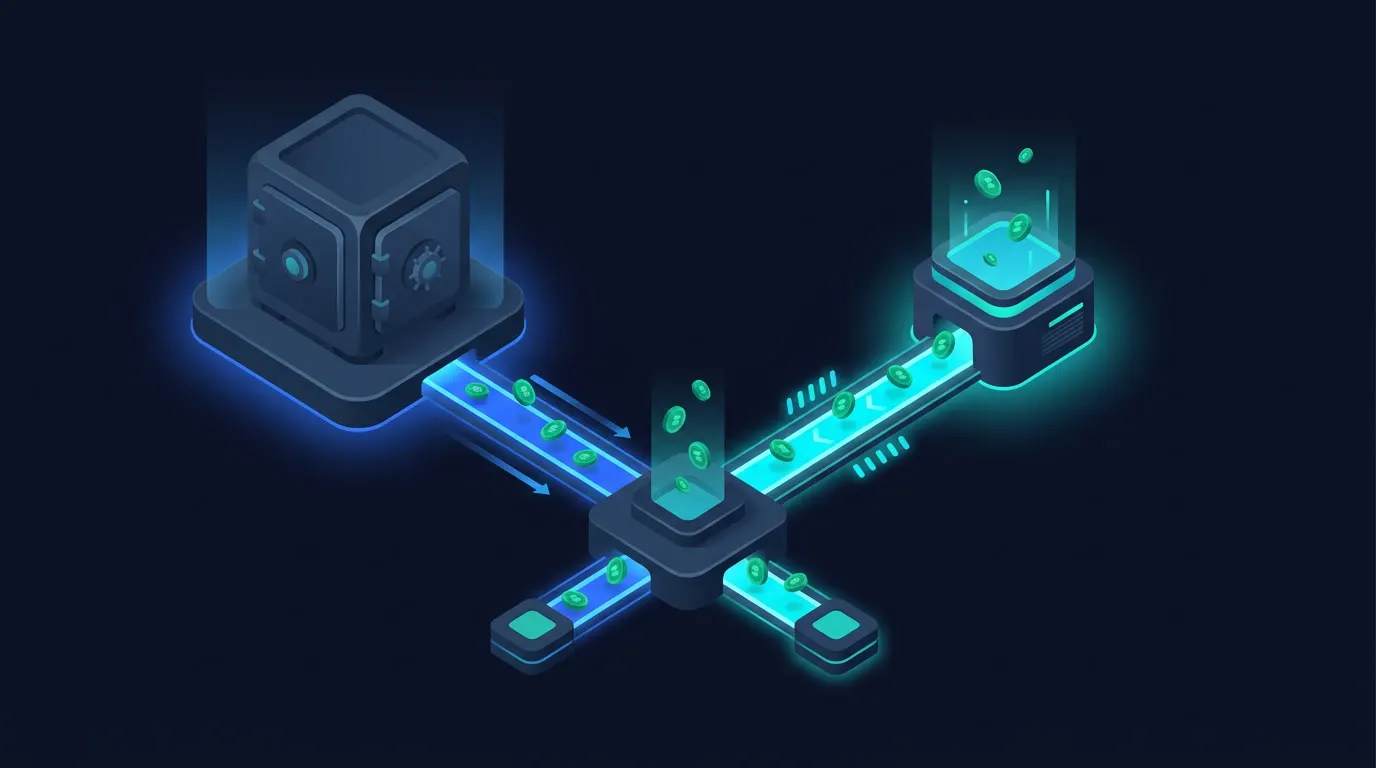
Illuvium isn't the only blockchain game worth your attention. The broader GameFi ecosystem has several titles serving different player profiles - and understanding where alternatives fit helps you make a more informed decision.
📊 Blockchain Gaming Ecosystem Overview
Axie Infinity - Battle RPG - Ethereum + Ronin
Best for players who want an established, liquid NFT market with a proven P2E track record. Simpler mechanics, larger existing player base. Dive deeper in the complete Axie Infinity guide.
Gods Unchained - Card Battle - Immutable X
Best for strategy gamers who prefer card-based mechanics. Also runs on Immutable X, so the zero-gas-fee experience is comparable. Free-to-play entry is generous.
The Sandbox - Metaverse / Land - Ethereum
Best for creators and investors focused on virtual real estate and user-generated content rather than combat gameplay.
Decentraland - Virtual World - Ethereum
Best for social and commercial metaverse use cases - events, virtual storefronts, community spaces - rather than combat-focused gameplay. Learn more about top NFT marketplaces where these assets trade.
The honest take: Illuvium targets the gamer-first audience that other blockchain titles have underserved. If your priority is competitive gameplay quality backed by real on-chain economics, Illuvium is the strongest current candidate. If you want the deepest existing NFT liquidity, Axie Infinity still leads. If you're more interested in virtual real estate as an asset class, The Sandbox and Decentraland are purpose-built for that.
Platforms built on self-custody principles, real yield from platform activity, and on-chain verifiability reflect the same values that define the next generation of decentralized finance infrastructure - where users hold their own keys and earnings come from genuine activity rather than inflationary token programs.
Conclusion: Is the Illuvium Game Worth Playing in 2026?
The Illuvium game has done something most blockchain gaming projects haven't: it's built something that would be worth playing even without the financial layer. The 3D world, the creature collection system, the competitive Arena modes - these stand on their own as gaming experiences. The on-chain economics and ILV staking model add a meaningful financial dimension without compromising the gameplay integrity.
That said, "worth it" depends entirely on who you are:
⚡ Who Is Illuvium Best For?
🎮 Casual Gamers
Illuvium's free-to-play Overworld entry point and AAA production quality make it genuinely compelling without any financial commitment. Start exploring for free before deciding whether the ILV token economy is worth engaging.
💰 Play-to-Earn Players
The combination of quest-based ILV earnings and passive staking yield creates a dual income stream that compounds over time. The Vault's 100% revenue distribution model is more sustainable than emissions-based alternatives.
📊 Crypto Investors
ILV exposure comes with real on-chain utility: governance rights, Vault yield tied to platform revenue, and a capped supply model. The token isn't backed by promises - it's backed by the platform's actual fee generation.
The risks are real: development timelines remain fluid, token price is volatile, and the P2E model's long-term sustainability depends on player growth. None of those risks are unique to Illuvium - they're inherent to early-stage Web3 gaming.
The foundation - verifiable on-chain mechanics, self-custodial asset ownership, real yield from real platform activity - is exactly what serious DeFi participants should demand from any platform they allocate to. Visit illuvium.io to explore the ecosystem, review the staking portal, and make your own assessment.
Crypto trading and play-to-earn participation involve substantial risk of loss and are not suitable for all users. This article is for informational purposes only and does not constitute financial advice. Always conduct your own research before allocating capital to any crypto-native platform.
Last updated: April 2026.
Frequently Asked Questions
What is the Illuvium game?
Illuvium is an open-world RPG blockchain game built on Ethereum, using Immutable X Layer-2 technology for zero gas fees. Players explore a post-apocalyptic alien world as Hunters, capturing powerful creatures called Illuvials that are represented as unique NFTs stored in the player's own wallet. The game combines traditional RPG mechanics - exploration, collection, and combat - with a play-to-earn model powered by the ILV token. Multiple game modes, including the Arena auto-battler and Illuvium Zero land builder, expand the ecosystem beyond the core Overworld experience.
What is the ILV token used for?
ILV is Illuvium's primary ERC-20 token with a maximum supply of 10 million. It serves three core functions: governance (ILV holders vote on protocol changes via the Illuvinati Council), staking rewards (players stake ILV to earn a share of the Illuvium Vault's revenue distributions), and play-to-earn earnings (completing quests, winning battles, and achieving milestones rewards players with ILV). The token also benefits from a buyback mechanism - 100% of in-game revenue from IlluviDEX fees and in-game purchases is used to buy ILV from the market and distribute it to stakers.
What is sILV and how is it different from ILV?
sILV is an in-game currency that stakers can choose to receive instead of standard ILV rewards. The key difference: ILV rewards come with a 12-month lock-up period before they can be accessed, while sILV is available to spend immediately within the game. sILV is valued at the USD equivalent of ILV at the time of conversion and can be used to purchase in-game items, cosmetics, and NFTs on the IlluviDEX. Critically, sILV has no on-chain representation - it cannot be withdrawn to an external wallet, traded on any exchange, or transferred between players.
Does Illuvium have zero gas fees?
Yes - all in-game transactions on Illuvium operate through Immutable X with zero gas fees for players. This includes minting Illuvial NFTs, trading on the IlluviDEX, claiming staking rewards, and completing in-game actions. The zero-fee structure is made possible by Immutable X's zk-Rollup architecture, which batches transactions and settles them on Ethereum without passing individual gas costs to users. Standard Ethereum gas fees still apply for external actions - such as bridging assets between Ethereum mainnet and the Immutable X Layer-2 network - but day-to-day gameplay is genuinely gas-free.
How does ILV staking work?
ILV staking allows token holders to deposit ILV into core pools and earn a share of Vault revenue distributions. There are two core pool options: the single-asset ILV pool (deposit ILV only, lower risk) and the ILV/ETH liquidity pool (deposit both ILV and ETH, higher yield with impermanent loss risk). Staking rewards vest as ILV with a 12-month lock-up, or as sILV for immediate in-game spending with no withdrawal option. Flash pools offer additional staking opportunities for specific partner tokens - such as AXS - during limited promotional periods.
Is the Illuvium game free to play?
Yes - Illuvium includes a free-to-play entry point for the core Overworld experience. Players can download the desktop client, create an account, and begin exploring without purchasing any NFTs or ILV tokens upfront. Premium participation - buying specific Illuvial NFTs, staking ILV for Vault yields, or competing at the highest Arena tiers - requires investment. This is a deliberate design decision that distinguishes Illuvium from earlier blockchain games that required expensive NFT purchases before any gameplay was possible.
How does Illuvium compare to Axie Infinity?
Both games advanced the play-to-earn blockchain gaming model, but they target different experiences. Axie Infinity established the category with a 2D, accessible combat system on the Ronin chain, building one of the largest NFT gaming communities. Illuvium targets a more graphics-intensive, deeper gameplay experience with 3D environments, 100+ Illuvials, and three interconnected games on Ethereum + Immutable X. Illuvium's Vault model distributes 100% of revenue to stakers with no token inflation. Practically, they complement more than they compete - Illuvium even supports AXS staking in its flash pools.